
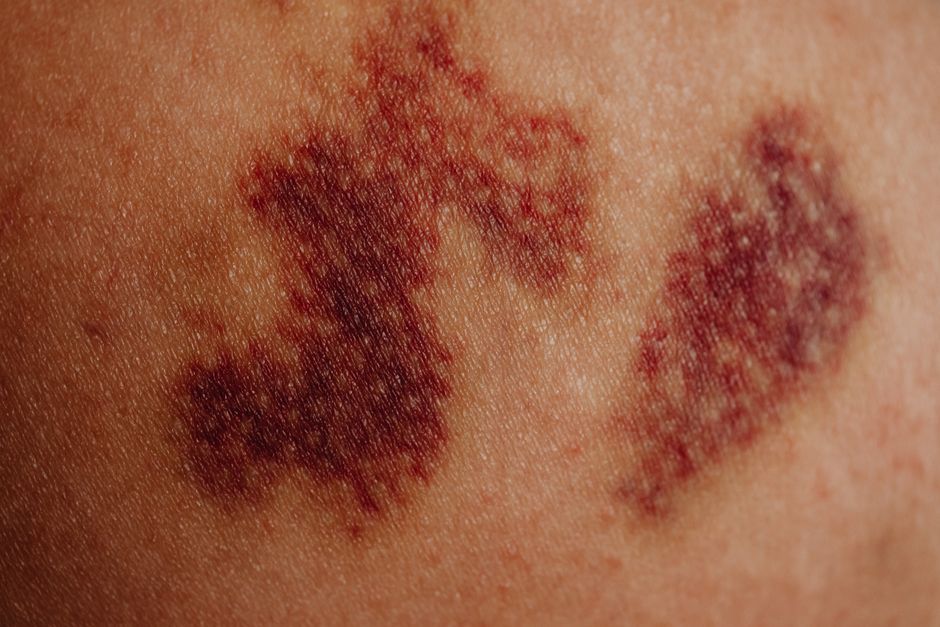
Yes, the body can show marks that look like bruises after death, but these are not true bruises. True bruising requires blood circulation, which stops when the heart stops beating. What appears as a bruise after death is usually livor mortis, a pre-existing injury that becomes visible, or another postmortem change. Forensic pathologists examine these carefully to tell the difference.
What is a true bruise?
A bruise forms when small blood vessels break under the skin. Blood leaks into the surrounding tissue. The heart pumps blood to the injured area, and the blood collects there. This pooling of blood creates the familiar black-and-blue mark.
For a true bruise to form, two things are needed: broken blood vessels and active circulation. When the heart stops, circulation stops. No pumped blood means no new blood can collect at a wound site. That is why a fresh bruise cannot develop after death.
Can new bruises form after death?
No, new bruises cannot form after death. Without a heartbeat, blood cannot travel to an injury site. Even if a body is hit after death, blood does not actively pool. The mechanical force may still break small vessels, but without circulation the blood cannot accumulate enough to create a visible bruise.
However, a blow to a body soon after death can sometimes cause a small amount of passive blood leak. This may look like a bruise but is not the same process. Forensic pathologists call this postmortem blood extravasation. It is rare and usually minor.
What is livor mortis?
Livor mortis, also called lividity or postmortem lividity, is the settling of blood in the lowest parts of the body after death. Gravity pulls blood down into small vessels. This creates a purple-red discoloration of the skin. It can look very much like a bruise.
Livor mortis begins within 20 to 30 minutes after death and becomes fixed after about 8 to 12 hours. Unlike a true bruise, livor mortis follows gravity. It appears on the back of a body lying face up, not on the front. Medical examiners check this pattern to tell the difference.




Can a pre-death bruise become more visible after death?
Yes. A bruise that formed just before death may not be clearly visible at the time of death. After death, as livor mortis sets in and the skin changes color, the bruise can become more apparent. This does not mean it formed after death — it was there all along.
Bruises that are a few hours old may become more noticeable as the skin loses its normal pinkness. The contrast increases. This is a common source of confusion for laypeople who see a mark after death and assume it happened at or after the moment of death.
How do medical examiners distinguish bruises from postmortem changes?
Forensic pathologists use several clues. First, they check if the discoloration follows gravity. If it is on the lowest part of the body, it is likely livor mortis. A bruise may appear anywhere, not just where gravity would pull blood.
Second, they cut into the skin. A true bruise shows blood that has soaked into the soft tissue. Livor mortis shows blood only in the blood vessels, not spread through the tissue. Third, they check for blanching. Pressing on livor mortis can sometimes cause it to fade briefly in early stages. A bruise will not blanch.
Other discolorations that mimic bruises after death
Several other conditions can appear similar to bruising after death. Decomposition changes cause skin discoloration as bacteria break down the body. This may look like large purple or green patches. Postmortem insect activity or animal scavenging can also produce marks that resemble bruises.
Also, some medical conditions such as blood clotting disorders or certain medications can cause easier bruising before death. Those pre-existing bruises may become more prominent after death. In all cases, the timing and pattern help examiners decide the cause.
In summary, the question “Can a body bruise after death?” has two parts. True bruises cannot form after death because circulation stops. But bruise-like marks from livor mortis, pre-death injuries, or other causes can appear. Forensic professionals are trained to tell the difference.
Frequently Asked Questions
Can a dead body bruise if hit after death?
No. A hit after death does not produce a true bruise because there is no blood circulation to pool at the site. Minor passive blood leak can occur but it looks different.
What is the difference between a bruise and livor mortis?
A bruise is blood from broken vessels that has soaked into tissue. Livor mortis is blood that has settled within intact vessels due to gravity. Livor mortis always appears on the lowest part of the body.
Can a bruise get worse after death?
A bruise that formed before death cannot expand after death because circulation has stopped. But it can become more visible as the surrounding skin changes color from livor mortis or decomposition.
Do pathologists always know if a bruise happened before death?
In most cases, yes. By examining the tissue under the skin and the pattern of discoloration, experienced pathologists can determine if a mark was caused before or after death.
