
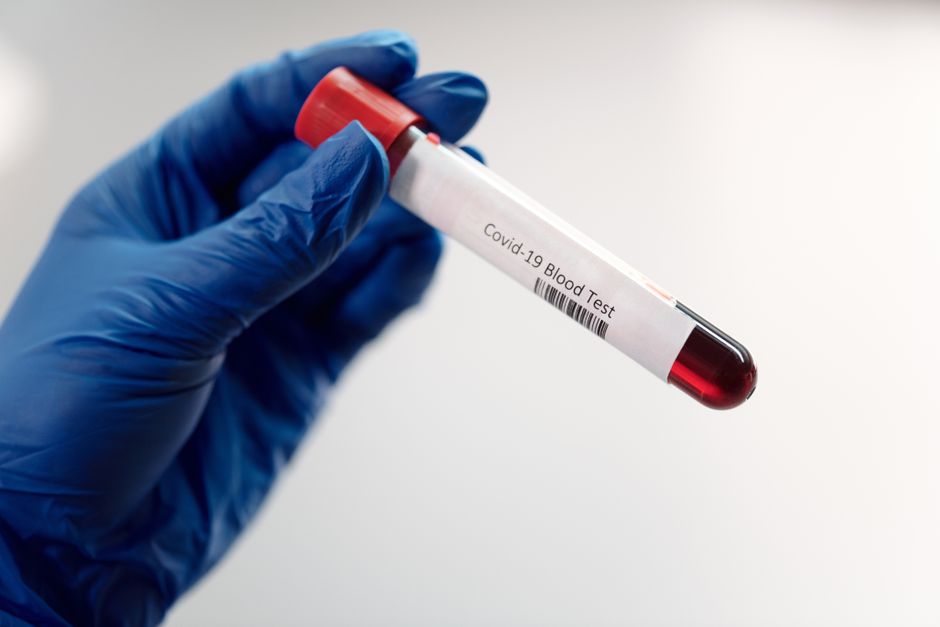
A blood test can detect some viruses, but not all of them, and not at every stage of an infection. The test has to match the virus, and the timing has to match the body’s response. That is why a negative result does not always mean you are in the clear.
Most virus blood tests work in one of two ways. They either look for the virus itself, or they look for the antibodies your immune system makes against it. Each approach has a window of time when it works best.
Can A Blood Test Detect A Virus Directly?
Yes. Some blood tests detect the virus itself by finding its genetic material or proteins in the bloodstream.
These are called direct tests. A polymerase chain reaction (PCR) test looks for viral genetic material. An antigen test looks for viral proteins. When a virus travels through the blood, these tests can pick it up.
Viruses that spend time in the bloodstream include HIV, hepatitis B, hepatitis C, and cytomegalovirus. For these infections, direct blood testing is a standard part of diagnosis.
Other viruses mostly stay in the respiratory tract or elsewhere in the body. A blood test may not find them even during an active infection.
What Is The Difference Between Antibody And Antigen Testing?
Antigen tests and antibody tests look for different things. One looks for the invader. The other looks for your body’s response to it.
An antigen test detects pieces of the virus itself. It can turn positive early in an infection, sometimes before symptoms start. But antigen levels can drop quickly as the immune system clears the virus.
An antibody test detects proteins your immune system makes to fight the virus. This response takes time. It usually takes one to three weeks after infection for antibodies to reach detectable levels. Some people develop them faster. Some develop them slower.
Antibody tests are useful for showing whether you have been exposed to a virus at some point. They are less useful for catching an infection in its first days.
Why Does Timing Matter So Much?
Timing is the single biggest reason a virus blood test can miss an infection.
Every virus has a window period. This is the time between when you are infected and when a test can reliably detect it. During that window, you can be infected and contagious while your test still reads negative.
The length of the window depends on the virus and the test. For some infections, direct tests can detect the virus within days. Antibody tests for the same virus may take weeks to turn positive.
This is why testing too early is a common cause of false negatives. If you test before the window closes, a negative result does not rule out infection.





Which Viruses Can Blood Tests Detect?
Blood tests are well established for viruses that circulate in the blood. They are much less reliable for viruses that stay in the respiratory tract or nervous system.
- HIV: Detected by both antigen and antibody blood tests.
- Hepatitis B and C: Detected by direct and antibody blood tests.
- Cytomegalovirus and Epstein-Barr virus: Detected by antibody blood tests.
- Measles and rubella: Often confirmed by antibody blood tests.
- Respiratory viruses: Usually detected by swabs, not blood tests.
Respiratory viruses like influenza and common cold viruses are usually found with a nasal or throat swab. A blood test is not the standard method for these.
What Can Cause A False Result?
No blood test is perfect. A result can be wrong in either direction.
A false negative means the test says you are not infected when you actually are. Testing too early is a leading cause. A poorly collected sample or a low level of virus in the blood can also cause one.
A false positive means the test says you are infected when you are not. This can happen if the test reacts to something similar to the virus. Some antibody tests can cross-react with antibodies from a related infection.
Because of this, a single positive result is sometimes confirmed with a second, different test. This is common practice for infections like HIV and hepatitis.
How Accurate Are Virus Blood Tests?
Accuracy varies widely by virus, by test, and by how long you have been infected.
Tests that detect the virus directly tend to be highly specific when the virus is present in the blood. Antibody tests are generally reliable for detecting past exposure, but they can miss recent infections.
There is no single accuracy number that applies to all virus blood tests. A test that works well for one virus may perform poorly for another.
Some people assume a blood test can screen for any virus at once. That is not how it works. Most tests target one specific virus. A doctor has to order the right test for the right virus at the right time.
When Should You Ask About Testing?
Testing decisions depend on your symptoms, your exposure history, and the virus in question.
If you think you were exposed to a specific virus, tell a doctor. They can help choose a test and time it correctly.
If a test comes back negative but your symptoms continue, that does not always mean you are fine. It may mean the test was done too early or was not the right test.
This article is informational. It is not medical advice. Talk to a doctor about your specific situation.
Frequently Asked Questions
Can a blood test detect a virus immediately after exposure?
No. Every virus has a window period before a test can detect it. Testing too soon is a common cause of false negatives.
What is the difference between a PCR test and an antibody test?
A PCR test looks for the virus’s genetic material directly. An antibody test looks for the immune response your body makes against the virus.
Why would a virus blood test give a false positive?
A false positive can happen if the test reacts to something similar to the virus, such as antibodies from a related infection. A second test is often used to confirm.
Can one blood test check for many viruses at once?
Usually not. Most virus blood tests target one specific virus, so a doctor orders the test that matches your symptoms and exposure.
