
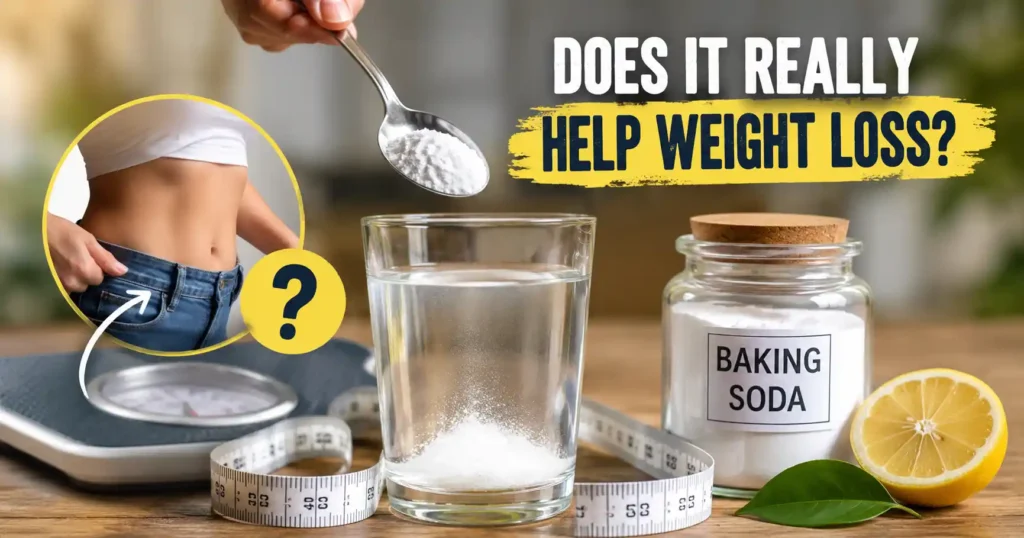
Does the baking soda water shot help you lose weight?
No. There is no clinical evidence that baking soda water burns fat or speeds up your metabolism. Any drop on the scale is water weight or less bloating, not fat loss.
You have probably seen this drink on social media. Someone mixes baking soda with water, drinks it fast, and claims it flattened their stomach. The recipe is real. The weight-loss claim is not.
This article gives you the actual recipe, explains what the drink really does in your body, and shows you what the research says. All claims are backed by sources from PubMed and major medical publishers, linked below.
The baking soda water shot recipe
What you need:
- ¼ teaspoon baking soda (sodium bicarbonate, food grade)
- 8 ounces (1 cup) of room-temperature water
- 1–2 teaspoons fresh lemon juice (optional)
How to make it: Stir the baking soda into the water until it fully dissolves. Add lemon juice if you like. Let the fizz settle for a minute. Drink it slowly, not in one gulp.
That is the whole recipe. There is no secret ratio or timing trick that makes it work better for weight loss, because it does not cause weight loss in the first place.
What baking soda actually does in your body
Baking soda is a base. It neutralizes stomach acid. That is its real, well-known job. It is the active ingredient in many over-the-counter antacids.
Some people believe that drinking alkaline substances makes your whole body “alkaline,” which they think forces it to burn fat. This is not how your body works.
Your kidneys control your blood’s acid-base balance every single day. According to a review published in Advances in Kidney Disease and Health, the kidney maintains this balance by reabsorbing and generating bicarbonate on its own, regardless of what you eat or drink (Greenberg & Lecker, 2025). One glass of baking soda water cannot override that system. Your blood pH stays in its normal, narrow range no matter what.
What it may actually do
- Calm occasional heartburn or acid reflux
- Reduce bloating and gas short-term
- Make you feel lighter for a few hours
What it does not do
- Burn body fat
- Boost your metabolism
- Target belly fat specifically
- Replace a calorie deficit
-
 Baking Soda and Lemon Juice for Weight Loss: Does It Work?
 -
What is the Recipe for the Gelatin Weight Loss? What You Need to Know
-
What is the Jello Trick Recipe for Weight Loss? A Clear Explanation
-
What is the Jello Weight Loss Recipe? What Most People Don’t Know
-
Sleep Lean Reviews 2025. Does Weight Loss Supplement Really Work?





Why people think it works
Three things happen when someone drinks this and steps on the scale the next day:
Water shift. The extra sodium from baking soda can cause a short-term shift in how much water your body holds. This can move the scale by half a pound. It comes back.
Less bloating. If the drink calms indigestion, your stomach feels flatter. That is not fat loss. That is gas leaving your digestive tract.
Expectation. When people expect a drink to work, they often eat a bit less that day without noticing. The drink itself is not doing the work.
Is it safe? What the research shows
Small, occasional amounts are generally low-risk for healthy adults. But baking soda is not harmless when people overuse it, and case reports show what can go wrong.
A 2026 case report and systematic review in the American Journal of Emergency Medicine described a man who took large daily doses of sodium bicarbonate for two months to try to “cleanse” his body. He ended up in the hospital with severe metabolic alkalosis and dangerously high blood sodium. The same review found 78 documented cases of sodium bicarbonate toxicity, most linked to people trying unproven home remedies (Inokuchi et al., 2026).
That case involved much larger amounts than the ¼ teaspoon recipe above. But it shows a real pattern: people start with a small dose, do not see results, and take more. That is where the drink turns from mildly useless to actually risky.
Common, mild side effects
- Nausea
- Gas and bloating
- Stomach cramping
- Increased thirst
- Diarrhea
Known risks of regular or heavy use
- High sodium load. A half-teaspoon of baking soda has over 600 mg of sodium. That adds up fast if you drink this daily.
- Stomach irritation. The fizzing reaction can trigger reflux, especially if you lie down soon after.
- Electrolyte imbalance. Frequent, large doses can disturb your body’s sodium and potassium balance, and in severe cases affect muscle function and heart rhythm.
- Blood pressure. High sodium intake is linked to higher blood pressure over time.
- Kidney strain. Excess sodium and bicarbonate make your kidneys work harder to restore balance.
Who should avoid this drink
- People with high blood pressure or heart conditions
- People with kidney disease
- Pregnant or breastfeeding women
- Anyone on a low-sodium diet
- Anyone taking prescription medication, since baking soda can change how some drugs absorb
If any of these apply to you, talk to a doctor before trying this drink, even for heartburn.
Where baking soda actually has real evidence: athletic performance
Sodium bicarbonate does have one legitimate, research-backed use. It is not weight loss. It is short-burst athletic performance.
A 2026 randomized, placebo-controlled study in the European Journal of Applied Physiology found that trained cyclists who took sodium bicarbonate before a 40km time trial performed 1.2% better than those who took a placebo, likely because it helps buffer acid buildup in muscles during intense exercise (Shannon et al., 2026). A separate 2025 study in Nutrients found a similar effect in elite artistic swimmers, with lower perceived effort during high-intensity routines after sodium bicarbonate use (Sprenger et al., 2025).
Important: these studies used doses far higher than the weight-loss recipe, under controlled research conditions, in trained athletes. This is not a reason to increase your dose at home. It only shows that baking soda’s real, proven benefit has nothing to do with fat loss.
Is apple cider vinegar a better option?
Apple cider vinegar (ACV) is the other viral “shot” people compare this to. It is not the same story.
Unlike baking soda, ACV actually has some real research behind it. A 2025 systematic review and meta-analysis of randomized controlled trials found that daily ACV intake led to modest but statistically significant reductions in body weight, BMI, and waist circumference, mainly in adults who were overweight or had type 2 diabetes. Mayo Clinic still describes the overall evidence as limited and says ACV “isn’t likely to cause” meaningful weight loss on its own.
| Feature | Baking Soda Water | Apple Cider Vinegar |
|---|---|---|
| Burns fat | No | No |
| Weight loss evidence | None | Modest, in some clinical trials |
| Appetite effect | No evidence | Mixed, small studies only |
| Main risk | High sodium, alkalosis | Tooth enamel erosion, stomach irritation |
Neither one replaces a calorie deficit, protein, movement, and sleep. ACV simply has thinner, but real, clinical support. Baking soda has none.
If you want to try it anyway
If you just want occasional heartburn relief, here is how to do it more safely:
- Use no more than ¼ to ½ teaspoon per dose
- Do not take more than 3 doses in 24 hours
- Do not use it for more than 2 weeks without talking to a doctor
- Do not lie down right after drinking it
- Do not use baking powder by mistake. It is a different product and will not work the same way
What actually works for weight loss
If your real goal is losing weight, put your time into things with actual evidence behind them:
- Eating in a consistent calorie deficit
- Getting enough protein at each meal to stay full longer
- Eating more fiber (vegetables, fruit, whole grains, beans) to slow digestion and control hunger
- Drinking water before meals, since the water itself, not baking soda, is what may reduce how much you eat
- Regular movement you can stick with, not just workouts you dread
- Enough sleep, since poor sleep is linked to higher hunger hormones
- Tracking progress over weeks, not days
None of these fit in a single glass. That is exactly why they work and a baking soda shot does not.
Frequently asked questions
This article is for general education. It is not medical advice. Always talk to a doctor before starting any new supplement or home remedy, especially if you have a health condition or take medication.
