
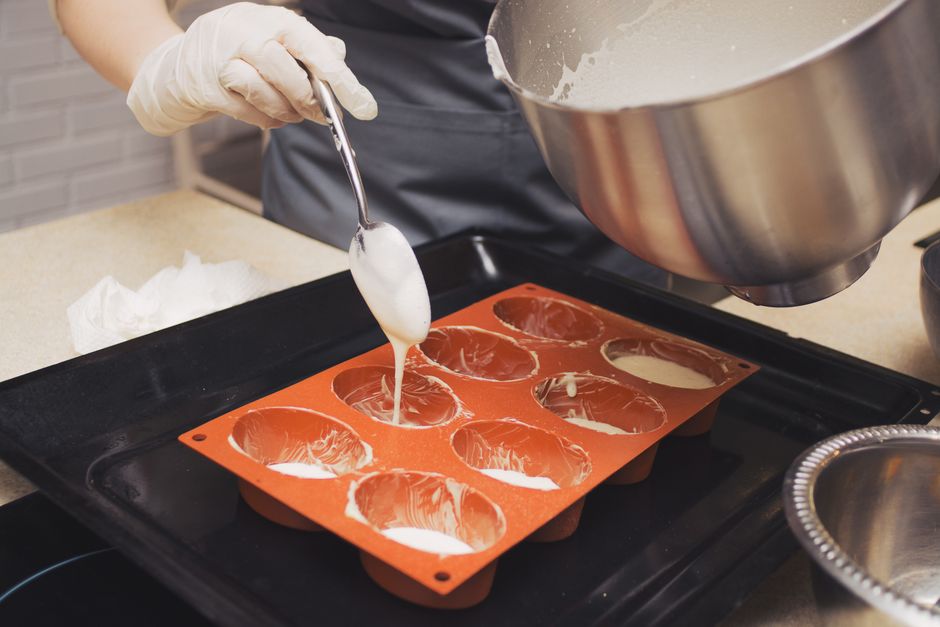
Silicone baking pans are generally safe for home baking when used correctly. Food-grade silicone is heat-stable, does not react with food, and does not leach harmful chemicals under normal baking temperatures. That said, safety depends on the quality of the product, how you use it, and what you bake in it. Here is what the evidence actually shows.
What Is Food-Grade Silicone Made Of?
Silicone is a synthetic polymer made from silicon, oxygen, carbon, and hydrogen. It is not plastic, and it is not rubber. The material is manufactured by cross-linking silicone molecules into a flexible, heat-resistant structure.
Food-grade silicone is produced without fillers or extenders. Those fillers are important. Some cheaper products mix silicone with plastic or rubber fillers to cut costs. Those fillers can break down at high temperatures. True food-grade silicone should be pure.
You can check the label. Look for the words “food-grade” or “FDA-approved.” The FDA does not require a certification stamp, but reputable manufacturers list their compliance. If the label does not say food-grade, do not assume it is.
Are Silicone Baking Pans Safe at High Temperatures?
Most food-grade silicone products are rated for temperatures between 400°F and 450°F. Some are rated higher. The material is stable within that range and does not break down or release chemicals when heated.
Standard home baking happens between 325°F and 375°F. That is well within the safe range for most silicone pans. Broiling is a different story. A broiler can reach 500°F or higher. Do not put silicone under a broiler unless the manufacturer explicitly states it is safe to do so.
The FDA has reviewed food-grade silicone and found it safe for repeated use in cooking and baking. Studies have not shown significant migration of silicone compounds into food at normal baking temperatures.
Do Silicone Pans Leach Chemicals Into Food?
People often worry that silicone behaves like plastic. It does not. Plastic contains additives like BPA and phthalates that can migrate into food. Food-grade silicone is chemically inert. It does not contain those additives.
Some research has looked at whether siloxanes — the building blocks of silicone — transfer into food. The amounts found in testing are extremely small, far below levels considered harmful. No regulatory agency has established a health concern for food-grade silicone at normal cooking temperatures.
That does not mean every silicone product on the market is pure. Low-quality pans may contain fillers that can degrade with heat. Stick to well-known brands and products that clearly state they are 100% food-grade silicone.





What Are the Downsides of Silicone Baking Pans?
Silicone pans are safe, but they are not perfect. They behave differently than metal pans. Understanding those differences helps you bake better and avoid problems.
Browning: Silicone is an insulator. It does not conduct heat the way metal does. Baked goods often come out paler and softer on the bottom. Cookies may not crisp. Bread crusts may not brown. This is a quality issue, not a safety issue.
Wobble: Silicone pans are flexible. A full cake pan can be hard to move without spilling. Place the pan on a sturdy baking sheet before filling it. This also makes it easier to get the pan in and out of the oven.
Staining: Silicone can absorb grease and food colorings. Dark stains may appear over time. This does not affect safety, but it can make the pan look worn. Washing with warm soapy water helps.
Durability: Silicone can tear or puncture. A knife or fork can cut through it. Handle the pans with care and store them flat or hanging, not folded with heavy items on top.
Do You Need to Grease Silicone Baking Pans?
Most silicone pans are marketed as non-stick. That claim is partially true. Silicone is naturally non-stick, but not as non-stick as a good non-stick metal pan.
Some recipes release easily without greasing. Others stick, especially cakes with sugar or sticky batters. A light coating of butter, oil, or baking spray improves release in most cases.
There is no safety concern with greasing silicone. It simply makes the pan more reliable. If a recipe says to grease a metal pan, grease your silicone pan too.
How Do You Clean and Care for Silicone Pans?
Cleaning silicone is simple. Most silicone pans are dishwasher safe. The material does not rust, corrode, or absorb water.
Hand washing with warm soapy water works just as well. Silicone is non-porous, so it does not hold onto bacteria or old food particles. This makes it more hygienic than some other bakeware materials.
One caution: silicone can pick up odors. Baking a garlic bread or a fish dish may leave a smell in the pan. Washing with baking soda and water removes most odors. The smell does not transfer to the next bake, but it can be unpleasant.
Are There Any Real Health Risks With Silicone Bakeware?
For healthy adults using food-grade silicone at normal baking temperatures, no meaningful health risk has been identified. Regulatory agencies in the United States and Europe have reviewed the material and found it safe for food contact.
The main risks come from misuse or low-quality products. Do not use silicone above its rated temperature. Do not use silicone that smells strongly of plastic or rubber — that can indicate the presence of fillers. Replace pans that are torn, melted, or visibly degraded.
One more point worth noting: silicone is not approved for all cooking methods. Deep frying in silicone is not recommended. Direct flame contact is not safe. Keep silicone away from open burners and grill flames.
How Does Silicone Compare to Other Baking Pan Materials?
Metal pans are the standard for a reason. They conduct heat well, brown evenly, and are very durable. They can react with acidic foods — tomato-based batters or lemon cakes can leave a metallic taste or discoloration. Silicone does not react with acidic ingredients.
Glass pans are heavy and can shatter, but they bake evenly and are completely inert. They take longer to heat up and can cause over-browning on the bottom if the oven temperature is too high.
Non-stick metal pans are coated with materials like PTFE, commonly known as Teflon. These pans are safe when used properly, but the coating can scratch and flake over time. Silicone does not flake or peel.
Here is a quick comparison:
| Property | Silicone | Metal | Glass |
|---|---|---|---|
| Heat conduction | Poor (insulator) | Excellent | Good |
| Browning | Light | Even | Even |
| Non-stick | Good | Varies | Poor |
| Reacts with acidic food | No | Yes | No |
| Durability | Tears easily | Very durable | Can shatter |
| Dishwasher safe | Yes | Often | Yes |
What Should You Look for When Buying Silicone Pans?
Not all silicone bakeware is created equal. The cheapest options are often the riskiest. Here is what to check before you buy:
- Label: The product should clearly say “100% food-grade silicone.” Avoid anything that lists “silicone blend” or does not specify.
- Flex test: Bend the pan. Pure silicone returns to its shape immediately. If it turns white when bent or feels stiff, it likely contains fillers.
- Smell test: New silicone has a mild odor. A strong chemical or rubber smell is a red flag.
- Brand reputation: Established kitchen brands have more to lose from a bad product. They also tend to use higher-quality materials.
Buying from a reputable source matters. No clinical evidence currently confirms that low-quality silicone causes harm, but there is also no research proving it is safe. When the evidence is absent, choose the option with fewer unknowns.
Are Silicone Baking Pans Safe for Everyday Use?
Yes, for most home bakers. If you use food-grade silicone within its temperature limits, it is a safe and convenient option. It is lightweight, easy to clean, and will not rust or corrode.
The bigger question is whether silicone is right for the kind of baking you do. If you want crisp cookies and golden crusts, metal pans will give you better results. If you bake delicate items like muffins, mini cakes, or no-bake treats, silicone is excellent.
Some bakers use silicone for everything. Others use it only for specific tasks. Both approaches are fine. The material is not dangerous. It is simply different.
Frequently Asked Questions
Can silicone baking pans go in the oven?
Yes, most food-grade silicone pans are oven-safe up to 400°F or 450°F. Check the manufacturer’s rating before using the pan at high temperatures.
Is silicone bakeware toxic?
No, food-grade silicone is not toxic. It is chemically inert and does not contain BPA or phthalates, and no significant chemical migration into food has been shown at normal baking temperatures.
Why do my baked goods not brown in silicone pans?
Silicone is a poor heat conductor, so it does not brown the bottom of baked goods as well as metal pans. This is a performance difference, not a safety issue.
Can you put silicone baking pans in the dishwasher?
Yes, most silicone bakeware is dishwasher safe. Hand washing with warm soapy water also works well and helps preserve the pan’s appearance.
