
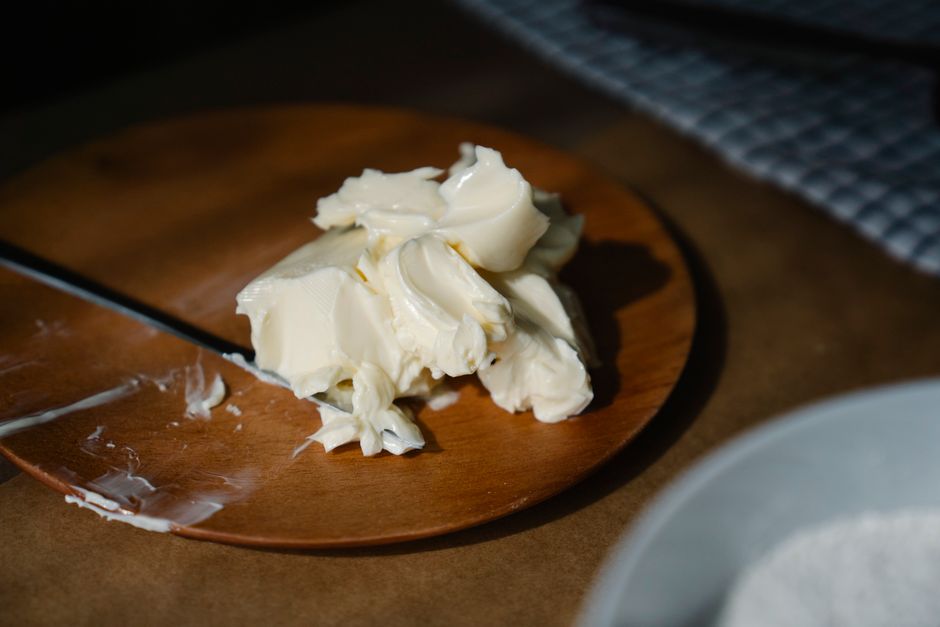
Yes, saturated fats are typically solid at room temperature. This is a basic fact of chemistry, not a health claim. Think of butter, coconut oil on a cool day, or the fat on a piece of steak. They hold their shape. Unsaturated fats, like olive oil or avocado oil, stay liquid. The difference comes down to their molecular structure. Saturated fat molecules pack tightly together, which makes them solid. This physical trait is what gave them their name, but it does not tell you everything about how they affect your body.
Why Are Saturated Fats Solid at Room Temperature?
The answer is in the chemistry. A fat molecule is a chain of carbon atoms. In saturated fats, every carbon atom is bonded to as many hydrogen atoms as possible. There are no double bonds between the carbons. This makes the chain straight and rigid. These straight chains stack on top of each other like a neat pile of logs. That tight packing creates a solid structure.
Unsaturated fats have at least one double bond between carbon atoms. This double bond creates a kink or a bend in the chain. The kinked chains cannot pack tightly together. They slide past each other instead. That is why they remain liquid at room temperature. The more double bonds a fat has, the more liquid it tends to be. This is basic organic chemistry, and it is well established in textbooks. The CDC and the American Heart Association both use this physical property to help explain the difference between fat types.
Does Being Solid at Room Temperature Make Saturated Fats Unhealthy?
Not directly. The physical state of a fat is not the same as its health effect. Many people assume that because saturated fat is solid, it must clog arteries like grease clogs a pipe. That is an oversimplification. The human body does not work like a kitchen drain.
Research on saturated fat and heart disease is more complex than the old headlines suggest. A well-known 2010 meta-analysis published in the American Journal of Clinical Nutrition found no strong link between saturated fat intake and heart disease when looking at the data on its own. However, later studies have shown that replacing saturated fat with polyunsaturated fats does lower heart disease risk. The key insight is that what you replace saturated fat with matters more than the saturated fat itself. Swapping butter for olive oil is likely beneficial. Swapping it for refined carbs or sugar is not. The American Heart Association still recommends limiting saturated fat to 5-6 percent of total daily calories, but the evidence behind that number is debated.
What Does the Chemistry of Saturated Fats Actually Mean for Your Body?
The solid nature of saturated fats affects how your body handles them, but not in a simple “clogs your arteries” way. Your liver processes saturated fats differently than unsaturated ones. Saturated fats tend to raise LDL cholesterol, the type often called “bad” cholesterol. But they also raise HDL cholesterol, the “good” type. The net effect on your cholesterol ratio depends on the rest of your diet and your genetics.
Some research suggests that certain saturated fats, like those in dairy, may have different effects than those in red meat. For example, a 2016 study in PLOS ONE found that dairy fat intake was associated with a lower risk of heart disease in some populations. This contradicts the idea that all solid fats are equally harmful. The structure of the fat molecule is the same, but the food matrix surrounding it matters. Cheese and butter have similar fat profiles but different effects on blood lipids. The body is not a test tube. Context matters.





Are There Different Types of Saturated Fats That Are Solid at Room Temp?
Yes. Not all saturated fats are identical. There are several types, classified by the length of their carbon chain. The three main categories are short-chain, medium-chain, and long-chain saturated fats. All are solid at room temperature, but they behave differently in the body.
- Short-chain saturated fats (like butyric acid in butter) are absorbed quickly and used for energy. They have minimal effect on cholesterol.
- Medium-chain saturated fats (like lauric acid in coconut oil) are also absorbed rapidly and may slightly raise HDL cholesterol. Coconut oil is about 90 percent saturated fat and is solid at room temperature.
- Long-chain saturated fats (like palmitic acid in palm oil and stearic acid in beef) are the most common in the diet. They have the strongest effect on raising LDL cholesterol. Stearic acid is unique because it converts to a monounsaturated fat in the body and has a neutral effect on cholesterol.
This means a tablespoon of butter and a tablespoon of coconut oil are not the same thing, even though both are solid at room temperature. Their fatty acid profiles differ. This is a nuance that most health articles skip. The physical property of being solid is shared, but the metabolic effects are not uniform.
Should You Avoid Foods With Saturated Fats That Are Solid at Room Temp?
This depends on the rest of your diet. If you eat a standard Western diet high in processed foods, cutting back on foods with solid saturated fats is likely a good idea. Replacing them with unsaturated fats from nuts, seeds, avocados, and fish is supported by strong evidence. The Harvard School of Public Health recommends this approach based on decades of observational data.
If your diet is already rich in whole foods, vegetables, and fiber, the occasional serving of butter or red meat is unlikely to cause harm. The evidence does not support the idea that saturated fat is a toxin. It is a normal part of human diets across many cultures. The problem arises when saturated fat displaces healthier options. The Dietary Guidelines for Americans 2020-2025 recommend keeping saturated fat intake below 10 percent of total calories. This is a moderate target. Going to zero is not supported by evidence and may lead to deficiencies in fat-soluble vitamins like A, D, E, and K, which are found alongside saturated fats in whole foods.
How Do Saturated Fats Compare to Unsaturated Fats in Practical Terms?
A comparison table helps make the differences clear. This shows why the physical property of being solid is just one piece of the puzzle.
| Property | Saturated Fats | Unsaturated Fats |
|---|---|---|
| State at room temp | Solid (butter, lard, coconut oil) | Liquid (olive oil, canola oil, fish oil) |
| Chemical structure | No double bonds, straight chains | One or more double bonds, kinked chains |
| Effect on LDL cholesterol | Raises LDL in most people | Lowers or neutral effect on LDL |
| Effect on HDL cholesterol | Raises HDL | Neutral or raises HDL slightly |
| Oxidation stability | Very stable, resists rancidity | Less stable, oxidizes easily when heated |
| Common food sources | Butter, cheese, red meat, palm oil, coconut | Olive oil, nuts, seeds, fatty fish, avocados |
| Best use in cooking | High-heat frying, baking | Low-heat cooking, dressings, cold use |
The table shows that saturated fats are not all bad. Their stability makes them ideal for high-heat cooking. Unsaturated fats are healthier for your heart but break down at high temperatures, forming potentially harmful compounds. This is a practical trade-off that many people overlook.
Common Misconceptions About Saturated Fats Being Solid
One widespread myth is that saturated fats are solid because they are “unhealthy” and unsaturated fats are liquid because they are “healthy.” This is not true. The physical state is purely a function of molecular structure. Lard is solid. Whale blubber is solid. Both are saturated fats. But coconut oil is also solid and is marketed as a health food. The same physical property cannot be both good and bad depending on the source.
Another misconception is that all solid fats are the same. As discussed, the carbon chain length changes how the body processes them. Stearic acid in chocolate is different from palmitic acid in palm oil. The food industry sometimes uses this to claim that products with stearic acid are “heart healthy,” but the evidence for that is weak. The FDA does not allow such health claims. The physical property of being solid is just a descriptor, not a health verdict.
Frequently Asked Questions
Are all saturated fats solid at room temperature?
Yes, all saturated fats are solid at room temperature due to their straight molecular chains that pack tightly together.
Is coconut oil a saturated fat that is solid at room temperature?
Yes, coconut oil is about 90 percent saturated fat and is solid at room temperature, though it melts at around 76 degrees Fahrenheit.
Does solid fat at room temperature mean it clogs arteries?
No, the physical state of fat does not directly determine its effect on arteries, though saturated fats can raise LDL cholesterol in some people.
What is the difference between saturated and unsaturated fats at room temperature?
Saturated fats are solid at room temperature because their molecules pack tightly, while unsaturated fats are liquid due to kinked molecular chains that prevent packing.
