
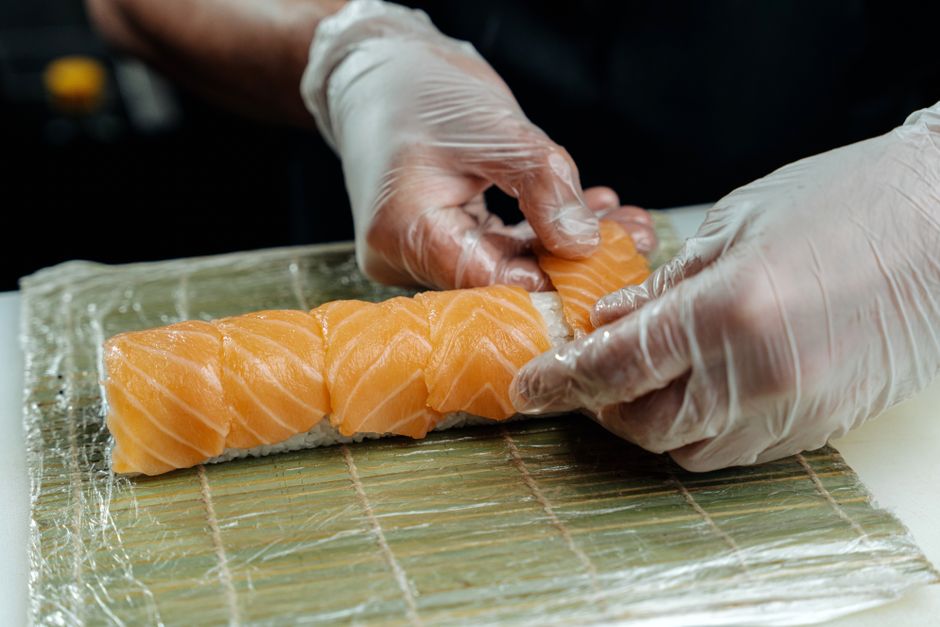
Sushi is best eaten the same day it is made. Raw sushi lasts only 24 hours in the refrigerator. Cooked sushi lasts 3 to 4 days. Sushi left at room temperature must be eaten within 2 hours. These timelines come from food safety guidelines on seafood and cooked rice.
How Long Is Sushi Good For in the Refrigerator?
Refrigeration slows bacterial growth but does not stop it completely. Raw fish sushi — including nigiri and sashimi — should be eaten within 24 hours. After one day the texture changes and the risk of bacterial growth rises. Cooked sushi rolls, such as those with tempura or cooked crab, last 3 to 4 days in the refrigerator. The cooked ingredients have a longer shelf life than raw fish.
Rice is a separate concern. Sushi rice is seasoned with vinegar, which lowers its pH and slows bacterial growth. But the vinegar does not make the rice safe indefinitely. After 3 to 4 days the rice dries out and can grow mold or bacteria even in the refrigerator. Store sushi in an airtight container to slow moisture loss. Place it in the coldest part of the refrigerator, not the door.
How Long Can Sushi Sit Out at Room Temperature?
Sushi should not sit at room temperature for more than 2 hours. The United States Department of Agriculture considers this the danger zone limit. Bacteria grow most rapidly between 40°F and 140°F. If the room is hotter than 90°F — outdoors on a warm day or inside a hot car — the limit drops to 1 hour.
This rule applies to both raw and cooked sushi. Rice is especially risky because Bacillus cereus, a bacteria common in rice, can survive cooking and grow at room temperature. Reheating does not destroy the toxins this bacteria produces. If sushi has been sitting out longer than 2 hours, throw it away. Do not try to refrigerate it to make it safe again. The bacteria may have already multiplied to unsafe levels.
How Long Does Sushi Last in the Freezer?
Freezing sushi stops bacterial growth but does not kill all bacteria. It also changes the texture of raw fish and rice. Raw fish sushi can be frozen for up to 3 months for quality. After that the fish may develop freezer burn or an off flavor. Cooked sushi lasts about 2 to 3 months in the freezer before quality declines.
The rice is the limiting factor. Frozen rice loses moisture and becomes dry and crumbly when thawed. The texture will not be the same as fresh sushi. For best results wrap sushi tightly in plastic wrap and then in aluminum foil or a freezer bag. Remove as much air as possible. Thaw frozen sushi in the refrigerator, not on the counter. Eat it within 24 hours after thawing.
Freezing raw fish before it is used in sushi is a common practice to kill parasites. The FDA recommends freezing fish at -4°F for 7 days or at -31°F for 15 hours before serving raw. This is a separate step from freezing prepared sushi at home. Most sushi-grade fish sold in the United States has already been frozen for parasite control. Check with your fish supplier if you are unsure.





How Can You Tell if Sushi Has Gone Bad?
Trust your senses. The first sign of spoiled sushi is a change in smell. Fresh raw fish smells like the ocean or has almost no odor. Spoiled fish smells sour, ammonia-like, or fishy in an unpleasant way. Cooked ingredients may develop a sour or rancid smell.
Look for visual changes. Fresh raw fish is translucent and firm. Spoiled fish looks dull, milky, or discolored. The flesh may separate easily or look mushy. Rice that has gone bad may have a slimy film, visible mold, or a sour smell. If the nori (seaweed wrapper) is soggy or slimy instead of crisp, the sushi is past its prime.
Texture changes are another clue. Fresh sushi should feel firm and moist but not wet. If the fish feels slimy or sticky to the touch, bacteria are growing. If the rice is hard, dry, or crusty, it has been stored too long. When in doubt, throw it out. Food poisoning from spoiled sushi can cause vomiting, diarrhea, and abdominal pain within hours.
Why Does Raw Sushi Spoil Faster Than Cooked Sushi?
Raw fish contains enzymes and bacteria that break down the flesh naturally. This process, called autolysis, starts as soon as the fish dies. Refrigeration slows it but does not stop it. Within 24 hours the texture softens and the flavor changes. Cooked fish has been heated to a temperature that kills most bacteria and deactivates these enzymes. That is why cooked sushi lasts 3 to 4 days instead of one.
Cooked sushi also does not carry the same parasite risk as raw fish. Parasites such as Anisakis can survive in raw or undercooked fish. Cooking kills them. Freezing also kills them if done at the correct temperature and duration. Most sushi restaurants source fish that has been previously frozen for parasite control.
Does the Type of Fish Affect How Long Sushi Lasts?
Yes, different fish spoil at different rates. Oily fish such as salmon, tuna, and mackerel spoil faster than lean fish such as snapper or flounder. The fat in oily fish oxidizes and becomes rancid more quickly. This is why salmon sushi often smells fishy sooner than snapper sushi.
Freshwater fish carry a higher risk of parasites than saltwater fish. The FDA recommends freezing freshwater fish intended for raw consumption. Saltwater fish from cold ocean waters also require freezing for parasite control. Farmed salmon that is fed only processed feed has a lower parasite risk and may not require freezing, but many restaurants freeze it anyway as a precaution.
Sushi made with shellfish — such as shrimp, crab, or eel — spoils differently. Cooked shellfish lasts 3 to 4 days refrigerated. Raw shellfish such as scallops or oysters should be eaten within 24 hours. Shellfish are filter feeders and can concentrate bacteria and viruses from the water. They require careful handling and storage.
Can You Eat Day Old Sushi From the Grocery Store?
Grocery store sushi is typically made fresh each day. If it has been continuously refrigerated and is still within the 24-hour window for raw sushi or 3 to 4 days for cooked sushi, it is likely safe. But consider the storage conditions. Grocery store sushi may sit under warm lights or in a refrigerated case that is opened frequently. These temperature fluctuations can shorten its safe shelf life.
Many grocery stores label sushi with a “sell by” or “best by” date. These dates indicate quality, not safety. Sushi may still be safe to eat after the “best by” date if it has been properly stored and shows no signs of spoilage. But the safest approach is to eat grocery store sushi the same day you buy it.
Does Sushi Vinegar Help Preserve Sushi?
Sushi rice is seasoned with a mixture of rice vinegar, sugar, and salt. The vinegar lowers the pH of the rice, making it more acidic. Bacteria grow less readily in an acidic environment. This is why sushi rice does not spoil as quickly as plain cooked rice.
But the vinegar does not make the rice safe indefinitely. It slows bacterial growth but does not stop it. After 3 to 4 days the rice will still spoil, especially if it has been contaminated with bacteria from hands or utensils during rolling. The vinegar is a preservation aid, not a preservation guarantee.
Frequently Asked Questions
Frequently Asked Questions
Can I eat sushi the next day for lunch?
Yes, if it has been refrigerated immediately and is raw sushi eaten within 24 hours or cooked sushi eaten within 3 to 4 days. Check for any off smells or slimy texture before eating.
How long is grocery store sushi good for?
Grocery store sushi should be eaten the same day you buy it for best quality and safety. If it is cooked sushi and has been continuously refrigerated, it may be safe for up to 3 days from purchase.
Can you freeze sushi to make it last longer?
Yes, but freezing changes the texture of the fish and rice. Frozen sushi lasts 2 to 3 months in the freezer. Thaw in the refrigerator and eat within 24 hours for best quality.
No, you cannot safely extend the window by reheating sushi. Reheating does not destroy toxins produced by bacteria such as Bacillus cereus that may have grown in the rice or fish.
