
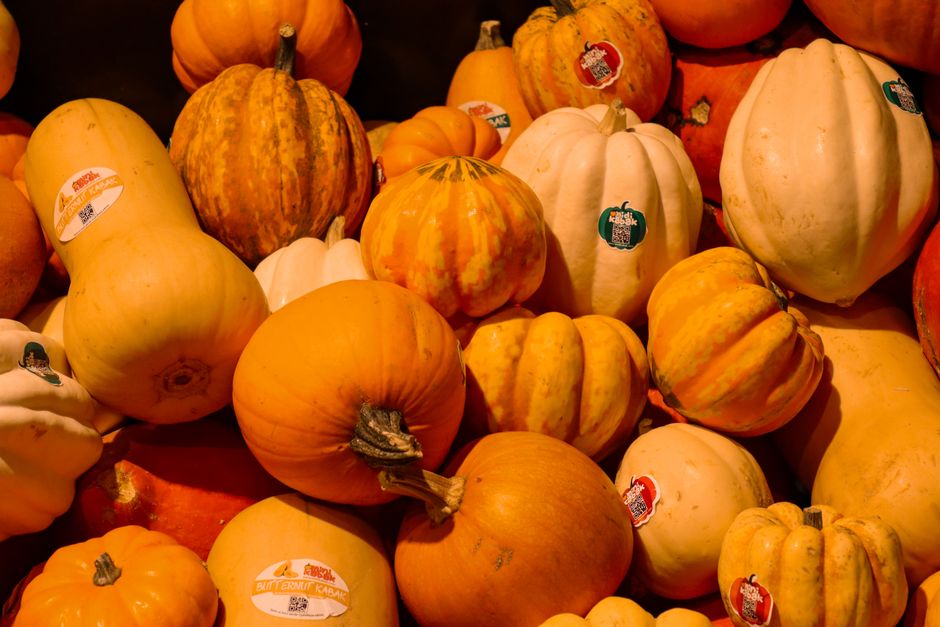
Are pumpkins a veggie or a fruit? A pumpkin is a fruit. Botanically speaking, a fruit is the part of a flowering plant that develops from the flower’s ovary and contains the seeds. A pumpkin fits that definition exactly. In the kitchen, though, most people treat it as a vegetable because it is savory, not sweet, and shows up in soups, curries, and roasted side dishes rather than fruit salads.
That split between science and everyday cooking is the whole answer. Both labels are correct depending on who is asking and why. A botanist will say fruit. A chef or a grocery store produce manager will usually say vegetable. Neither is wrong within its own system.
Why Is A Pumpkin Botanically A Fruit?
Botany classifies a pumpkin as a fruit because of how it forms. The pumpkin grows from the fertilized ovary at the base of the pumpkin flower. As it develops, that ovary swells into the thick, fleshy wall we carve and cook, and the seeds form inside.
That structure — a mature ovary plus its seeds — is the textbook definition of a fruit. Any plant part that develops this way is a fruit, no matter how it tastes or how it is used.
This is not a technicality invented to confuse people. The plant kingdom is full of foods that break our kitchen categories. Here is how some familiar ones sort out:
- Botanical fruits: pumpkin, squash, cucumber, tomato, bell pepper, zucchini, eggplant, avocado, olive
- Botanical vegetables: carrot, potato, lettuce, spinach, celery, broccoli, onion, beet
Notice the pattern. Most of the “vegetables” on the fruit list are savory. That is the only reason we call them vegetables. Taste and culinary use have nothing to do with botanical classification.
What Makes A Pumpkin A Cucurbit?
A pumpkin belongs to the gourd family, known scientifically as Cucurbitaceae. This family includes squash, cucumbers, melons, and gourds. All of them are botanically fruits, and all of them share a similar growing pattern.
Cucurbits produce large, sprawling vines with broad leaves and distinct male and female flowers on the same plant. Only the female flowers can develop into fruit, because only they have the ovary that needs fertilizing. Bees and other pollinators move pollen from the male flowers to the female flowers, and the pumpkin begins to grow.
This matters for gardeners. If female flowers appear but no fruit sets, poor pollination is often the reason. That is a common issue with squash and pumpkins, and it has nothing to do with the plant being unhealthy.
One clarification worth making: “pumpkin” is not a strict botanical category. It is a common name applied to certain round, orange-fleshed cultivars, mostly within the species Cucurbita pepo and related species. The same species also includes many varieties we call squash. So the line between pumpkin and squash is more about language and tradition than about biology.
Why Do We Call Pumpkins Vegetables In The Kitchen?
Culinary classification runs on flavor, texture, and how a food is used — not on plant anatomy. Pumpkins are earthy, mildly sweet, and low in the sharp acidity that most fruits have. They work in savory dishes. They roast, puree, and hold up in soups and stews.
That savory profile is why cooks and grocers file pumpkins under vegetables. The same logic puts tomatoes and cucumbers in the vegetable bin even though both are fruits.
There is also a legal angle in the United States. In a late 19th-century Supreme Court case, the court ruled that the tomato was a vegetable for the purpose of import tariffs, based on how it is used and eaten rather than its botanical identity. The decision did not change the science. It changed how the tomato was taxed. Pumpkins were never part of that case, but the same everyday reasoning applies to them.
So when a recipe says “add the vegetables,” the pumpkin belongs in the pot. When a biology teacher asks, the answer is fruit.


Is A Pumpkin A Fruit Or A Vegetable Nutritionally?
Nutritionally, pumpkin behaves more like a vegetable than a fruit. It is low in sugar compared with most fruits, and it is a strong source of several nutrients that vegetables are known for.
According to USDA nutritional data, cooked pumpkin is a notable source of vitamin A, provided mainly through beta-carotene, along with vitamin C and potassium. It is also low in calories and provides dietary fiber.
Here is a rough comparison of how pumpkin lines up with a few familiar foods per typical serving:
| Food | Botanical Type | Typical Kitchen Use |
|---|---|---|
| Pumpkin | Fruit | Vegetable (savory dishes) |
| Tomato | Fruit | Vegetable (salads, sauces) |
| Cucumber | Fruit | Vegetable (salads, pickles) |
| Apple | Fruit | Fruit (eaten sweet, raw) |
| Carrot | Vegetable | Vegetable (savory and sweet) |
The nutrition point is worth stating carefully. Pumpkin is nutritious, but the beta-carotene in a whole pumpkin is not the same as the concentrated extract sold in supplement capsules. Whole-food pumpkin and pumpkin supplements are not interchangeable, and the evidence for high-dose beta-carotene supplements has been mixed, with some research raising concerns about certain groups. Eating pumpkin as food is a different situation from taking it as a pill.
Are Pumpkin Seeds And Pumpkin Flowers Fruits Too?
Pumpkin seeds are botanically seeds, not fruits. They form inside the fruit and are the reason the pumpkin exists — to protect and disperse them. The seeds themselves sit in a different category.
Pumpkin flowers are a different story. The flower is the reproductive structure that comes before the fruit. Once a female flower is pollinated, its base begins to swell into what becomes the pumpkin. So the flower is not a fruit, but it is the stage that makes one possible.
Pumpkin seeds are edible and are a source of magnesium, zinc, and healthy fats. They are often roasted and eaten as a snack. The seeds inside a carving pumpkin are perfectly edible, though the varieties grown for carving tend to have stringier flesh and less flavor than the smaller “sugar pumpkins” grown for cooking.
Does The Answer Change For Squash And Zucchini?
No. Squash and zucchini follow the same rule as pumpkins. They are all botanically fruits because they all develop from the flower’s ovary and contain seeds.
Zucchini is simply a variety of Cucurbita pepo, the same species that includes many pumpkins. Butternut, acorn, and spaghetti squash belong to related species within the same family. Every one of them is a botanical fruit.
The practical takeaway is simple. If you are ever unsure whether something is a botanical fruit, ask one question: did it grow from a flower and does it hold the seeds? If yes, it is a fruit. If it is a root, stem, or leaf — like a carrot, potato, or lettuce — it is a botanical vegetable.
Does It Matter Which Word You Use?
Not much, in everyday life. The word you choose depends on the context. In a biology class or a botany textbook, pumpkin is a fruit. In a grocery store, a recipe, or a Thanksgiving menu, it is a vegetable.
The confusion is not a sign that one side is wrong. It is a sign that human language sorts food by how we use it, while science sorts it by how it grows. Those are two different jobs, and they can produce two different answers for the same food.
So the next time someone insists a pumpkin is a vegetable, you can agree with the cooking and correct the botany. Both are true, and now you know why.
Frequently Asked Questions
Are pumpkins a veggie or fruit?
A pumpkin is a fruit botanically because it develops from the flower’s ovary and contains seeds. It is called a vegetable in cooking because it is savory and used in savory dishes.
Why is a pumpkin a fruit and not a vegetable?
Botany defines a fruit as the mature ovary of a flowering plant that holds the seeds, and a pumpkin fits that definition. A botanical vegetable is a different part of the plant, such as a root, stem, or leaf.
Is pumpkin a fruit like a tomato?
Yes, pumpkin and tomato are both botanical fruits that are treated as vegetables in the kitchen. Both grow from a flower and contain their seeds.
Are pumpkin seeds a fruit?
No, pumpkin seeds are seeds, not fruits. They develop inside the pumpkin fruit, which is the part that grows from the flower’s ovary.
