
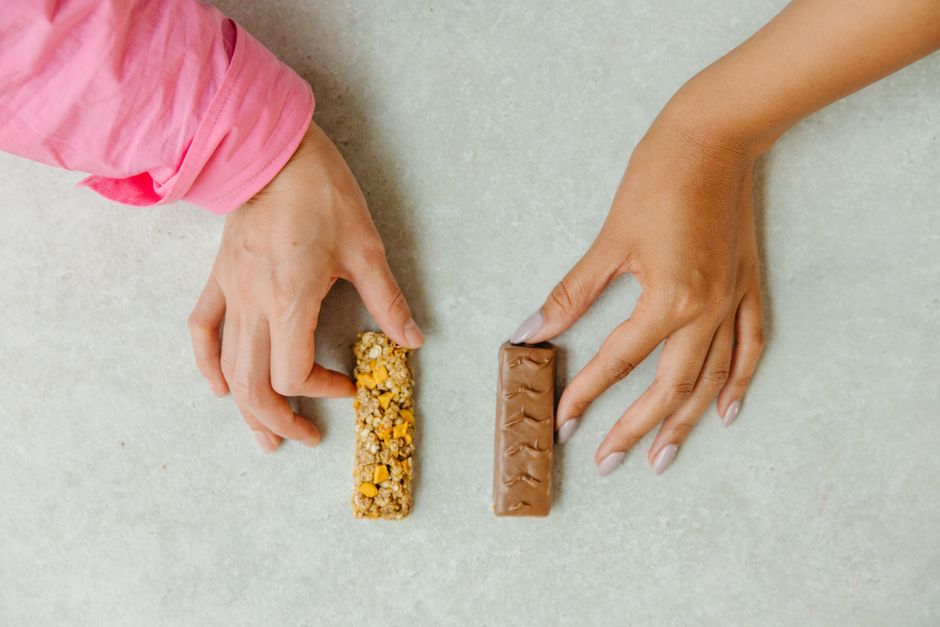
Kind bars are often seen as a healthier snack option, but whether they are truly healthy depends on which bar you pick and what you compare them to. The short answer: some Kind bars are reasonably balanced snacks with real ingredients, while others contain as much sugar as a candy bar. The FDA does not have a strict legal definition for the word “healthy” on food labels, though the agency has been updating its criteria. You still need to read the nutrition label yourself, because the brand name alone does not tell you everything.
What Is a Kind Bar Actually Made Of?
Kind bars are built around whole nuts, which is a genuine nutritional strength. Most varieties list almonds, peanuts, or cashews as the first ingredient. Nuts provide protein, fiber, and unsaturated fats, all of which are linked to better heart health in large population studies.
The other main ingredients vary widely by flavor. Many bars contain dried fruit, which adds fiber but also concentrates natural sugars. Some contain chocolate, rice crisps, or honey. A few varieties are essentially nut-and-fruit combinations with very little added sugar. Others are closer to confectionery.
That range matters. You cannot judge all Kind bars as one product. The difference between the lowest-sugar and highest-sugar varieties is significant.
How Much Sugar Is in a Kind Bar?
Sugar content ranges from about 4 grams to more than 15 grams per bar, depending on the flavor. The lowest-sugar options are usually the fruit-and-nut bars with no chocolate coating. The higher-sugar options include the ones with chocolate, caramel, or yogurt coatings.
The American Heart Association recommends no more than 25 grams of added sugar per day for women and 36 grams for men. A single Kind bar with 15 grams of added sugar uses up more than half of that daily allowance. That is not automatically disqualifying, but it changes how the bar fits into your day.
One important detail: the label lists total sugar, which includes sugar naturally present in fruit. The FDA now requires a separate line for added sugar. Look at that number, not just total sugar, because dried fruit naturally contains sugar that is not the same as added sweetener.
Some research suggests that nuts and dried fruit together produce a lower blood sugar response than the same amount of sugar eaten alone. The protein and fat in the nuts slow digestion. That does not make the sugar free, but it does mean the bar behaves differently in your body than a sugary drink would.
What About the Fat Content?
Kind bars are relatively high in fat because they are made with nuts. A typical bar contains 10 to 18 grams of total fat. That sounds like a lot, but most of it is monounsaturated and polyunsaturated fat, the types associated with reduced cardiovascular risk.
Population studies consistently link nut consumption to lower rates of heart disease. The FDA even allows a qualified health claim for nuts and reduced heart disease risk, though the claim comes with specific conditions about portion sizes and fat content.
Saturated fat is the number to watch. Most Kind bars contain 2 to 4 grams of saturated fat, mostly from chocolate or added oils. That is modest compared to many snack bars. The Dietary Guidelines for Americans recommend keeping saturated fat below 10 percent of daily calories, which is roughly 20 grams on a 2,000-calorie diet.
The fat in Kind bars is not a reason to avoid them. It is actually one of their better features. Fat slows digestion and increases satiety, which is why a Kind bar tends to be more filling than a rice cake or a granola bar made mostly from refined grains.




Are Kind Bars Healthy Fat Sugar And Fda Rules?
The FDA’s regulation of the word “healthy” has been a moving target. For years, the agency used a 1990s-era definition that focused almost entirely on total fat and certain vitamins. Under that old rule, a sugary cereal could qualify as healthy while a salmon fillet and an avocado did not, because they contain fat.
The FDA proposed an updated definition in 2022 that focuses on food groups and limits on saturated fat, sodium, and added sugar. Under the proposed rule, a food can only be labeled healthy if it contains a meaningful amount of a food group such as fruit, vegetables, or nuts, and stays under limits for added sugar, sodium, and saturated fat.
Some Kind bars would qualify under the updated definition. Others with high added sugar would not. The company has publicly supported the FDA’s update, which makes sense because many of their products already meet the stricter criteria.
The practical takeaway is that the word “healthy” on a package is not a reliable shortcut. It is a regulatory term that has changed over time and continues to evolve. The nutrition facts panel is the more trustworthy source of information.
Protein and Fiber: The Two Numbers That Matter Most
Most Kind bars provide 6 to 10 grams of protein and 3 to 7 grams of fiber. Those are respectable numbers for a snack bar. Protein and fiber both contribute to fullness, which is why a Kind bar can hold you over better than a processed snack made from refined flour and sugar.
The fiber comes mostly from nuts and dried fruit. Nuts are genuinely good sources of fiber, with almonds providing about 3.5 grams per ounce. That fiber supports digestive health and slows the absorption of sugar into the bloodstream.
Kind bars are not a protein bar. If you are looking for a post-workout snack with 20 grams of protein, this is not the product. But for a between-meal snack, the protein and fiber combination is reasonable.
How Do Kind Bars Compare to Other Snacks?
Compared to a candy bar, most Kind bars are nutritionally superior. They have more fiber, more protein, and less added sugar. Compared to a handful of almonds and an apple, most Kind bars have more sugar and more calories.
That comparison matters because it frames the real question. Are Kind bars a good choice relative to what you would otherwise eat? For most people replacing a candy bar or a pastry with a Kind bar is a step in the right direction. Replacing a whole-food snack with a Kind bar is a step in the wrong direction.
Here is a quick comparison of typical values:
| Snack | Calories | Added Sugar | Protein | Fiber |
|---|---|---|---|---|
| Kind bar (fruit and nut) | 180-200 | 4-8 g | 6-7 g | 3-5 g |
| Kind bar (chocolate coated) | 200-220 | 10-15 g | 5-6 g | 3-4 g |
| Typical candy bar | 250-280 | 20-30 g | 2-3 g | 1 g |
| Apple with peanut butter | 250 | 0 g | 7 g | 6 g |
These are approximate ranges, not exact figures for every product. The point is the pattern. Kind bars sit between whole foods and candy, closer to the whole-food end for some varieties and closer to candy for others.
Which Kind Bars Should You Choose?
If you want the healthiest option, look for bars where nuts are the first ingredient and where the added sugar line shows 5 grams or less. The simplest fruit-and-nut varieties usually fit this profile. The dark chocolate and nut varieties are also reasonable if the added sugar stays under 8 grams.
Check the ingredient list for the word “sugar” or any syrup. Honey, maple syrup, brown rice syrup, and agave are all forms of added sugar. They are not inherently worse than white sugar, but they count the same in your daily total.
Avoid the varieties with yogurt coating or caramel. These add significant sugar without adding much nutritional value. The yogurt coating is not real yogurt in any meaningful sense, and the caramel is mostly sugar and fat.
Portion size is also worth noting. A Kind bar is about 200 calories. That is a reasonable snack for most adults, but it is not a small snack. If you are eating a Kind bar on top of a full diet without adjusting anything else, the extra calories can add up.
Are There Any Downsides to Eating Kind Bars Regularly?
The main downside is the sugar content in certain varieties. If you eat a high-sugar Kind bar every day, you are consuming a meaningful amount of added sugar that you might not be accounting for. This is especially relevant for people with diabetes or prediabetes, who need to watch carbohydrate intake carefully.
Some Kind bars contain sugar alcohols or chicory root fiber, which can cause digestive discomfort in sensitive people. These ingredients are generally recognized as safe, but they are not problem-free for everyone. Bloating and gas are possible.
The other consideration is cost. Kind bars are significantly more expensive per calorie than whole foods like nuts and fruit. If you are buying them for convenience, that is a fair trade. If you are buying them because you think they are a health food, you may be overpaying for something you could make yourself for less money.
What About the Company’s Marketing Claims?
Kind has built its brand around the idea of ingredients you can see and pronounce. That is a legitimate point. The bars do contain recognizable whole foods, and the company publishes clear ingredient lists. This is genuinely better than many ultra-processed snack bars that rely on isolated proteins, artificial sweeteners, and emulsifiers.
But the marketing also implies that all Kind products are equally healthy, which is not true. The company’s own website groups products by their sugar content, acknowledging that some varieties are treats rather than everyday snacks. The marketing language should not replace your own reading of the label.
No clinical trial has compared Kind bars to other snacks and found a specific health benefit. The evidence for nuts and dried fruit is strong, but that evidence comes from studies of whole foods, not from studies of branded snack bars. Kind bars are a delivery system for nuts and fruit, and they inherit some of the benefits of those ingredients.
Frequently Asked Questions
Are Kind bars good for weight loss?
Kind bars can fit into a weight loss diet because they are portion-controlled and relatively filling. But at around 200 calories each, they are not a low-calorie food, and the high-sugar varieties provide little satiety for their calorie cost.
Are Kind bars considered ultra-processed foods?
Most Kind bars fall into the minimally processed or moderately processed category, not ultra-processed. They contain recognizable whole foods like nuts and dried fruit, though some varieties include added oils and sweeteners that increase processing.
Can people with diabetes eat Kind bars?
People with diabetes can eat Kind bars, but they should choose varieties with 5 grams or less of added sugar and account for the total carbohydrates. The nut content helps slow glucose absorption, but the dried fruit and sweeteners still raise blood sugar.
Is the FDA’s “healthy” label on Kind bars accurate?
The FDA’s current “healthy” definition is outdated and focuses on total fat, which means some Kind bars qualify even if they have high added sugar. The proposed updated rule would tighten the criteria, but it is not yet final.
Kind bars are a reasonable snack choice when you pick the right variety and understand their place in your diet. They are not a superfood, and they are not a candy bar in disguise. They sit somewhere in between, closer to the healthy end for the simple nut-and-fruit bars and closer to the treat end for the coated varieties. Read the label, watch the added sugar, and treat the bar as what it is: a convenient snack made from real ingredients.
