
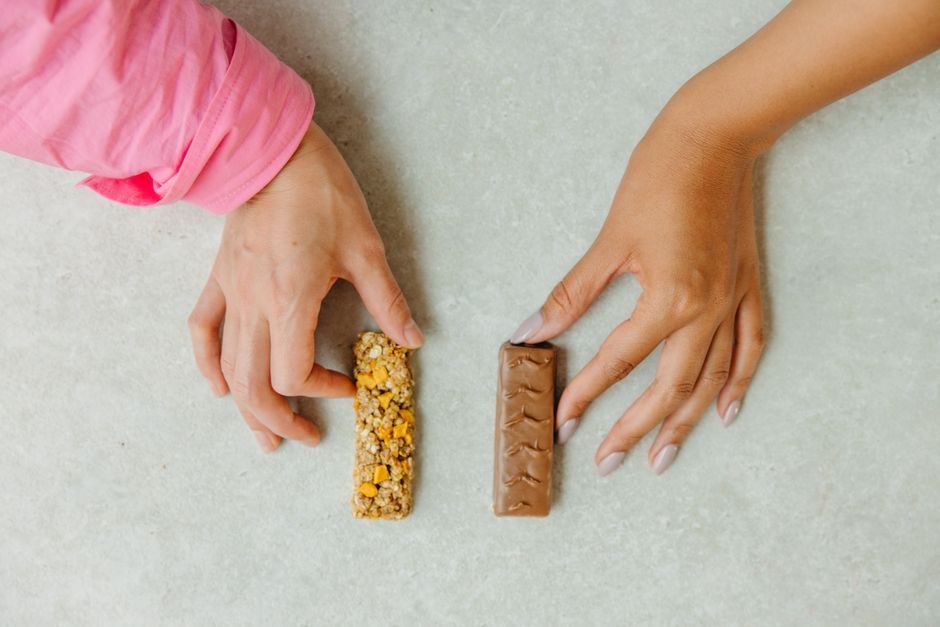
Clif Bars sit in a strange spot on the grocery shelf. They look like candy bars, get sold next to energy drinks, and carry a reputation as a workout food. Whether they are healthy depends entirely on why you are eating one and what you would otherwise be eating instead.
For a cyclist two hours into a ride, a Clif Bar is a practical source of quick carbohydrate and some protein. For someone sitting at a desk looking for a low-sugar snack, it is closer to a cookie than a health food. The bar itself is not the problem. The mismatch between what it is designed for and how most people use it is.
What Is Actually in a Clif Bar?
Clif Bars are built around oats, brown rice syrup, soy protein isolate, and dried fruit or nuts depending on the flavor. The original recipe is roughly 250 calories per bar, with about 40 to 45 grams of carbohydrate, 9 to 10 grams of protein, and 4 to 6 grams of fat. Fiber typically lands around 4 to 5 grams.
That macronutrient profile is deliberate. It is closer to a sports nutrition product than a general snack. The carbohydrate load is high because the bar was designed to fuel endurance activity, where carbohydrate is the primary fuel source for working muscles.
The sugar content is where the picture gets murkier. Depending on the flavor, a Clif Bar contains somewhere in the range of 16 to 21 grams of total sugar. Brown rice syrup and cane syrup are the main contributors. Nutritionally, these syrups are not meaningfully different from table sugar once they are digested. Your body breaks them down into glucose and fructose either way.
That does not make them harmful. It does mean the “natural sweetener” framing on the packaging is a marketing distinction, not a physiological one.
Are Clif Bars Healthy or Just Candy Bars in Disguise?
Neither label is accurate. A Clif Bar has more protein, more fiber, and more micronutrients than a typical candy bar, and it is made from recognizable food ingredients rather than mostly refined sugar and palm oil. But the sugar content is genuinely comparable to some candy bars, and the calorie count is similar.
The more useful question is what the bar replaces. If it replaces a donut and a soda at 3 p.m., it is a modest improvement. If it replaces a meal of vegetables, whole grains, and lean protein, it is a downgrade. If it is added on top of everything else you already eat, it is simply extra calories.
One thing worth understanding: the oats and soy protein do slow digestion somewhat compared to pure sugar. That means the blood sugar response is not identical to eating a candy bar. But “slower than candy” is a low bar, and it does not transform the product into a low-glycemic food.
Why Are Clif Bars So High in Sugar?
Because that is what they are for. During sustained exercise, your muscles rely heavily on glycogen, the stored form of carbohydrate in muscle and liver. Once glycogen runs low, performance drops. Athletes eat carbohydrate during long efforts specifically to delay that drop.
Fast-digesting carbohydrate is a feature in that context, not a flaw. A bar that digested slowly would sit in the stomach and cause discomfort during running or cycling. This is why sports nutrition products are engineered to be absorbed quickly.
The problem is that the same fast-digesting carbohydrate that helps a marathoner is unnecessary for someone who has been sitting at a desk. Your muscles are not depleted. The carbohydrate still gets absorbed, and any excess energy gets stored.





How Do Clif Bars Compare to Other Snack Bars?
Clif makes several distinct product lines, and they are not nutritionally equivalent. The table below reflects typical values for the original Clif Bar and a few common alternatives. Exact numbers vary by flavor.
| Product | Calories | Protein | Sugar | Fiber |
|---|---|---|---|---|
| Original Clif Bar | ~250 | 9-10 g | 16-21 g | 4-5 g |
| Clif Kid Zbar | ~130 | 2-3 g | ~11 g | ~2 g |
| Typical granola bar | ~100-190 | 2-4 g | 6-12 g | 1-2 g |
| Typical candy bar | ~230-280 | 3-5 g | 20-30 g | 1-2 g |
The pattern is clear. A Clif Bar lands between a granola bar and a candy bar on sugar, but well above both on protein and fiber. That combination is what makes it a decent fuel source and a mediocre everyday snack.
Worth noting: “granola bar” covers a wide range. Some are essentially cookies. Others are closer to a bowl of oats. The category label tells you very little.
Who Should Eat Clif Bars and Who Should Not?
Clif Bars make practical sense for people doing sustained physical activity. Hikers, cyclists, runners, and anyone working outside for hours can use one as portable fuel. They hold up in a backpack, do not melt easily, and provide usable energy without needing preparation.
They make less sense as a daily desk snack or a meal replacement. The calorie density is high relative to how filling they are. Most people find a 250-calorie bar does not keep them satisfied the way a 250-calorie meal of whole food would.
Some groups should be cautious or avoid them:
- People managing blood sugar conditions should check with a clinician, since the carbohydrate load is substantial and fast-acting.
- Anyone with soy or nut allergies needs to read labels carefully, as soy protein isolate is a core ingredient and many flavors contain tree nuts or peanuts.
- People following low-carbohydrate or ketogenic diets will find the carbohydrate content incompatible with their approach.
- Young children do not need the calorie or sugar load of an adult-size bar; the smaller kid-focused versions exist for that reason.
There is no clinical guideline recommending Clif Bars for any population. They are a food product, not a therapeutic one. Any decision to include them is a personal nutrition choice, not a medical one.
Are Clif Bars a Good Meal Replacement?
No, not in any meaningful sense. A meal replacement needs to cover protein, fat, fiber, vitamins, and minerals in proportions that sustain you for several hours. A Clif Bar is high in carbohydrate, moderate in protein, and low in the micronutrient variety you get from vegetables, fruits, and whole grains.
Eating one occasionally when you are stuck without other options is fine. Relying on them regularly in place of meals means you are likely under-consuming protein, healthy fats, and a range of vitamins and minerals over time.
If you need something shelf-stable and more complete, the honest answer is that no single bar does that job well. Bars are convenient, not complete.
What Should You Look for in a Snack Bar?
The right bar depends on the job. If you need fuel during exercise, carbohydrate is the point. If you need a between-meals snack that will not spike and crash your energy, look for more protein and fiber relative to sugar.
A rough rule that holds up reasonably well: if sugar is one of the first two or three ingredients on the label, the product is closer to a treat than a staple. Ingredient lists are ordered by weight, so the earliest ingredients are the most abundant.
Also check the protein source. Whey, soy, and pea protein are all well-absorbed. Collagen is not a complete protein and is a poorer choice for muscle support, though it appears in many “protein” bars because it is cheap.
None of this makes Clif Bars a bad product. They are well-made for their intended use. The issue is that their intended use is narrower than their marketing suggests.
Frequently Asked Questions
Are Clif Bars healthy?
They are healthy for their intended purpose, which is fueling sustained physical activity. As an everyday snack for someone who is not active, the sugar and calorie content make them a poor fit.
How much sugar is in a Clif Bar?
Most original Clif Bar flavors contain roughly 16 to 21 grams of total sugar. That is comparable to many candy bars, though Clif Bars also provide more protein and fiber.
Can I eat a Clif Bar every day?
Eating one daily is not inherently harmful for an active person. For someone sedentary, a daily 250-calorie bar with 16 to 21 grams of sugar adds up quickly without providing much nutritional benefit.
Are Clif Bars good for weight loss?
No clinical evidence supports Clif Bars for weight loss, and their calorie density works against it. Whole foods with more volume and fiber generally keep you full on fewer calories.
