
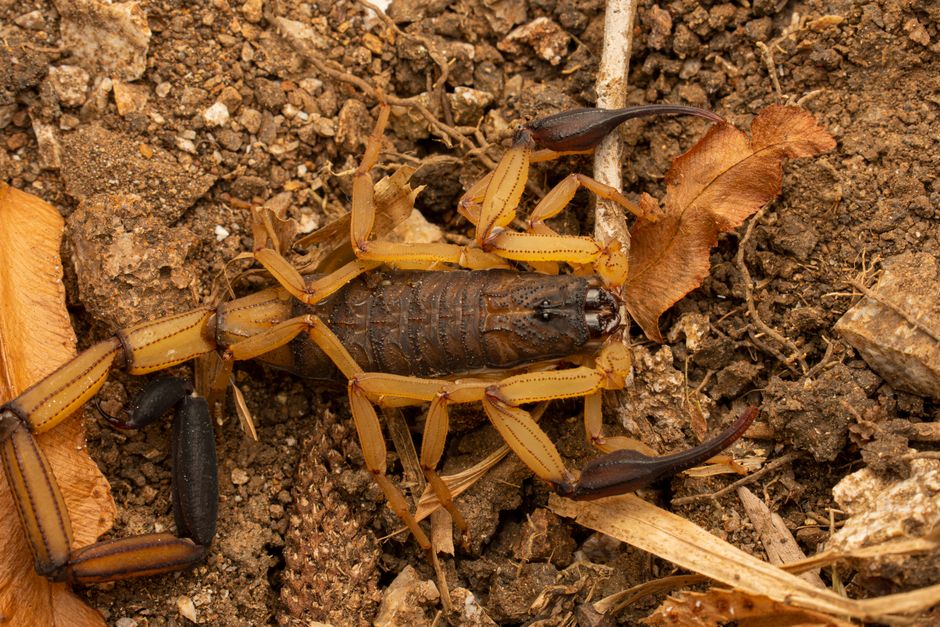
Brown scorpions are dangerous, but the level of danger depends on the specific species and where you live. In the United States, most brown scorpions deliver a sting that is painful but not life-threatening, acting like a bee sting for most healthy adults. However, the bark scorpion, found mainly in Arizona and parts of the Southwest, is the one species in North America whose sting can be a true medical emergency, especially for young children. Treatment ranges from simple ice and pain relief for common stings to immediate antivenom for a bark scorpion sting.
Which Brown Scorpions Are Actually Dangerous?
There is no single scorpion called “the brown scorpion.” Many species are brown, tan, or amber colored. In the United States, you mostly need to worry about one specific type.
The Arizona bark scorpion (Centruroides sculpturatus) is the only scorpion in the U.S. with venom strong enough to be considered medically significant. It is light brown or tan and can be hard to spot because it is small, usually around 2 to 3 inches long. It lives in Arizona, New Mexico, western Texas, and parts of California, Nevada, and Utah. It is the only scorpion in the U.S. that can climb walls and ceilings, which is why it often ends up in beds and clothing.
Other brown scorpions in the U.S., such as the striped bark scorpion found in the central and southern states, have venom that causes pain but is not considered dangerous to healthy adults. Their stings are similar to a bee or wasp sting.
What Are the Symptoms of a Brown Scorpion Sting?
Symptoms depend entirely on which scorpion stung you. For most non-bark brown scorpions, the symptoms are local and mild.
Common symptoms for a typical brown scorpion sting include:
- Immediate sharp burning pain at the sting site
- Swelling and redness around the area
- Numbness or tingling near the sting
- Mild warmth in the affected limb
These symptoms usually peak within a few hours and fade within 24 to 48 hours.
Bark scorpion stings are different. The venom attacks the nervous system, and symptoms can spread beyond the sting site. Symptoms of a bark scorpion sting include:
- Severe pain that spreads up the arm or leg
- Numbness and tingling that moves beyond the sting area
- Muscle twitching or jerking
- Rapid eye movement or blurred vision
- Excessive drooling or trouble swallowing
- Difficulty breathing
- Slurred speech
- Restlessness or agitation
In young children, the symptoms can be more intense and appear faster. A child may not be able to tell you what happened, so watch for sudden crying, drooling, or twitching that has no obvious cause.
Are Brown Scorpion Stings Fatal?
For healthy adults, death from any U.S. scorpion sting is extremely rare. The last recorded death from a bark scorpion sting in Arizona was in 2004, and that was an infant. With proper medical care, even severe bark scorpion stings are treatable.
Globally, there are scorpions that are far more dangerous. The deathstalker scorpion in North Africa and the Middle East, and certain species in India and South America, have venom that can kill a healthy adult. These species are not found in the United States. If you are traveling to those regions, the risk is real and you should seek local medical advice before traveling to remote areas.
In the U.S., the people at highest risk from a bark scorpion sting are:
- Children under age 6
- Elderly adults
- People with heart conditions or respiratory problems
- People with a history of severe allergic reactions





What Should You Do Immediately After a Sting?
Stay calm. Panic increases your heart rate, which can spread venom faster through your bloodstream.
For a sting from a non-dangerous brown scorpion, clean the area with soap and water. Apply a cool compress to reduce pain and swelling. Over-the-counter pain relievers like acetaminophen or ibuprofen can help. Antihistamines may reduce itching. Most people do not need to see a doctor for these stings.
For a possible bark scorpion sting, the rules are different. Do not wait to see if symptoms get worse. Call poison control or go to an emergency room. The national poison control number is 1-800-222-1222. This line is free, confidential, and available 24 hours a day. They will tell you exactly what to do next.
Do not apply a tourniquet. Do not cut the skin and try to suck out the venom. Do not apply ice directly to the skin without a cloth barrier, as this can cause frostbite. These old methods do not work and can cause more harm.
What Is the Medical Treatment for a Dangerous Sting?
For a bark scorpion sting, doctors will assess the severity of symptoms. Mild cases may only need pain medication and observation. Moderate to severe cases may need more aggressive treatment.
The most effective treatment for severe bark scorpion stings is antivenom. An antivenom called Anascorp has been available in the U.S. since 2011. It is made from horse plasma and works by neutralizing the venom in the bloodstream. Studies have shown that patients who receive antivenom recover faster and need less sedation and pain medication than those who do not receive it.
Antivenom is given intravenously in a hospital setting. Most patients see symptom improvement within an hour. Because the antivenom is made from horse proteins, there is a small risk of allergic reaction. Doctors monitor patients closely during and after the infusion.
For children with severe symptoms, antivenom is the standard of care. It can reverse symptoms like muscle twitching and breathing difficulty quickly. Delaying treatment can make recovery longer and more uncomfortable, but with prompt care, full recovery is expected.
How Can You Prevent Scorpion Stings at Home?
Prevention is the best strategy, especially if you live in bark scorpion territory. These scorpions are nocturnal and hide during the day.
Here are practical steps that reduce your risk:
- Seal cracks and gaps in walls, doors, and windows. Scorpions can squeeze through spaces as thin as a credit card.
- Remove rock piles, wood stacks, and debris from around your home. These are prime hiding spots.
- Keep grass trimmed and bushes away from the house foundation.
- Shake out shoes, boots, and clothing before putting them on, especially if they have been on the floor.
- Check bedding before getting into bed. In desert areas, scorpions sometimes climb into beds.
- Use weather stripping under doors and keep screens in good repair.
- Do not walk barefoot outside at night in scorpion areas. Wear closed-toe shoes.
Pesticides labeled for scorpion control can help, but they are not a complete solution. Scorpions can survive for months without food and are resistant to many common insecticides. Professional pest control may be necessary in heavily infested areas.
One thing many people do not realize: scorpions glow under ultraviolet light. A blacklight flashlight is an effective way to check your yard or home at night. This is a practical tool used by pest control professionals and homeowners alike.
When Should You Go to the Emergency Room?
Go to an emergency room immediately if you or someone else experiences any of these after a scorpion sting:
- Trouble breathing
- Muscle twitching or jerking
- Numbness or tingling spreading beyond the sting site
- Difficulty swallowing or excessive drooling
- Blurred or double vision
- Rapid eye movements
- Severe pain that does not improve
- Any symptom in a child under age 6
If you are unsure whether the scorpion was a bark scorpion, treat it as a medical concern. Call poison control at 1-800-222-1222. They can help you decide if you need to go to the hospital. It is always better to call and be told you are fine than to wait and have symptoms escalate.
If possible, take a photo of the scorpion with your phone. Do not try to capture it live. A photo is enough for medical staff to identify the species.
Are Brown Scorpions Dangerous Symptoms Treatment: The Bottom Line
Most brown scorpions in the U.S. are not a serious threat. Their stings hurt but are not dangerous to healthy adults. The Arizona bark scorpion is the exception. Its sting can cause severe neurological symptoms and requires prompt medical attention, especially for children.
Know which scorpions live in your area. If you are in Arizona or the surrounding Southwest, treat any scorpion sting seriously. If you live elsewhere in the U.S., clean the wound, apply ice, and monitor for any spreading symptoms. When in doubt, call poison control. A two-minute phone call can save you hours of worry and potentially prevent a serious medical situation.
Frequently Asked Questions
Can a brown scorpion sting kill you?
In the United States, death from a brown scorpion sting is extremely rare and has not occurred in a healthy adult in decades. The only U.S. scorpion with potentially fatal venom is the Arizona bark scorpion, and deaths are limited almost entirely to very young children.
How long do brown scorpion sting symptoms last?
For common brown scorpions, pain and swelling usually peak within a few hours and resolve within 24 to 48 hours. Bark scorpion sting symptoms can last longer, but antivenom typically brings significant improvement within an hour of administration.
What does a brown scorpion sting feel like?
Most people describe it as a sharp, burning pain similar to a bee sting. With a bark scorpion sting, the pain is more intense and often spreads with numbness and tingling moving up the affected limb.
Should I go to the ER for a scorpion sting?
Go to the ER if you have trouble breathing, muscle twitching, spreading numbness, difficulty swallowing, or if the sting victim is a young child. For stings from non-dangerous species, home care with ice and pain relievers is usually sufficient.
