
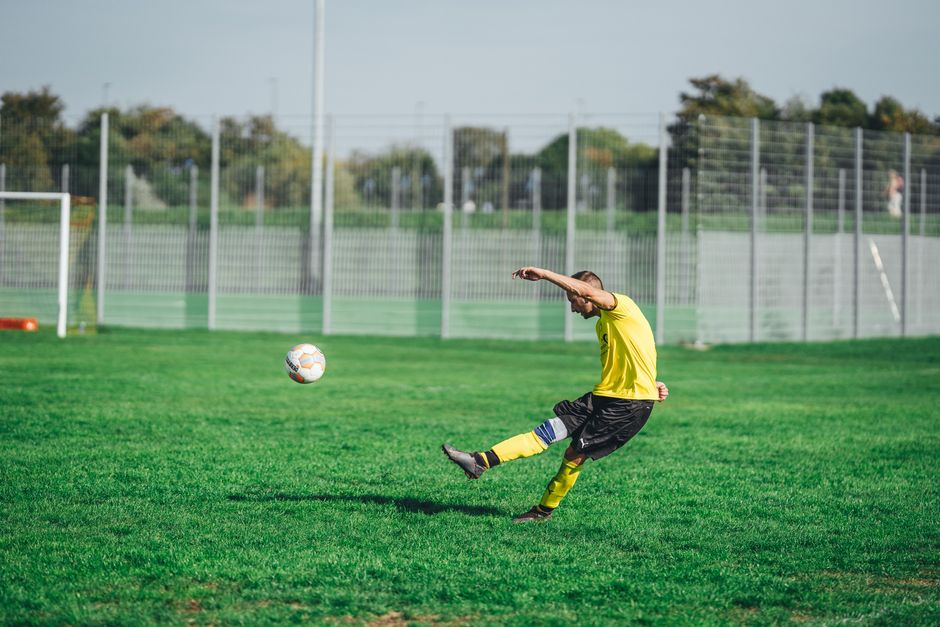
Turf toe is a sprain of the big toe joint, most often caused by the toe bending too far upward. It happens frequently in football, especially on artificial turf, which is harder than natural grass. The injury ranges from a mild stretch to a complete tear of the ligaments and capsules that support the joint, and treatment depends on how severe the damage is.
What Exactly Happens Inside The Toe?
The big toe joint, called the first metatarsophalangeal joint, is a complex hinge. It bears a large amount of your body weight when you push off to run or jump. Several ligaments, along with a thick capsule of tissue, hold the bones in place on the bottom of the joint.
When you push off the ground, your toe bends upward. If something stops your foot from moving forward — like a defender’s weight landing on your heel while your toe stays planted — the joint gets forced into an extreme upward bend. This stretches or tears the structures on the underside of the toe.
That is the mechanism of turf toe. The name comes from its common occurrence on artificial turf, which does not give way under pressure the way natural grass and dirt do. The harder surface means the toe is more likely to hyperextend instead of the cleat releasing or the ground absorbing the force.
What Are The Symptoms Of Turf Toe?
Pain at the base of the big toe is the primary symptom. The pain is usually sharp at the moment of injury and becomes a deep ache afterward. Swelling and stiffness often develop within hours.
You may find it difficult to push off when walking or running. Bending the toe upward, even slightly, can reproduce the pain. Some people report a feeling of instability in the joint, as if the toe is loose or not tracking correctly.
Bruising may appear on the bottom or top of the foot over the following days. The amount of swelling and bruising generally reflects the severity of the sprain. A mild injury may only cause tenderness, while a severe tear can cause significant swelling and discoloration across the entire forefoot.
How Is Turf Toe Diagnosed?
A doctor will examine the joint and ask how the injury happened. They will press on the underside of the toe and gently move it to test range of motion. Pain with upward bending of the toe is a key finding.
Imaging is often needed to rule out a fracture. X-rays can show bone injuries, but they do not show ligament damage. In some cases, a doctor may order an MRI to assess the extent of the ligament tear, especially if the injury is severe or not improving with initial treatment.
Doctors grade turf toe similarly to other sprains. A Grade 1 sprain involves stretching of the ligaments without tearing. Grade 2 involves a partial tear. Grade 3 is a complete tear of the ligaments, often with damage to the joint capsule. Grade 3 injuries can be season-ending and may require surgery.





What Is The Best Treatment For Turf Toe?
Treatment follows the severity of the injury. For mild and moderate sprains, conservative care is the standard approach. Rest, ice, compression, and elevation — the RICE protocol — form the foundation of early treatment.
Immobilization is often necessary. A stiff-soled shoe, walking boot, or even a cast may be used to keep the toe from bending. This allows the damaged tissue to heal without repeated stress. Crutches may be needed for a short period to keep weight off the foot.
Nonsteroidal anti-inflammatory drugs (NSAIDs) like ibuprofen can help manage pain and swelling in the first few days. They do not speed healing but can make the recovery period more comfortable. Always follow the dosing instructions on the label or those given by your doctor.
Ice should be applied for 15–20 minutes several times a day during the first 48–72 hours. Do not apply ice directly to the skin — use a towel or ice pack barrier to prevent frostbite.
When Is Surgery Needed For Turf Toe?
Surgery is reserved for the most severe cases. A complete tear of the ligaments, a displaced fracture, or damage to the cartilage surfaces of the joint may require surgical repair. This is not common, but it is a real possibility with Grade 3 injuries.
Some athletes with severe turf toe also develop a condition called hallux rigidus, where the joint becomes stiff and arthritic. This can happen even with proper treatment. Surgery may be considered to remove bone spurs or, in advanced cases, to fuse the joint. A fusion eliminates motion at the joint but typically relieves pain.
The decision to operate is made on an individual basis. Factors include the athlete’s position, level of play, and response to conservative treatment. A lineman who needs to push off explosively may have different surgical considerations than a recreational runner.
How Long Does Turf Toe Take To Heal?
Recovery time varies widely based on the grade of the injury. A mild sprain may heal in one to two weeks. A moderate sprain often takes three to six weeks. Severe injuries with complete tears can take two to three months or longer to fully heal.
Returning to play too early is a common mistake. The toe may feel better while walking but still be vulnerable to the forces of sprinting and cutting. Returning before the ligaments have healed increases the risk of re-injury, which can lead to chronic pain and permanent stiffness.
Rehabilitation is important. Gentle range-of-motion exercises help prevent stiffness. Strengthening the muscles of the foot and calf can improve stability. A physical therapist can guide this process and help you progress safely.
How Can Turf Toe Be Prevented?
Prevention focuses on reducing the stress placed on the big toe joint. Wearing shoes with a stiff sole limits how far the toe can bend. Many football cleats now incorporate carbon fiber plates or other rigid materials in the forefoot for this reason.
Taping the big toe can also provide support. Athletic tape applied to limit upward bending of the toe is a common preventive measure. This is especially useful for players who have had a previous turf toe injury.
Playing surface matters. Turf toe is more common on artificial turf, particularly older turf that has become harder over time. Newer synthetic surfaces with more padding may reduce the risk, but they do not eliminate it. Strong, flexible foot muscles may help, but no research confirms that any specific exercise program prevents turf toe.
What Happens If Turf Toe Is Left Untreated?
Ignoring a turf toe injury can lead to long-term problems. The joint may become chronically stiff and painful. Some people develop arthritis in the joint years later. The toe may also lose its ability to push off effectively, which affects running and jumping performance.
Repeated injury to the same joint is a real concern. Without proper healing time, the ligaments remain weak and are more likely to tear again with less force. This can turn a manageable injury into a chronic condition that affects daily activities, not just sports.
Prompt treatment is the best way to avoid these complications. Even a mild sprain deserves attention. If you cannot push off your toe without pain, or if swelling limits your ability to walk normally, see a doctor for a proper evaluation.
Frequently Asked Questions
Can you walk with turf toe?
You can often walk, but it will hurt, especially when pushing off the toe. Limping or favoring the foot can delay healing and increase the risk of other injuries.
Is turf toe a serious injury?
Most cases are mild and heal with rest, but severe tears can require surgery and months of recovery. Even mild injuries can become chronic if not given enough time to heal.
What is the fastest way to heal turf toe?
There is no shortcut. Rest, ice, and avoiding activities that bend the toe are the most effective early steps. Returning to activity before the joint heals typically prolongs recovery.
Do turf toe injuries require a cast?
Not always. Mild injuries may only need a stiff-soled shoe, while moderate to severe injuries often require a walking boot or cast to keep the toe from bending. Your doctor will decide based on the grade of the sprain.
