
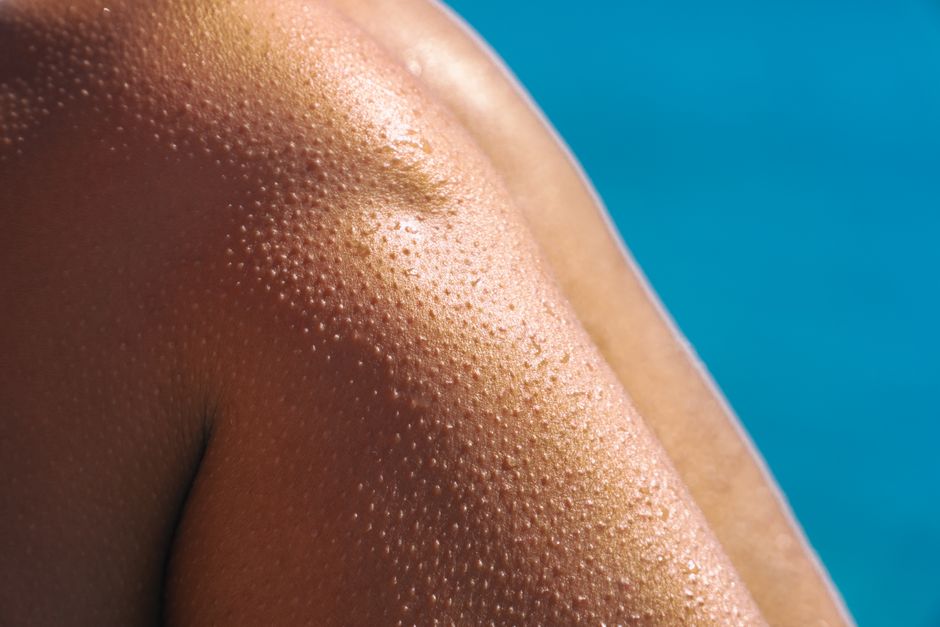
No, sunburns do not turn into tans. A sunburn is skin damage, and a tan is also a sign of skin damage. The idea that a sunburn fades into a golden tan is a common myth. What actually happens is your skin produces more melanin as a defense response after the burn heals. That new color is not a healthy glow. It is your skin trying to protect itself from more harm.
What Actually Happens to Your Skin During a Sunburn?
A sunburn is a radiation burn. The ultraviolet (UV) rays from the sun damage the DNA in your skin cells. Your body reacts by sending extra blood flow to the area. That is why the skin turns red, feels hot, and hurts. This is inflammation.
Within a few hours of overexposure, the damaged cells begin to die. Your immune system steps in to clear them out. This process causes peeling or blistering. The redness and pain are your body telling you that injury has happened. It is not a step toward a tan.
Research from the Skin Cancer Foundation confirms that just one blistering sunburn in childhood can double your risk of developing melanoma later in life. That is not something that happens on the way to a tan.
Why Do People Think Sunburns Turn Into Tans?
The confusion comes from timing. After a sunburn heals, the skin often looks darker. This happens because the skin produces more melanin in response to UV exposure. Melanin is the pigment that gives skin its color.
When you get a sunburn, your melanocytes — the cells that make melanin — ramp up production. This is a protective response. The extra melanin helps absorb some UV rays and prevent further DNA damage. The darker color you see after the redness fades is this melanin.
So the sequence is: UV damage, then inflammation, then melanin production. The tan you see is not a transformation of the burn. It is a separate process that happens alongside the healing. The tan itself is evidence of injury. There is no such thing as a safe tan.
Do Sunburns Turn to Tans or Just Cause Skin Damage?
Sunburns cause skin damage. Period. The tan that follows is also damage. The American Academy of Dermatology states clearly that any change in skin color after UV exposure is a sign of injury.
A tan is your skin’s attempt to shield itself from more UV rays. It provides very limited protection — roughly equivalent to an SPF of 2 to 4. That is not enough to prevent further damage. Relying on a tan as protection is dangerous.
Think of it this way. A callus forms on your hand after repeated friction. That callus is a defense. But no one would say the friction was good for your hand. A tan is the same. It is a defense mechanism, not a sign of health.





What Does the Research Show About Tanning and Sunburns?
Multiple large-scale studies have looked at the relationship between sunburns, tanning, and skin cancer risk. A 2014 study published in JAMA Dermatology followed over 100,000 people. It found that women who had five or more blistering sunburns between ages 15 and 20 had a 68 percent higher risk of melanoma.
The same study showed that indoor tanning before age 35 increased melanoma risk by 75 percent. These numbers are not small. They show that UV damage — whether it causes a burn or a tan — adds up over time.
Another study from the National Institutes of Health found that people who tan easily are not protected. Even if you never burn, repeated tanning still increases your risk of skin cancer. The idea that “I just tan, I never burn” is not a pass. It is still damage.
What Are the Real Risks of Sunburns and Tanning?
The risks go beyond skin cancer. UV damage also causes premature aging. Collagen and elastin fibers in the skin break down. This leads to wrinkles, sagging, and leathery texture. These changes are permanent.
| Risk Factor | Sunburn | Tanning (No Burn) |
|---|---|---|
| DNA damage | High | Moderate |
| Melanoma risk increase | Significant | Significant |
| Premature aging | Yes | Yes |
| Eye damage (cataracts) | Possible | Possible |
| Immune suppression | Yes | Yes |
UV exposure suppresses the local immune system in your skin. This means your skin is less able to fight off abnormal cells. That includes cancer cells. So even a tan that does not burn is still weakening your skin’s defenses.
How to Protect Your Skin Instead of Relying on Tanning
Sun protection is straightforward. The CDC recommends using a broad-spectrum sunscreen with at least SPF 30. Apply it 15 minutes before going outside. Reapply every two hours, or more often if you are swimming or sweating.
- Wear protective clothing. Long sleeves, wide-brimmed hats, and UV-blocking sunglasses help.
- Seek shade between 10 a.m. and 4 p.m. when UV rays are strongest.
- Do not use tanning beds. They are classified as a Group 1 carcinogen by the World Health Organization. That is the same category as tobacco and asbestos.
If you want the look of a tan without the damage, self-tanners are a safe alternative. They contain dihydroxyacetone (DHA), which reacts with the outer layer of skin to produce color. This does not involve UV exposure at all. The color fades as skin cells naturally shed.
Some people report that self-tanners look orange or streaky. Modern formulations have improved significantly. A good application technique — exfoliating first, using a mitt, and blending well — gives natural results.
Frequently Asked Questions
Can a sunburn ever become a tan?
No. A sunburn is damaged skin. The darker color that appears after healing is new melanin, not the burn turning into a tan.
How long does it take for a sunburn to turn into a tan?
It does not turn into a tan. The redness typically fades within three to seven days. Any darkening that follows is a separate melanin response.
Is it better to tan than to burn?
No. Both are signs of UV damage. A tan provides minimal protection and still increases your risk of skin cancer and premature aging.
What should I do after getting a sunburn?
Cool the skin with a damp cloth, apply aloe vera or a moisturizer, drink extra water, and avoid any further sun exposure until the skin heals.
