
Key Takeaways
- Gut health works as a system — it’s not just about bacteria alone.
- Fix digestion first — adding probiotics or fiber won’t help if digestion is already impaired.
- Removing triggers matters most — eliminating problem foods is often more effective than adding “healthy” ones.
- Lifestyle directly impacts gut function — poor sleep and high stress disrupt digestion.
- Progress shows in symptoms — changes in bloating, energy, and digestion matter more than guesswork.
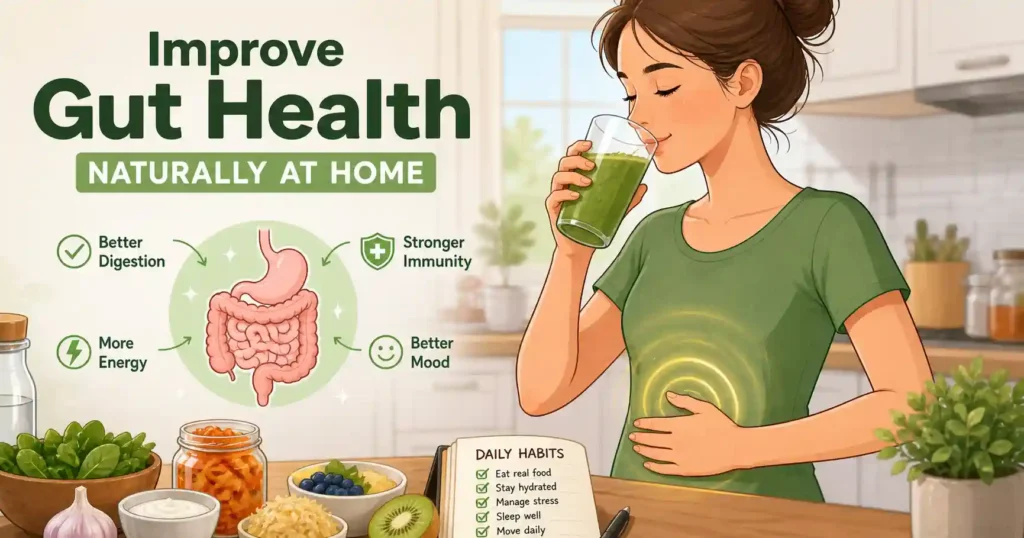
Anyone can improve gut health naturally at home by following a few scientifically proven but easy steps, such as restoring balance in your digestive system using food, lifestyle, and basic habits that support digestion and gut bacteria.
It matters because your gut affects digestion, immunity, energy, and even mood. Most people focus only on “good bacteria,” but real gut health also depends on how well you digest and absorb food.
What Does “Improve Gut Health Naturally” Actually Mean?
Improving gut health naturally means fixing how your digestive system works, not just adding probiotics or eating yogurt. Your gut includes stomach acid, enzymes, gut lining, and trillions of bacteria. If one part fails, the whole system struggles.
Most articles reduce gut health to “eat more fiber.” That’s incomplete.
Here’s what actually defines a healthy gut:
- You digest food without bloating or discomfort
- You have regular bowel movements (not random or painful)
- You don’t feel heavy or tired after meals
- Your body absorbs nutrients properly
Current research (as of 2026), including findings published in Nature Reviews Gastroenterology & Hepatology (2019), shows that gut health is a system, not a single factor like bacterial diversity.
👉 The problem: Most people try to fix gut health by adding things instead of fixing what’s broken first.
Why Most Gut Health Advice Fails for Many People
Most advice sounds right. It just doesn’t work for everyone.
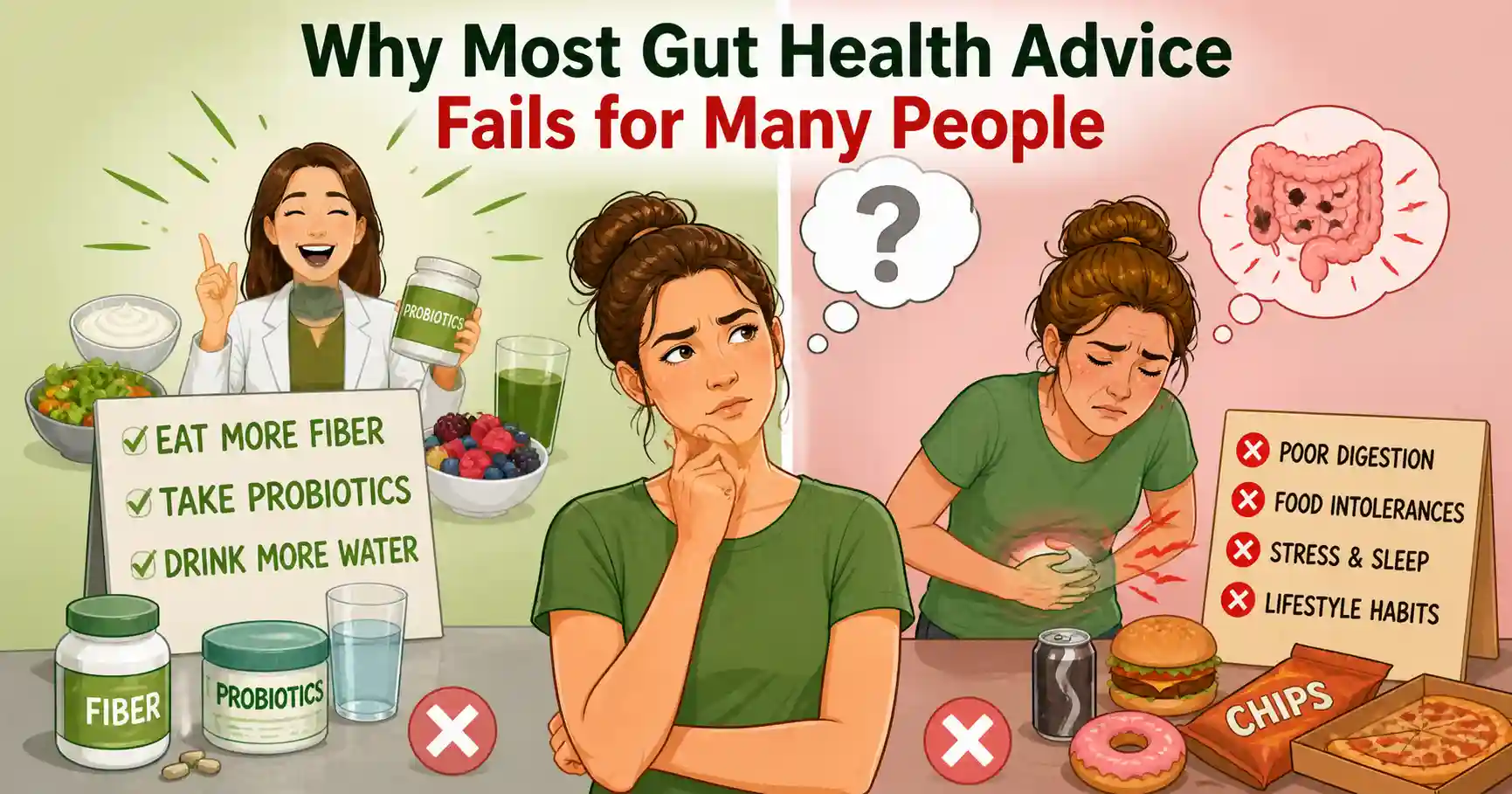
Here’s where it breaks:
1. Too much focus on probiotics
People assume more bacteria means a better gut. But the reality is, if digestion is weak, probiotics don’t colonize properly.
2. Fiber overload
Fiber helps—but only if your gut can handle it.
Too much fiber in a damaged gut = gas, bloating, worse symptoms.
3. Ignoring digestion
Your stomach acid and enzymes matter more than people think.
If food isn’t broken down, gut bacteria can’t use it properly.
4. No removal phase
People add “healthy foods” without removing triggers like:
- Ultra-processed foods
- Excess sugar
- Alcohol
That’s like pouring clean water into a dirty tank without cleaning it first.
Quick Takeaway: Most gut plans fail because they add before they repair.
How to Fix Gut Health Naturally (Step-by-Step System)
This is where competitors fail—they give tips, not a process.
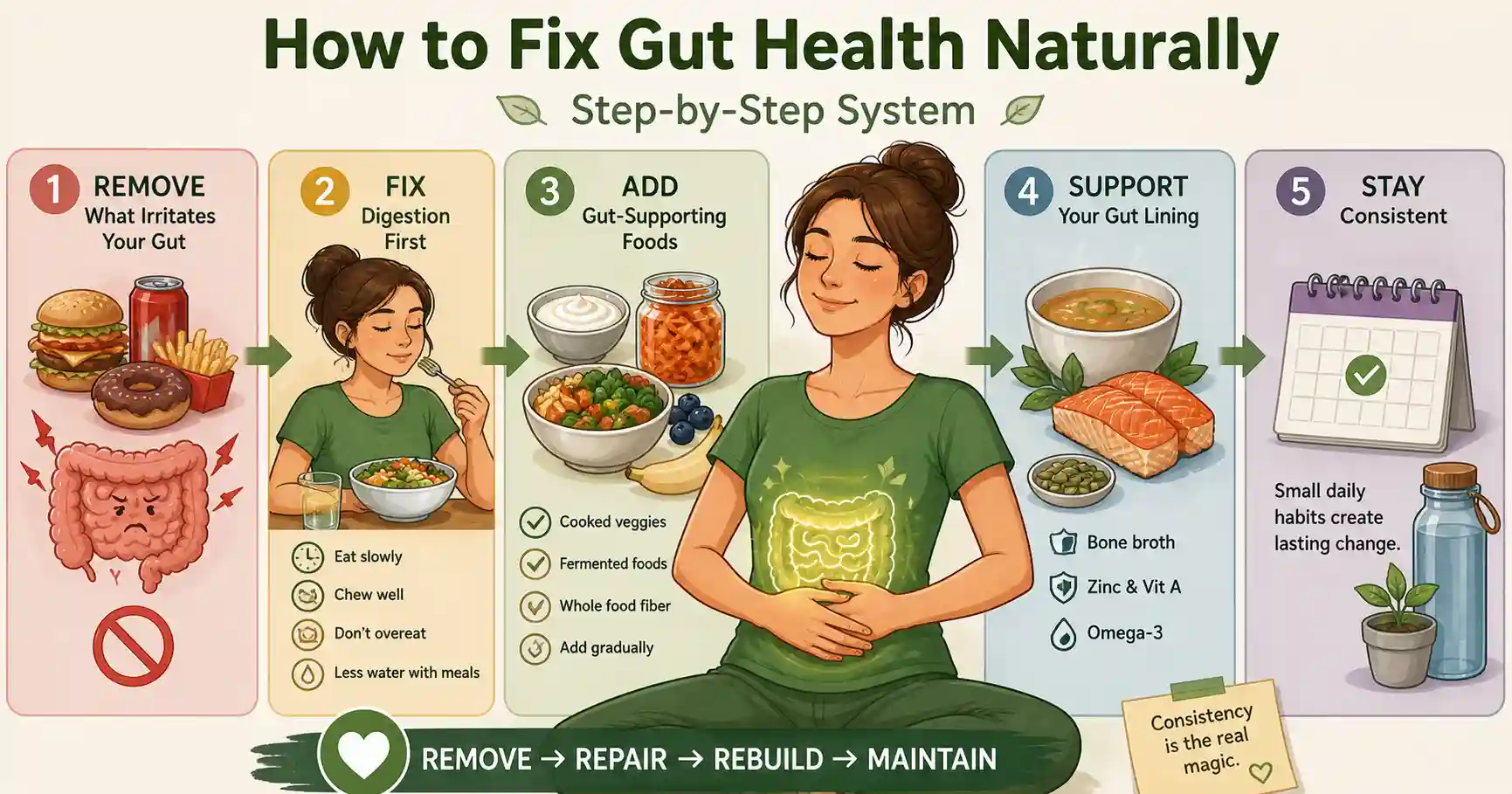
Here’s a simple system that actually works:
Step 1: Remove what irritates your gut
Start here. Always.
Cut or reduce:
- Processed foods
- Artificial sweeteners
- Excess alcohol
- Deep-fried foods
Even “healthy” foods like dairy or gluten can trigger some people.
Step 2: Fix digestion first
If digestion is weak, everything else fails.
Focus on:
- Eating slowly
- Chewing properly (seriously, most people don’t)
- Avoiding overeating
- Drinking less water during meals
Better digestion = less fermentation = less bloating.
Step 3: Add gut-supporting foods (gradually)
Now you add.
Start with:
- Cooked vegetables (easier to digest than raw)
- Fermented foods (small amounts first)
- Fiber from whole foods (not supplements first)
Step 4: Support your gut lining
Your gut lining acts like a barrier. When damaged, problems start.
Helpful foods:
- Bone broth
- Foods rich in zinc and vitamin A
- Omega-3 sources (like fish)
Step 5: Maintain consistency
Gut repair is slow. A study in Cell (2016) showed microbiome changes can happen in days, but lasting changes require consistent habits.
Quick Takeaway: Fix gut health by removing → repairing → rebuilding. Not the other way around.
What Are the Best Daily Habits for a Healthy Gut?
Your daily routine matters more than any supplement.
Focus on these:
- Eat at consistent times → supports gut rhythm
- Sleep 7–8 hours → poor sleep disrupts gut bacteria
- Manage stress → chronic stress affects gut motility
- Move your body daily → improves digestion
The Harvard T.H. Chan School of Public Health (2023) highlights that lifestyle factors impact gut bacteria just as much as diet.
What most people miss: Stress alone can trigger digestive issues even if your diet is perfect.
How to Improve Digestion and Not Just the Microbiome?
This is the biggest blind spot online. Gut health ≠ just bacteria.
You need to fix digestion:
Key factors:
- Stomach acid → breaks down protein
- Digestive enzymes → break food into usable nutrients
- Gut motility → moves food efficiently
If these are weak, you get:
- Bloating
- Gas
- Incomplete digestion
What actually helps:
- Eat in a relaxed state (not while scrolling or working)
- Avoid overeating
- Leave gaps between meals (no constant snacking)
Quick Takeaway: Strong digestion prevents gut problems before they start.
Which Foods Help and Which Ones Quietly Damage Your Gut?
Here’s a clear comparison most articles avoid:
| Helps Gut Health | Can Damage the Gut (If Overused) |
|---|---|
| Cooked vegetables | Ultra-processed foods |
| Fermented foods (small amounts) | Excess sugar |
| Whole fruits | Artificial sweeteners |
| Healthy fats | Deep-fried foods |
| Bone broth | Alcohol |
Do Probiotics Really Work or Not?
Short answer: sometimes.
A review in the American Journal of Gastroenterology (2020) found probiotic effects vary widely depending on the person.
Why they fail:
- Wrong strain
- Poor digestion
- Existing gut imbalance
When they help:
- After antibiotics
- Mild digestive issues
- Specific strains for specific problems
Quick Takeaway: Probiotics are not a shortcut. They work only in the right conditions.
What Are the Signs Your Gut Is Actually Improving?
You need feedback. Otherwise, you’re guessing.
Look for:
- Less bloating after meals
- Regular bowel movements
- More stable energy
- Reduced cravings for sugar
- Better skin (sometimes, not always)
If nothing changes after weeks, your approach is wrong. Not your body.
FAQs
How to fix gut health naturally at home?
Start by removing processed foods and reducing sugar. Improve digestion by eating slowly and avoiding overeating. Add gut-friendly foods like cooked vegetables and fermented foods gradually. Consistency matters more than quick fixes, and results usually appear over a few weeks.
How long does it take to restore gut health?
Some changes happen within days, especially with diet shifts. However, long-term improvement usually takes weeks or months. Research shows gut bacteria can change quickly, but stable improvement depends on consistent habits like diet, sleep, and stress control.
What foods heal your gut naturally?
Cooked vegetables, fermented foods, fruits, healthy fats, and bone broth can support gut health. These foods are easier to digest and provide nutrients that support gut lining and bacterial balance. The key is introducing them gradually, especially if your gut is sensitive.
Can you fix gut health without probiotics?
Yes. Many people improve gut health through diet and lifestyle alone. Probiotics are not essential for everyone. Improving digestion, reducing processed foods, and managing stress often have a stronger impact than supplements.
What is the fastest way to improve digestion?
The fastest improvement often comes from eating more slowly, chewing food properly, and avoiding overeating. Reducing stress during meals also helps. These simple changes improve how your body breaks down food, which reduces bloating and discomfort quickly.
Final Thoughts
If you want to improve gut health naturally, stop chasing trends. Fix the basics first. Then build from there. Most people don’t have a complicated gut problem. They have a basic system that’s being ignored.

Recent Posts