
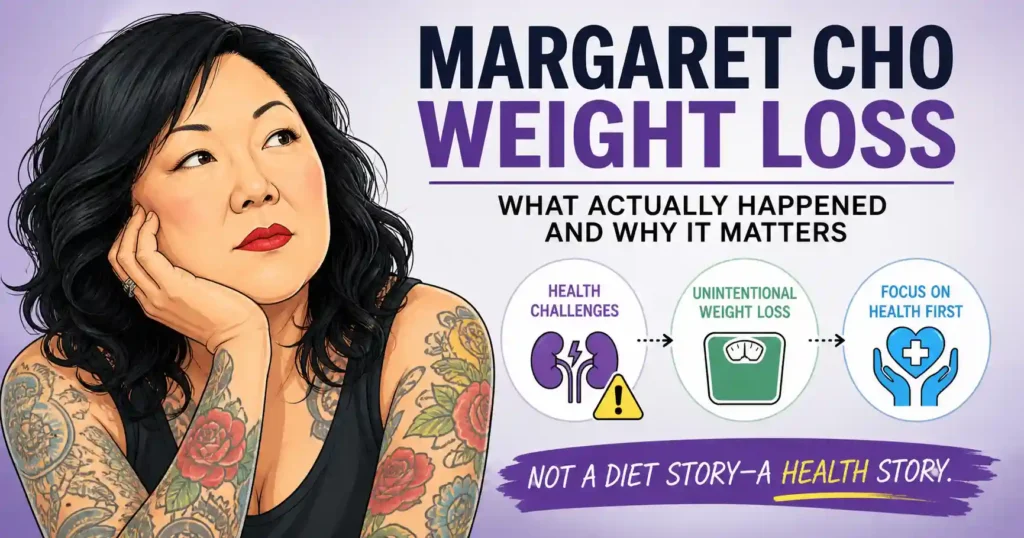
Margaret Cho weight loss is linked to health complications and medical factors, not a typical diet or fitness plan. In her case, weight loss appears tied to illness-related stress and treatment effects, which can lead to rapid, unintentional changes in body weight. This is not the same as healthy, controlled fat loss.
Key Takeaways
- Margaret Cho’s weight loss is likely illness-related — it does not appear to be the result of a structured diet or fitness plan.
- Unintentional weight loss often includes muscle loss — not just fat, which makes it physically different from healthy weight loss.
- Rapid weight loss is usually a warning sign — it often points to underlying stress, illness, or metabolic disruption.
- There is no confirmed link to GLP-1 drugs — current information does not support medication-driven weight loss in this case.
- Most celebrity weight loss stories are misunderstood — many are tied to medical or personal factors, not replicable routines.
What Happened to Margaret Cho Weight Loss?
Margaret Cho’s weight loss became a topic after public appearances showed a noticeably slimmer frame. Reports tied this change to serious health issues, including kidney-related complications, rather than intentional dieting.
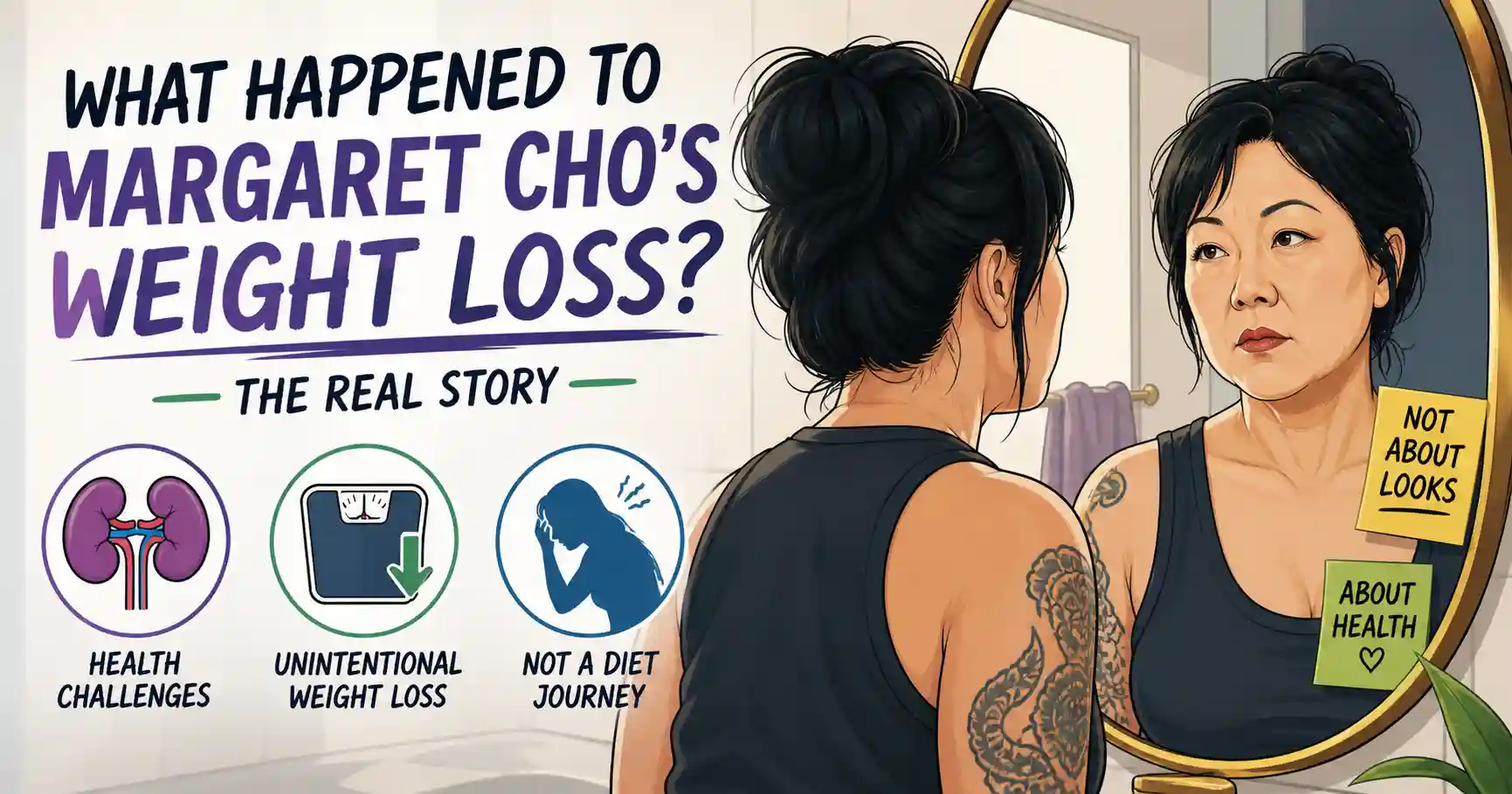
That distinction matters. Most celebrity weight loss stories get framed as success stories. This one doesn’t fit that pattern. The available reporting points toward unintentional weight loss, which is medically very different from planned fat loss.
Unintentional weight loss usually means the body is under stress. It often shows up when something disrupts appetite, digestion, or metabolism.
Quick Takeaway: Margaret Cho’s weight loss is not a fitness transformation—it’s more likely a result of underlying health stress.
Why Did Margaret Cho Lose Weight?
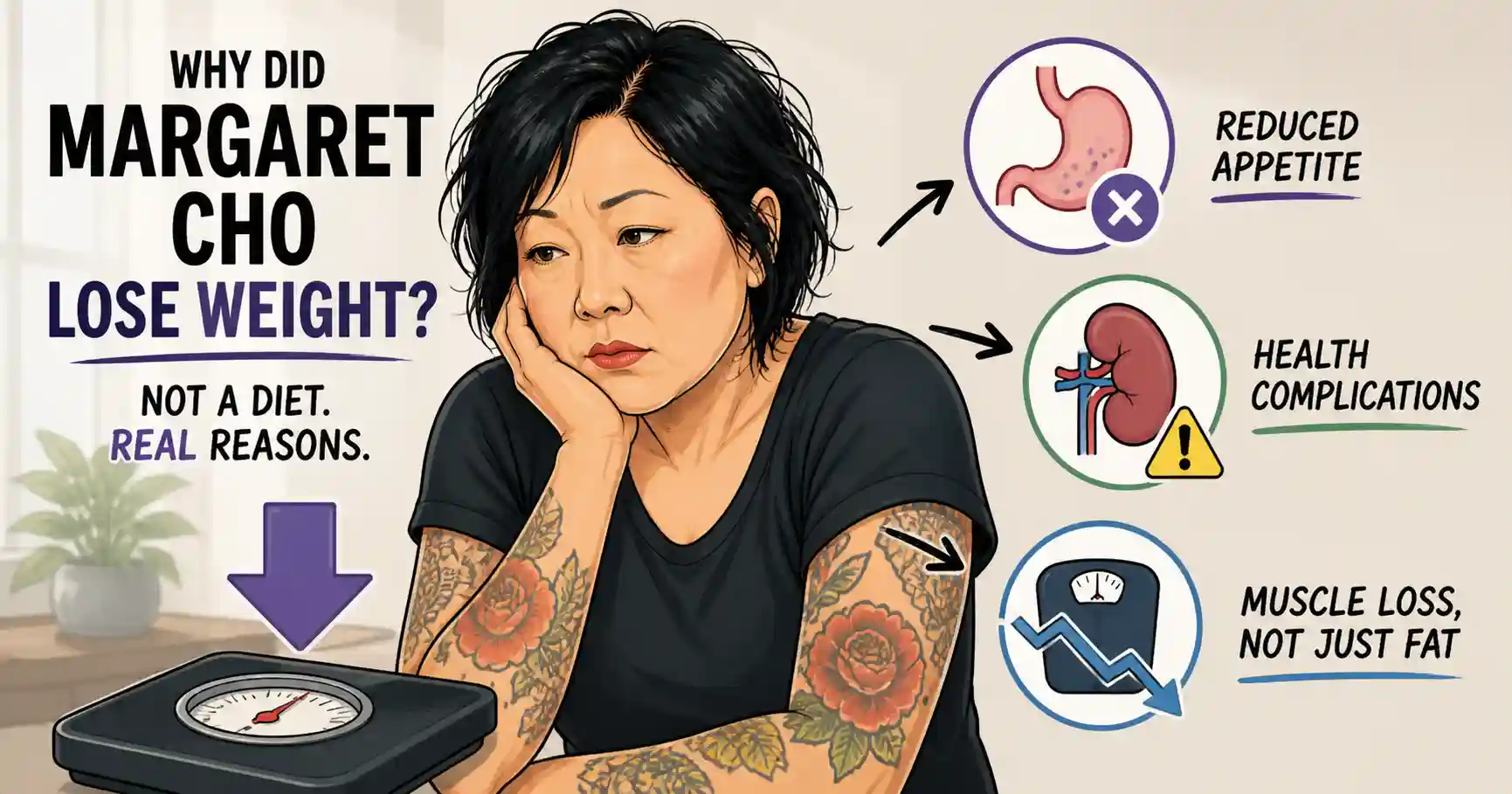
The most likely explanation comes down to three overlapping factors:
1. Illness-related metabolic stress
When the body is dealing with illness, it burns energy differently. Inflammatory processes increase calorie use, even at rest. At the same time, appetite often drops.
2. Reduced food intake
Health conditions—especially those affecting organs like the kidneys—can cause:
- Nausea
- Fatigue
- Loss of appetite
That combination leads to fewer calories consumed daily.
3. Muscle breakdown (not fat loss)
This is the part most people misunderstand.
Weight loss during illness is often:
- Muscle loss (catabolism)
- Not just fat loss
Research from the National Institutes of Health (NIH, 2020) shows that illness-related weight loss frequently reduces lean body mass first, not fat stores.
That’s why it can look dramatic—and why it’s not considered healthy.
Quick Takeaway: Illness-driven weight loss is usually a mix of appetite loss and muscle breakdown—not controlled fat loss.
Is Margaret Cho’s Weight Loss Healthy or Concerning?
This kind of weight loss raises concern, not praise.
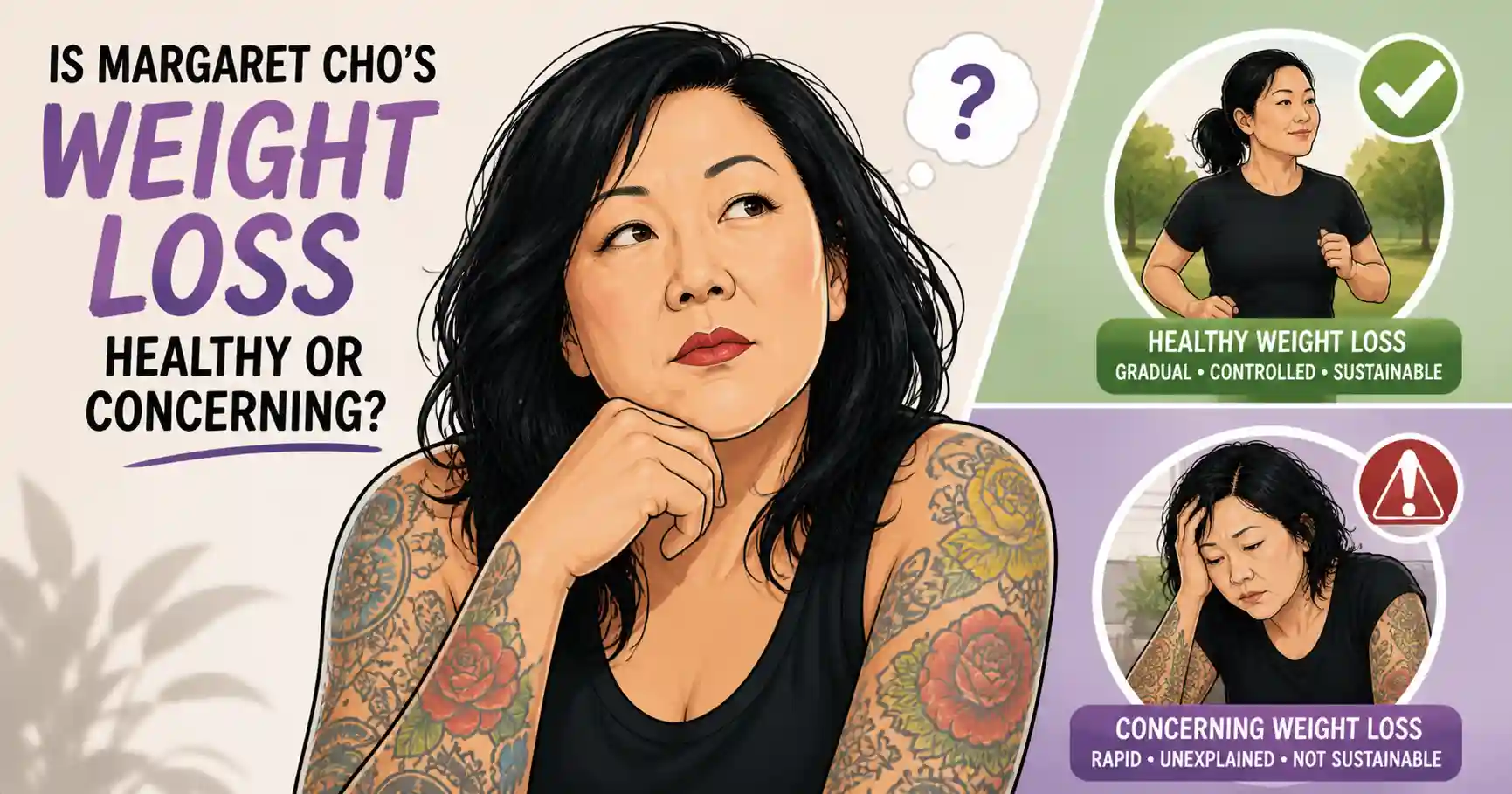
Here’s the difference most people miss:
- Healthy weight loss → gradual, controlled, mostly fat
- Illness-related weight loss → rapid, uncontrolled, often muscle
According to the Mayo Clinic (2023), losing more than 5% of body weight in 6–12 months without trying is considered medically significant.
That threshold exists for a reason. It often signals:
- Chronic illness
- Hormonal disruption
- Organ dysfunction
So when people ask, “Did she lose weight successfully?”—they’re asking the wrong question.
The better question is: Was the weight loss intentional and controlled?
In this case, likely not.
How Illness Can Cause Rapid Weight Loss
This is where most articles fail. They tell you what happened, not how it works.
Here’s the actual mechanism:
The body under stress behaves differently
When illness hits:
- Inflammation increases calorie burn
- Hormones shift (especially cortisol)
- Appetite-regulating signals break down
At the same time:
- Digestion slows
- Nutrient absorption may drop
- Fatigue reduces food intake
The result:
- Calorie deficit (unintentional)
- Muscle breakdown for energy
- Rapid scale drop
A review in The American Journal of Clinical Nutrition (2019) found that chronic illness often leads to negative energy balance and lean tissue loss, even when calorie intake appears “normal.”
That’s why this type of weight loss is hard to reverse quickly.
Are GLP-1 Drugs Involved in Margaret Cho’s Weight Loss?
Some reports and speculation link celebrity weight loss to drugs like Ozempic (GLP-1 agonists). But here’s the reality:
There is no confirmed evidence that Margaret Cho used GLP-1 drugs. That matters because people jump to conclusions fast.
What GLP-1 drugs actually do
GLP-1 medications:
- Slow stomach emptying
- Reduce appetite
- Improve blood sugar control
Studies in The New England Journal of Medicine (2021) show users can lose 10–15% of body weight over time.
But that weight loss is:
- Gradual
- Monitored
- Medically supervised
That doesn’t match the pattern seen in illness-related weight loss.
Quick Takeaway: There’s no solid proof GLP-1 drugs caused Margaret Cho’s weight loss—and the pattern doesn’t strongly match.
Healthy vs Unhealthy Weight Loss (What Most People Miss)
Here’s the clean comparison:
| Type of Weight Loss | Cause | Speed | What You Lose | Risk Level |
|---|---|---|---|---|
| Healthy (diet/exercise) | Calorie deficit | Slow (0.5–1 kg/week) | Mostly fat | Low |
| Drug-assisted (GLP-1) | Appetite suppression | Moderate | Fat + some muscle | Medium |
| Illness-related | Stress, disease | Fast | Muscle + fat | High |
The key difference is control. Healthy weight loss is intentional and predictable. Illness weight loss is reactive and unstable.
What Most People Get Wrong About Celebrity Weight Loss
People assume:
- “They found something that works.”
- “It’s a diet or routine I can copy.”
That’s wrong more often than not.
Celebrity weight loss is often:
- Medical
- Temporary
- Not publicly explained fully
And sometimes, it’s something no one should want to replicate. There’s also a visibility bias. When someone loses weight quickly, it gets attention.
When they regain or struggle, it doesn’t. That skews perception.
When Weight Loss Is a Warning Sign
Unintentional weight loss isn’t subtle. It usually comes with other signals.
Watch for:
- Persistent fatigue
- Loss of appetite
- Muscle weakness
- Digestive issues
- Sudden drop in strength
According to the Cleveland Clinic (2022), unexplained weight loss can be linked to:
- Thyroid disorders
- Diabetes
- Gastrointestinal disease
- Cancer
That doesn’t mean every case is serious—but it means you don’t ignore it.
Final Thought
Margaret Cho’s weight loss is being talked about like a transformation. It isn’t.
It’s a reminder that not all weight loss is progress—and sometimes, the fastest changes are the ones worth questioning.
FAQs
What caused Margaret Cho’s weight loss?
Margaret Cho’s weight loss appears linked to health complications rather than intentional dieting. Reports suggest illness-related factors like reduced appetite, metabolic stress, and treatment effects may have contributed. This type of weight loss is usually unplanned and differs significantly from controlled fat loss through diet and exercise.
Did Margaret Cho use Ozempic or GLP-1 drugs?
There is no confirmed evidence that Margaret Cho used Ozempic or any GLP-1 medication. While these drugs are widely discussed in celebrity weight loss conversations, her reported situation aligns more closely with illness-related weight loss patterns rather than medically supervised weight-loss treatment.
Is sudden weight loss dangerous?
Sudden weight loss can be a medical concern, especially if it is unintentional. Losing more than 5% of body weight within 6–12 months without trying may indicate an underlying issue. Causes can include hormonal imbalance, digestive disorders, or chronic illness, and it often requires medical evaluation.
How is illness-related weight loss different from normal weight loss?
Illness-related weight loss is typically rapid and involves muscle loss along with fat. It happens due to metabolic stress, reduced appetite, or poor nutrient absorption. Normal weight loss is gradual, controlled, and focused on fat reduction through diet and activity.
How much weight did Margaret Cho lose?
Exact numbers have not been consistently confirmed in public reporting. Most discussions focus on visible physical changes rather than specific weight figures. The emphasis in credible coverage has been on the cause of the weight loss rather than the amount itself.

Recent Posts