
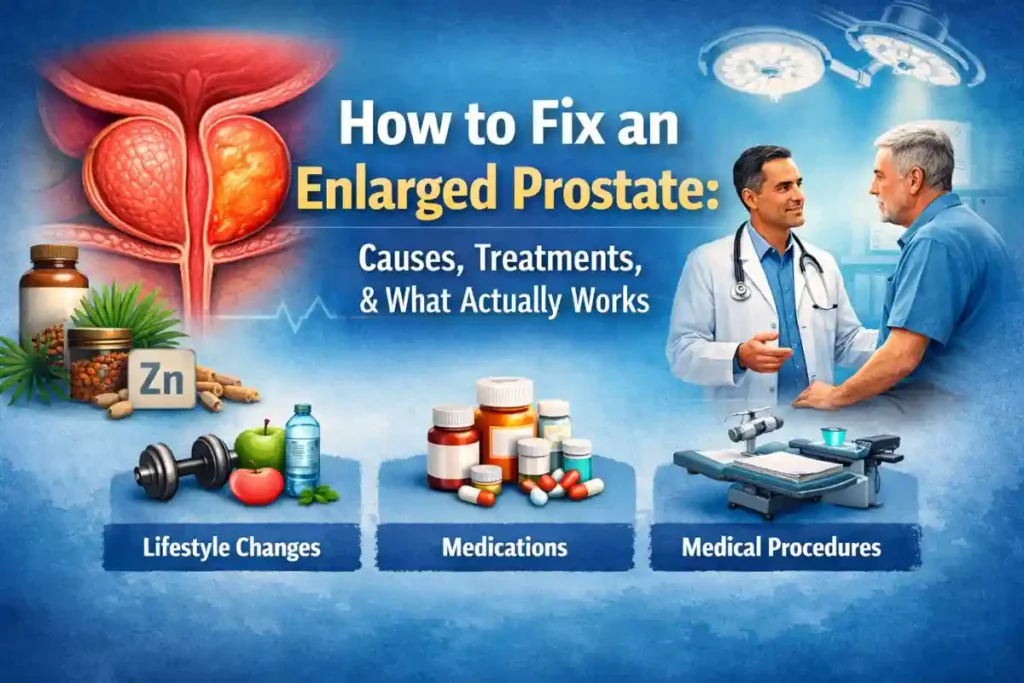
Fixing an enlarged prostate (benign prostatic hyperplasia) means reducing urinary symptoms using lifestyle changes, medications, or medical procedures. The right approach depends on how severe your symptoms are and what’s causing them.
Mild cases often improve with simple habits, while moderate to severe cases usually need medication or targeted treatment.
Key Takeaways
- ✔ Enlarged prostate (BPH) becomes common after age 50
- ✔ Symptoms matter more than prostate size when deciding treatment
- ✔ Lifestyle changes help, but don’t fix the root cause
- ✔ Medications manage symptoms and may slow prostate growth
- ✔ Procedures are the only way to directly remove blockage
What Is an Enlarged Prostate?
An enlarged prostate, also called benign prostatic hyperplasia (BPH), is a non-cancerous increase in prostate size that commonly happens as men age. The prostate sits just below the bladder and surrounds the urethra, so when it grows, it can restrict urine flow.
This condition becomes more common after age 50. According to the National Institutes of Health (NIH),1Enlarged Prostate (Benign Prostatic Hyperplasia), NIH. about 50% of men between 51 and 60 show signs of BPH, and the percentage increases with age.
What Causes an Enlarged Prostate?
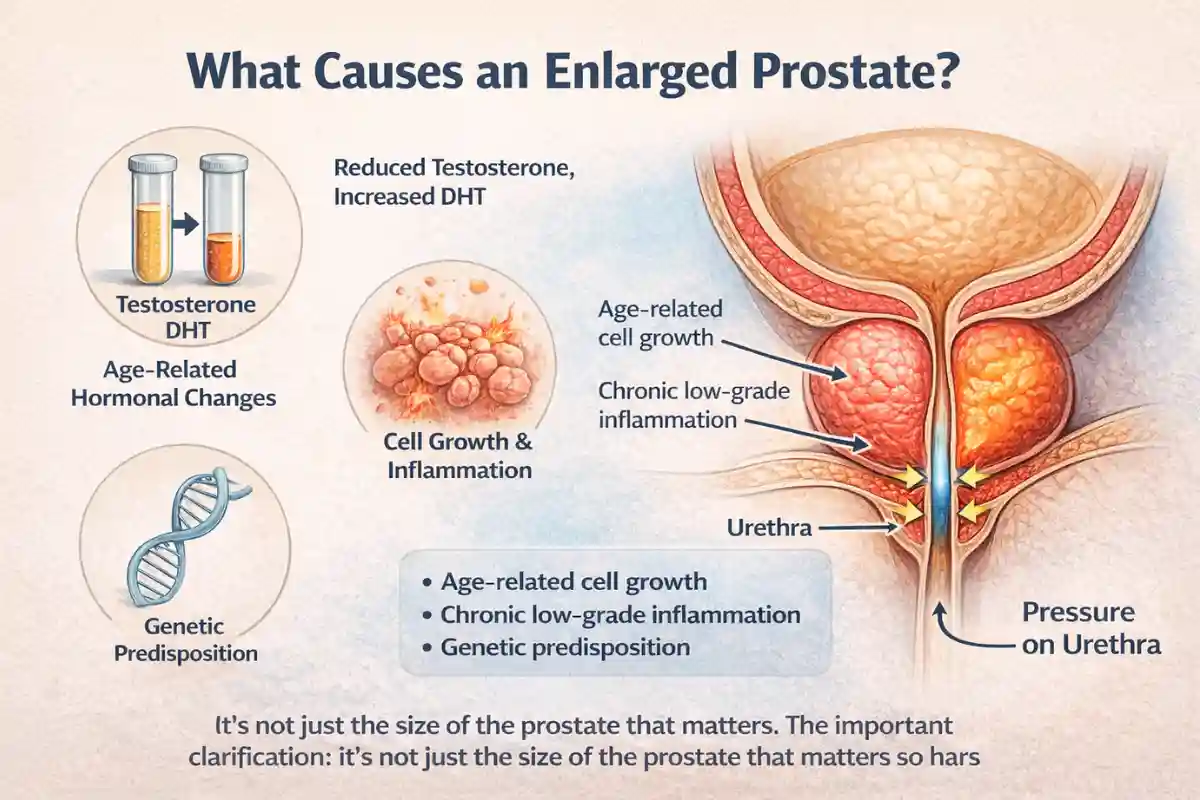
An enlarged prostate is mainly driven by hormonal changes that come with aging. The balance between testosterone and dihydrotestosterone (DHT) shifts over time, and DHT continues to stimulate prostate growth even as overall testosterone declines.
Other contributing factors include:
- Age-related cell growth
- Chronic low-grade inflammation
- Genetic predisposition
One important clarification: it’s not just the size of the prostate that matters. The real issue is how much pressure it puts on the urethra. A moderately enlarged prostate can cause severe symptoms if it presses in the wrong way, while a larger one might cause fewer problems.
What Are the Symptoms of an Enlarged Prostate?
Symptoms are mostly related to changes in urination. They tend to develop gradually and worsen over time if untreated.
Common symptoms include:
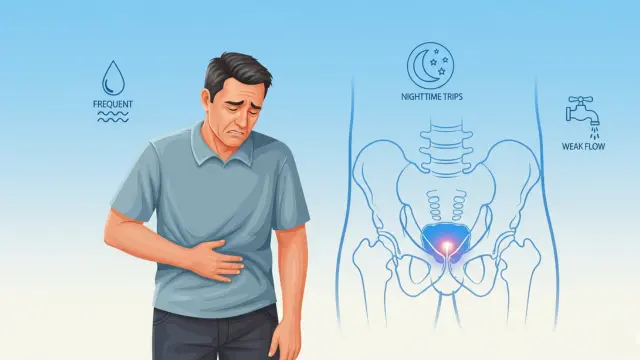
- Weak or slow urine stream
- Frequent urge to urinate, especially at night
- Difficulty starting urination
- Feeling like the bladder doesn’t fully empty
- Dribbling at the end of urination
How to Fix an Enlarged Prostate?
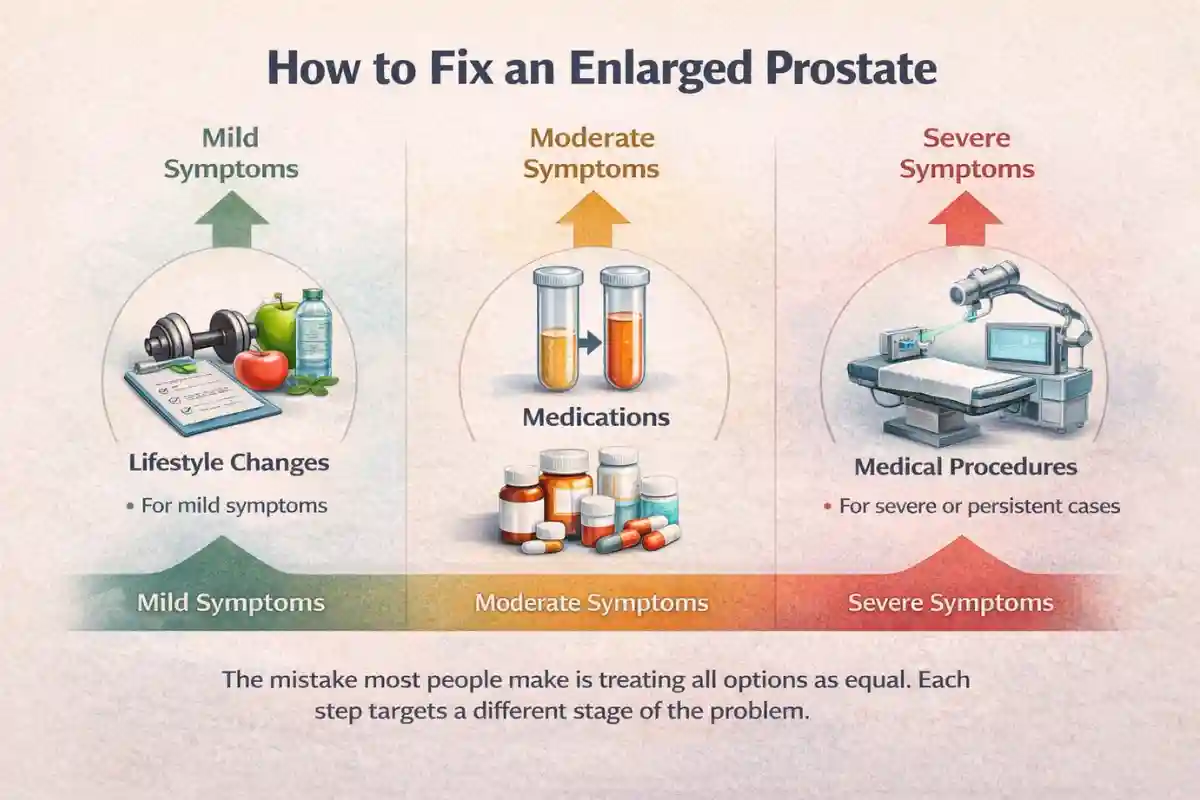
There are three main ways to fix an enlarged prostate, and each works at a different level:
- Lifestyle changes (for mild symptoms)
- Medications (for moderate symptoms)
- Medical procedures (for severe or persistent cases)
The mistake most people make is treating all options as equal. They’re not. Each step targets a different stage of the problem.
Lifestyle Changes That Actually Help
Lifestyle changes focus on reducing irritation and improving bladder function. They don’t directly shrink the prostate, but they can reduce symptoms.
What helps most:
- Reducing fluid intake in the evening
- Limiting caffeine and alcohol
- Training the bladder to hold urine longer
- Staying physically active
These changes can make a noticeable difference in mild cases. For example, simply cutting late-night fluids often reduces nighttime urination within a few days.
But here’s the limit: lifestyle changes manage symptoms — they don’t fix the underlying growth. That distinction matters if symptoms are getting worse.
Medications That Shrink or Relax the Prostate
Medications are the most common next step when symptoms start interfering with daily life.
Two main types are used:
- Alpha-blockers (like tamsulosin): relax the muscles around the prostate to improve urine flow
- 5-alpha reductase inhibitors (like finasteride): reduce DHT levels and slowly shrink the prostate
Some patients are prescribed both. A study published in the New England Journal of Medicine (2003)2Medical Management of Benign Prostatic Hyperplasia — Are Two Drugs Better Than One?, New England Journal of Medicine. found that combination therapy reduced the risk of symptom progression more than either treatment alone.
Medical Procedures That Actually Fix the Problem
When symptoms become severe or don’t respond to medication, procedures are usually the most effective solution.
Common options include:
- TURP (transurethral resection of the prostate)
- Laser therapy
- UroLift
These procedures work by removing or repositioning prostate tissue to relieve pressure on the urethra.
This is the only category that directly addresses the physical blockage. That’s why it often provides the most noticeable and lasting improvement, especially in advanced cases.
How to Shrink an Enlarged Prostate Naturally?
Natural approaches for shrinking an enlarged prostate are widely discussed, but the evidence is mixed.
Common options include:
- Saw palmetto
- Zinc-rich diets
- Regular exercise
Some people report mild symptom relief, especially with consistent lifestyle improvements. However, results are inconsistent across studies.
For example, a Cochrane Review (2012)3Spotlight on Saw Palmetto: What the Science Says, NCCIH. found that saw palmetto performed no better than a placebo in reducing urinary symptoms. That doesn’t mean it never works — it means the effect isn’t reliable.
The practical takeaway: Natural methods may help symptoms slightly, but they rarely reduce prostate size in a meaningful way.
What Is the Best Treatment Based on Severity?
The best treatment depends on how much the condition is affecting your daily life.
| Severity | Best Approach | Why |
|---|---|---|
| Mild | Lifestyle changes | Low risk, symptom control |
| Moderate | Medications | Improve flow and slow growth |
| Severe | Procedures | Remove or bypass the blockage |
This step-based approach is what doctors actually follow. Jumping straight to supplements or ignoring symptoms usually delays effective treatment.
Can an Enlarged Prostate Heal Itself?
No, an enlarged prostate does not reverse on its own.
It can stay stable for periods, and symptoms may improve temporarily, especially with lifestyle adjustments. But the underlying enlargement tends to persist or slowly progress over time.
That’s why monitoring matters, even if symptoms feel manageable.
What Should You Do If You Have an Enlarged Prostate?
If you’re noticing symptoms, the goal is to act early without overreacting.
A practical approach:
- Track your symptoms for a few weeks
- Rule out more serious conditions with a doctor
- Start with simple lifestyle adjustments
- Move to medication if symptoms persist
One pattern that often shows up: people wait too long because symptoms feel manageable at first. By the time they seek help, the condition is harder to control with simple measures.
FAQs
How to shrink the prostate immediately?
There is no way to shrink the prostate immediately. Some medications can improve urine flow within days, but actual size reduction takes months. Procedures can provide faster relief by removing blockage, but they are typically used only when symptoms are severe or persistent.
What to take to shrink the prostate?
Medications like finasteride or dutasteride are commonly used to shrink the prostate by reducing DHT levels. Supplements like saw palmetto are also used, but evidence for their effectiveness is inconsistent. A doctor can help determine the most appropriate option based on symptom severity.
Enlarged prostate treatment without surgery
Non-surgical treatment includes lifestyle changes and medications. Alpha-blockers improve urine flow quickly, while other drugs reduce prostate size over time. Many men manage symptoms effectively without surgery, especially in mild to moderate cases.
Can an enlarged prostate heal itself?
An enlarged prostate does not heal or shrink on its own. Symptoms may improve temporarily, but the underlying condition usually remains. Without treatment or management, it may gradually worsen over time.
Final Thoughts
Fixing an enlarged prostate isn’t about finding a single “best” solution. It’s about matching the right approach to the stage you’re in.
Mild symptoms can often be managed with simple changes. That’s real, and it’s worth trying first. But once symptoms start affecting sleep, daily routine, or comfort, waiting usually makes things worse, not better.
As of 2026, the pattern is consistent across research and clinical practice: lifestyle helps early, medication helps in the middle, and procedures solve advanced cases.
Most people don’t fail because options are unclear. They fail because they stay too long in the wrong stage of treatment.
Scientific References
- 1Enlarged Prostate (Benign Prostatic Hyperplasia), NIH.
- 2Medical Management of Benign Prostatic Hyperplasia — Are Two Drugs Better Than One?, New England Journal of Medicine.
- 3Spotlight on Saw Palmetto: What the Science Says, NCCIH.

Recent Posts