
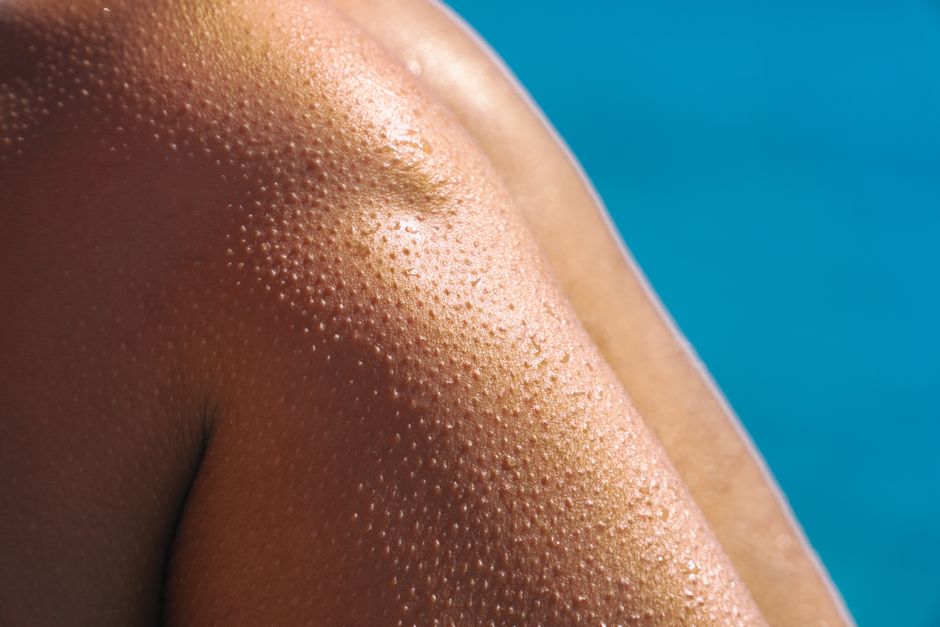
What Exactly Causes Heat Rash to Appear in New Spots?
Heat rash, also known as miliaria, develops when sweat ducts become blocked. When you sweat, the moisture cannot escape through the duct, so it builds up under the skin. This causes small bumps, itching, and a prickly sensation.
The rash only forms where sweat ducts are blocked. If you continue to sweat heavily and wear tight clothing, new blockages can form in different areas of your body. This is why the rash may seem to “spread” even though it is not moving on its own.
The key point is location. The rash appears in new places because new ducts are becoming blocked there. It is not migrating from the original rash site. Each new patch is a separate blockage event.
Is Heat Rash Contagious to Other People?
No. Heat rash is a physical blockage of sweat ducts, not an infection. You cannot catch it from someone else, and you cannot give it to anyone by touching them.
This is an important distinction. Many rashes are caused by viruses, bacteria, or fungi, and those can be contagious. Heat rash is purely mechanical. It results from your own body’s response to heat and sweat. There is no organism involved that could pass from person to person.
If a rash is spreading rapidly and you have a fever, that is a different situation. Those symptoms point to something other than heat rash, and you should seek medical advice.
How Long Does It Take for Heat Rash to Go Away?
In most cases, heat rash clears up on its own within a few days once you cool down and stop sweating. The blocked ducts need time to open and drain.
Mild cases may resolve in 24 to 48 hours. More stubborn cases can last up to a week. If the rash persists beyond that, or if you see signs of infection like pus, increased pain, or swelling, see a doctor.
The timeline depends on how quickly you remove the cause. If you stay in a hot, humid environment and keep sweating, the rash will not clear. Cooling off is the primary treatment.





What Does Heat Rash Look Like Compared to Other Rashes?
Heat rash has a distinct appearance, but it can be confused with other skin conditions. The most common type, miliaria rubra, looks like small red bumps or blisters. These bumps often appear in clusters and may feel prickly or itchy.
The rash typically shows up in areas where clothing rubs against skin or where sweat pools. Common locations include the neck, chest, back, groin, and under the breasts. In adults, it rarely appears on the face.
Other rashes like contact dermatitis or a fungal infection can look similar. The difference is the trigger. Heat rash appears after sweating in hot conditions. If you have not been hot or sweating, it is less likely to be heat rash.
Will Heat Rash Spread If You Scratch It?
Scratching does not cause heat rash to spread. The rash spreads because of new duct blockages, not because you touched or scratched the existing bumps.
However, scratching can damage the skin. This opens the door for bacteria to enter, which can lead to a secondary infection. An infected heat rash may look like it is spreading because the infection creates new redness and inflammation around the original site.
If the rash becomes more painful, oozes fluid, or develops honey-colored crusts, that suggests an infection. Keep the area clean and avoid scratching to reduce this risk.
How Do You Stop Heat Rash from Spreading to New Areas?
The only reliable way to prevent new patches is to stop the sweating that causes new blockages. This means cooling down and reducing activities that make you sweat heavily.
Here are practical steps that help:
- Move to a cool, air-conditioned environment as soon as possible.
- Remove tight clothing and switch to loose, breathable fabrics like cotton.
- Take a cool shower or bath to lower your skin temperature.
- Pat your skin dry gently. Do not rub, as friction can irritate blocked ducts.
- Avoid heavy creams or ointments that can further block sweat ducts.
These measures address the root cause. Once your skin is cool and dry, no new blockages should form. Existing bumps will begin to resolve.
When Should You See a Doctor for Heat Rash?
Most heat rash does not require medical treatment. But there are situations where you should get professional advice.
Seek medical care if the rash lasts longer than a week despite cooling measures. Also see a doctor if you notice signs of infection, such as increasing pain, swelling, warmth, or pus. A fever alongside a rash is another reason to get checked.
In rare cases, a severe form of heat rash called miliaria profunda can occur. This affects deeper skin layers and can cause systemic symptoms like nausea and dizziness. This type requires medical evaluation.
If you are unsure whether your rash is heat rash or something else, a doctor can provide a clear diagnosis. It is always better to check than to assume.
Can Heat Rash Occur in Winter or Without Heat?
Heat rash requires blocked sweat ducts, which usually happen during sweating. While it is most common in hot, humid weather, it can occur any time you sweat heavily.
Wearing heavy clothing during winter exercise can cause it. Fever-related sweating can also trigger it. The common factor is sweat that cannot evaporate quickly enough.
Some people are more prone to heat rash than others. Newborns and infants have immature sweat ducts and develop it more easily. Adults who have had heat rash before are also more likely to get it again.
Does Sunscreen or Moisturizer Make Heat Rash Worse?
Thick, heavy products can worsen heat rash by blocking sweat ducts further. Sunscreen is necessary for sun protection, but some formulations are greasy and trap sweat.
If you are prone to heat rash, choose lightweight, non-comedogenic sunscreens labeled as “oil-free” or “gel-based.” Apply them thinly and allow them to dry before getting hot.
Moisturizers serve a different purpose. If your skin is already irritated from heat rash, heavy moisturizers can make it worse. Let the rash breathe. Only use light, water-based products if your skin feels dry.
What Is the Difference Between Heat Rash and Prickly Heat?
There is no difference. Prickly heat is another name for heat rash. The medical term is miliaria. The “prickly” sensation comes from the itching and tingling that occurs when sweat builds up under the skin.
Some people also call it sweat rash. All these terms refer to the same condition. The name changes based on the symptom that bothers you most, but the cause and treatment are identical.
Frequently Asked Questions
Can heat rash spread to other parts of my body?
Heat rash does not spread on its own, but new patches can form in other areas if you continue to sweat and block more ducts. Each new patch is a separate blockage, not a migration of the original rash.
Is heat rash contagious through skin contact?
No, heat rash is not contagious. It is caused by blocked sweat ducts, not an infection, so you cannot pass it to another person by touching them.
How fast does heat rash spread?
New patches can appear within hours if you stay in hot, humid conditions and keep sweating. Once you cool down and stop sweating, new patches should stop forming.
Can scratching make heat rash spread?
Scratching does not spread the rash itself, but it can damage the skin and lead to a bacterial infection. An infection can create new redness that looks like the rash is spreading.
