
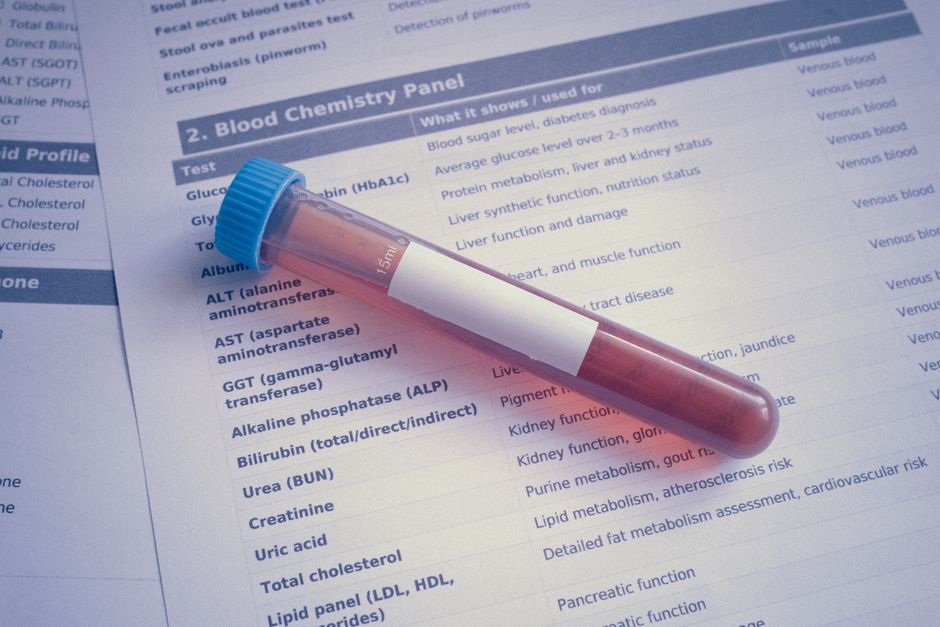
Will CBD show up in a urine test? The short answer is that pure CBD itself is not what standard urine drug tests are designed to detect. Those tests look for THC metabolites, not CBD. The real risk is not the CBD — it is THC that may be present in the product, or THC that accumulates in your body over time from repeated use.
That distinction matters. Many people using CBD for sleep, anxiety, or pain assume they are safe from workplace drug screens. Some are. Some are not. The difference usually comes down to what is actually in the bottle and how much of it you use.
What Do Standard Urine Drug Tests Actually Detect?
Most urine drug screens used by employers, courts, and treatment programs test for a class of compounds called cannabinoids, but the target is specific: THC and its metabolites.
The primary metabolite labs look for is THC-COOH (11-nor-9-carboxy-THC). This is what your body produces after THC enters your system. It is fat-soluble, which is why it can remain detectable in urine long after the psychoactive effects wear off.
CBD — cannabidiol — is a different molecule. Immunoassay screens, the most common first-step urine tests, are built around antibodies that bind to THC metabolites. CBD does not typically trigger that binding at normal concentrations. Confirmatory testing, usually gas chromatography-mass spectrometry (GC-MS), is even more specific and separates cannabinoids by their molecular structure.
So the test is not looking for CBD. The problem is what else might be in your product.
Can CBD Products Contain THC?
Yes, and this is the core of the risk. In the United States, hemp-derived CBD products may legally contain up to 0.3% THC by dry weight under federal law. That is a legal threshold, not a guarantee of zero THC.
Full-spectrum CBD products contain a range of cannabinoids, including THC, because they are extracted from whole plant material. The amount per serving is usually small. But “small” is not the same as “none,” and it is not the same as “undetectable in urine after daily use.”
Broad-spectrum products are processed to remove THC, though removal is rarely 100% complete. CBD isolate is purified CBD with other cannabinoids largely stripped out. Isolate carries the lowest THC risk, but only if the product is accurately labeled and genuinely pure.
Independent testing has repeatedly found that some commercial CBD products contain more THC than the label states, or contain THC when the label claims none. This is a product quality problem, not a hypothetical one.
Will CBD Show Up in a Urine Test — THC Is the Risk
The phrase “CBD shows up on a drug test” is misleading. What shows up is THC or its metabolites. CBD itself is generally not the target of standard workplace panels.
However, there are a few ways THC can end up in your urine even if you never used cannabis intentionally:
- Full-spectrum products that contain trace THC, especially with daily or high-dose use
- Mislabeled products where actual THC content exceeds what is printed on the bottle
- Accumulation over time, since THC metabolites are stored in fat tissue and cleared slowly
- Contamination during manufacturing if the same equipment processes high-THC and low-THC material
Repeated exposure to small amounts of THC can, over weeks or months, build up enough metabolite concentration to cross the detection threshold of a standard screen. This is why occasional use of a full-spectrum product may not register, while daily use of the same product might.




How Long Does THC Stay Detectable in Urine?
There is no single answer, and anyone who gives you an exact number is oversimplifying. Detection time depends on how much THC entered your system, how often, your body fat percentage, your metabolism, and your hydration level.
General clinical understanding, based on established toxicology references, is roughly:
- Single use or very infrequent use: often detectable for a few days
- Moderate use (several times per week): often detectable for one to several weeks
- Heavy, chronic use: can remain detectable for a month or longer
These are broad ranges, not precise predictions. A person using a full-spectrum CBD oil daily for months is not the same as someone who tried it once. The cumulative THC exposure matters more than any single dose.
CBD use alone, from a verified THC-free isolate, does not follow this timeline because there is no THC metabolite to clear.
Does CBD Itself Cause a False Positive?
This is a common claim, and the evidence is limited. Some early immunoassay screens have shown cross-reactivity with certain cannabinoid compounds at very high concentrations, but this is not a well-documented, reliable phenomenon at typical CBD doses.
The more likely explanation for a positive result after CBD use is that the product contained THC — not that CBD confused the test.
Some research suggests that certain other substances and medications can occasionally interfere with immunoassay results, which is exactly why positive screens are supposed to be confirmed with a more specific method like GC-MS before any action is taken. If you test positive and believe it is an error, requesting confirmatory testing is a reasonable step.
How Can You Reduce the Risk of a Positive Test?
If you use CBD and face drug testing, the most reliable approach is to use products you can verify are THC-free. That means looking for a certificate of analysis (COA) from an independent third-party lab, not just a label claim.
A COA should show the cannabinoid profile, including whether THC is present and at what concentration. It should come from a lab that is not affiliated with the manufacturer. If a company cannot or will not provide this, that is a meaningful gap.
CBD isolate products carry the lowest risk because the purification process removes other cannabinoids. Full-spectrum products carry more risk, particularly with daily use. Broad-spectrum falls somewhere in between, depending on how thorough the THC removal was.
No product can be guaranteed to produce a negative test result in every person. Individual metabolism, dose, and frequency all play a role. If avoiding a positive test is critical — for employment, legal, or medical reasons — that uncertainty is worth taking seriously.
What About Other Types of Drug Tests?
Urine tests are the most common, but they are not the only method. Blood tests detect THC and metabolites but typically only within a shorter window after use. Saliva (oral fluid) tests detect recent use, usually within hours to a couple of days. Hair tests can detect THC for months, since cannabinoids are incorporated into the hair shaft as it grows.
The detection window and the specific compounds targeted vary by test type. A product that might not trigger a urine screen could theoretically register on a hair test after repeated exposure, because hair testing looks at cumulative exposure over a longer period.
Most workplace and pre-employment testing still relies on urine. But if you are subject to hair testing, the cumulative THC exposure from a full-spectrum product is a more significant concern.
Is CBD Legal and Does That Matter for Testing?
Federal law in the United States legalized hemp-derived products containing no more than 0.3% THC by dry weight. That legal status does not protect you from a positive drug test. Employers, courts, and testing programs set their own rules, and many do not distinguish between hemp-derived THC and cannabis-derived THC.
In other words, a product can be legal to buy and still cause a positive test result. The two issues are separate.
Some states have their own laws about CBD and employment testing, but these vary widely. There is no universal protection.
Frequently Asked Questions
Will CBD show up on a urine test?
Pure CBD is not what standard urine drug tests detect — they look for THC metabolites. A positive result after CBD use almost always means the product contained THC.
Can full-spectrum CBD make you fail a drug test?
Yes, it can, especially with daily or high-dose use, because full-spectrum products may contain trace THC that accumulates over time. CBD isolate carries the lowest risk.
How long does THC from CBD stay in your urine?
It varies widely based on dose, frequency, and individual metabolism, ranging from a few days after infrequent use to a month or longer with heavy chronic exposure. There is no single reliable number.
Does CBD isolate show up on a drug test?
CBD isolate is unlikely to trigger a standard urine screen because it contains little to no THC. However, only a verified third-party lab report can confirm a specific product’s THC content.
