
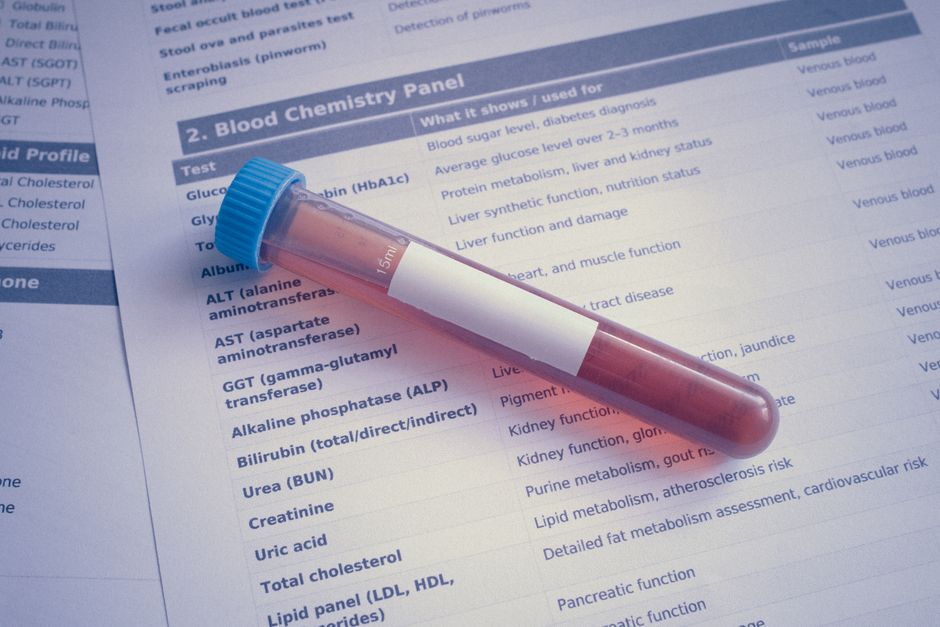
Whether CBD can trigger a positive drug test comes down to one question: what exactly is in the product you used. Standard urine drug screens look for THC, not CBD. Pure CBD isolate should not cause a positive result. But many CBD products sold in the US contain small amounts of THC, and repeated use of those products can sometimes push a test over the line.
That is the short answer. The longer answer involves how drug tests actually work, what “THC-free” really means on a label, and why two people using similar products can get different results.
What Do Standard Urine Drug Tests Actually Detect?
Most workplace urine drug screens use an immunoassay that detects THC metabolites — specifically a compound called THC-COOH. This is what your body produces after processing delta-9-tetrahydrocannabinol, the psychoactive compound in cannabis.
The test does not look for CBD. It has no mechanism to detect cannabidiol. If a lab ran a standard panel on someone who used only pure CBD, the result would be negative for cannabis.
The confusion arises because CBD and THC are both cannabinoids found in the cannabis plant. Hemp is legally defined in the US as cannabis containing no more than 0.3% THC by dry weight. CBD products are typically made from hemp. That 0.3% threshold is a legal limit, not a guarantee of zero THC.
So the test itself is not the problem. The product is the variable.
Will CBD Show Up in a Urine Test If the Product Contains No THC?
No. If a product contains only CBD — no THC at all — a standard urine drug screen will not detect it.
CBD is metabolized differently than THC. It does not convert into THC-COOH in the body. Some early research raised the theoretical possibility that CBD could convert to THC in stomach acid, but later studies found this conversion does not happen to any meaningful degree in humans. It is not considered a realistic pathway to a positive test.
The practical problem is that “THC-free” on a label is not always accurate. Independent testing of CBD products sold in the US has repeatedly found that some products contain more THC than the label states, or more than the legal limit. Some contain less CBD than advertised. Label accuracy in this market has been inconsistent.
This is the core issue for anyone facing a drug test. The risk is not CBD itself. The risk is contamination or mislabeling.
How Much THC Is Enough to Trigger a Positive Test?
There is no single threshold that applies to everyone. Drug tests have a cutoff level — commonly 50 nanograms per milliliter of THC-COOH in urine for standard workplace screening. But how much THC you need to consume to reach that cutoff depends on several factors.
- How much THC the product contains — even trace amounts add up with daily use
- How often you use it — occasional use clears faster than daily use
- Your body fat percentage — THC metabolites are stored in fat tissue and released slowly
- Your metabolism — individual differences affect how quickly you process and excrete metabolites
- Your hydration level — concentrated urine can push metabolite levels higher
- How much time has passed — metabolites clear over days to weeks depending on use patterns
A person using a full-spectrum CBD oil with trace THC once might never reach the cutoff. A person using the same product multiple times daily for weeks could accumulate enough metabolites to test positive. This is not a predictable equation.
Some research suggests that heavy, daily use of full-spectrum CBD products containing small amounts of THC can lead to positive urine screens in some individuals. The evidence is not strong enough to say exactly how often this happens or at what dose.



What Is the Difference Between CBD Isolate, Full-Spectrum, and Broad-Spectrum?
The type of CBD product you use matters more than the dose for drug testing purposes.
| Product Type | THC Content | Drug Test Risk |
|---|---|---|
| CBD isolate | No THC (theoretically) | Lowest risk — only if product is accurately labeled |
| Broad-spectrum CBD | THC removed, other cannabinoids present | Low risk — but depends on extraction quality |
| Full-spectrum CBD | Contains up to 0.3% THC by law | Higher risk with repeated use |
CBD isolate is purified to contain only cannabidiol. In theory, it should carry no risk of a positive THC test. In practice, the risk depends on whether the manufacturer actually achieved that purity and whether the label is honest.
Broad-spectrum products have THC removed but retain other plant compounds. The THC content should be negligible, but again, testing has shown that some products contain more than expected.
Full-spectrum products intentionally contain the full range of cannabinoids, including THC at legal levels. These carry the most risk for frequent users.
If avoiding a positive drug test is critical — for employment, legal, or medical reasons — CBD isolate from a manufacturer that provides third-party lab results is the lowest-risk option. Even then, no product can be guaranteed to be completely free of THC unless you verify it yourself.
Can You Test Positive From Secondhand Exposure or Topical CBD?
Secondhand inhalation of cannabis smoke can theoretically cause a positive test, but the evidence suggests this is rare and typically requires being in a poorly ventilated space with heavy smoke exposure. Incidental exposure is unlikely to trigger a positive result on a standard urine screen.
Topical CBD products applied to the skin are unlikely to cause a positive test. CBD and THC absorbed through the skin enter the bloodstream at low levels compared to inhalation or oral consumption. However, some transdermal products are designed for systemic absorption, and those could theoretically deliver enough THC to be detected if the product contains it.
CBD edibles, oils, tinctures, and vape products are the main routes that could lead to a positive test if the product contains THC.
What Should You Do If You Need to Pass a Drug Test and Use CBD?
The safest approach is to stop using any CBD product before a drug test and allow time for any THC metabolites to clear. How much time depends on your use history and body composition. There is no reliable way to calculate this for a specific person.
Drinking water does not reliably flush THC metabolites. They are stored in fat tissue and released slowly. Diluting your urine by drinking excessive water can sometimes lower metabolite concentration below the cutoff, but it can also trigger a “dilute” flag on the test, which may be treated as a refusal or require a retest.
If you use CBD for a medical reason and face mandatory drug testing, talk to your employer or the testing authority about your situation before the test. Some states have laws protecting medical cannabis patients, but these vary widely and often do not apply to CBD products.
There is no supplement or detox product proven to reliably clear THC metabolites faster than the body does on its own. Products marketed for this purpose have not been shown to work in controlled studies.
Why Do Some People Test Positive and Others Do Not?
Individual variation is significant. Two people using the same full-spectrum CBD oil at the same dose could get different results on the same day.
Body fat percentage plays a role because THC metabolites are lipophilic — they bind to fat tissue. A person with more body fat may store more metabolites and release them over a longer period. A person with less body fat may clear them faster.
Frequency and duration of use matter. Someone who used CBD daily for months has a higher body burden of any trace THC metabolites than someone who used it a few times.
The specific product matters. Two bottles of “full-spectrum CBD oil” from different brands can contain different amounts of THC, even if both claim to be within legal limits. Third-party lab testing is the only way to know what is actually in a product, and even that only reflects the batch tested.
This unpredictability is the main reason the answer to whether CBD will show up on a urine test is not a simple yes or no. It depends on the product, the person, and the pattern of use.
Frequently Asked Questions
Will CBD show up on a urine test?
Pure CBD does not show up on a standard urine drug test because the test detects THC metabolites, not CBD. However, many CBD products contain trace amounts of THC, and repeated use can sometimes lead to a positive result.
How long does CBD stay in your system for a drug test?
CBD itself is not detected by standard drug tests, so there is no clearance time for CBD. If a product contains THC, metabolites can be detectable for days to weeks depending on frequency of use, body fat, and metabolism.
Can full-spectrum CBD make you fail a drug test?
Yes, it can. Full-spectrum CBD legally contains up to 0.3% THC, and daily use of these products has been associated with positive urine screens in some individuals.
Is CBD isolate safe for drug testing?
CBD isolate carries the lowest risk because it is purified to remove THC. However, independent testing has found that some products labeled as isolate contain trace THC, so third-party lab results are the only way to verify purity.
