

Biotin does not appear to affect fertility directly, but it can seriously distort lab test results. That second part matters more than most people realize. High-dose biotin supplements can interfere with several common immunoassays, including thyroid tests, cardiac troponin, and hormone panels. The interference can produce falsely high or falsely low results that look like real disease.
If you take biotin for hair, skin, or nails and your doctor orders bloodwork, the supplement can quietly change the numbers on the page. In some cases that leads to a wrong diagnosis. In others it hides a real problem. Fertility itself is not harmed by biotin in any established way, but the tests used to investigate fertility can be thrown off.
Does Biotin Affect Fertility And Lab Test Results?
Biotin does not affect fertility. No clinical evidence shows that biotin supplements improve or reduce a person’s ability to conceive. The supplement is a B vitamin, and the body needs it, but deficiency is rare in people eating a normal diet.
The lab test issue is real and well documented. The FDA issued a safety communication in 2017 warning that high-dose biotin can interfere with certain lab tests and lead to incorrect results. That warning followed reports of a patient who died after a troponin test was falsely lowered by biotin, masking a heart attack.
The interference happens because many modern lab tests use a technique called immunoassay. These tests rely on biotin-streptavidin binding as part of the detection chemistry. When a person takes a large biotin supplement, the extra biotin in their blood competes with the test’s built-in biotin and disrupts the signal. The result can be wrong in either direction depending on the test design.
What counts as high-dose biotin
Standard multivitamins usually contain around 30 micrograms of biotin. That is close to the daily adequate intake of 30 micrograms for adults set by the National Institutes of Health. Doses in the range of 5,000 to 10,000 micrograms — often sold as 5 mg or 10 mg — are the ones linked to test interference. Those high doses are common in hair and nail supplements.
Doses used in some clinical trials for multiple sclerosis were even higher, around 300 mg per day, and those trials specifically reported thyroid test interference as a known effect.
How Does Biotin Interfere With Blood Tests?
Biotin interference is a chemistry problem, not a biological one. The supplement does not change your thyroid gland or your heart. It changes the test’s ability to measure them accurately.
Most affected tests use biotin and streptavidin as a binding pair. Streptavidin binds biotin very tightly. Test makers coat tiny particles with streptavidin and use biotin-tagged antibodies to capture the substance being measured. When a flood of extra biotin enters the sample, it saturates the streptavidin and blocks the intended reaction. The machine then reads a signal that does not reflect the real hormone or protein level.
Whether the result comes back falsely high or falsely low depends on the specific test design. Some assays are competitive, some are sandwich assays, and each responds differently to the same interference. That is why biotin can push one test up and another down.
Which Lab Tests Are Most Affected by Biotin?
Thyroid tests are the most commonly reported casualties. A falsely high free T4 and a falsely low TSH can look like hyperthyroidism. A falsely low free T4 and falsely high TSH can look like hypothyroidism. Neither picture may be real.
Cardiac troponin is the most dangerous one. Troponin is used to diagnose heart attacks. Biotin interference has been reported to lower troponin readings, which could cause a heart attack to be missed. This is the scenario behind the FDA warning.
Other tests reported to be affected include:
- Thyroid stimulating hormone (TSH), free T3, and free T4
- Cardiac troponin
- Pregnancy tests, including some used in early pregnancy detection
- Hormone panels such as estradiol, testosterone, and progesterone
- Vitamin B12 and vitamin D in some assay formats
- Certain tumor markers and thyroid antibodies
For anyone investigating fertility, that third and fourth bullet matters. Estradiol, progesterone, LH, FSH, and hCG are all measured by immunoassay on many platforms. If a fertility workup returns results that do not match the clinical picture, biotin should be on the list of possible explanations.
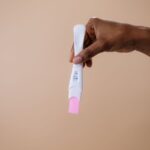




Can Biotin Cause a False Pregnancy Test Result?
Yes, high-dose biotin can interfere with some pregnancy tests. Both lab-based hCG immunoassays and some at-home tests have been reported to be affected.
The direction of the error depends on the test. Some reports describe false negatives, where a pregnant person is told they are not pregnant. Others describe false positives. This is not a common event, but it has been documented, and the FDA warning specifically mentions pregnancy tests.
If you are taking high-dose biotin and get a pregnancy test result that does not match your symptoms or your situation, stop the biotin and repeat the test. A healthcare provider can also order a test on a platform that is not affected.
How Long Should You Stop Biotin Before Bloodwork?
Biotin clears from the blood faster than most people assume. The half-life is roughly two hours in people with normal kidney function, and the FDA recommends stopping biotin at least two days before certain tests. Some lab guidelines suggest longer, up to three to eight days, for very high doses.
That range exists because the washout depends on the dose and on kidney function. A person taking 5 mg daily may clear it faster than someone taking 300 mg daily. Someone with impaired kidney function clears it more slowly.
The practical point is this: two days is the minimum the FDA cites, but many labs and clinicians prefer a longer window for high doses. If you take biotin and have bloodwork scheduled, tell the ordering clinician the exact dose and how long you have been taking it. They can decide how long to pause it and whether to use a different test platform.
Do not stop prescribed medications on your own to prepare for a test. Only biotin and biotin-containing supplements are the issue here.
Does Biotin Help Hair, Skin, or Nails Enough to Be Worth It?
For people who are genuinely biotin deficient, supplements correct the deficiency and can improve symptoms. Biotin deficiency is rare in the general population. It is seen mainly in certain inherited metabolic disorders, in people on long-term parenteral nutrition, in some cases of prolonged raw egg white consumption, and in a few other uncommon situations.
For people who are not deficient, the evidence that biotin supplements improve hair, skin, or nails is weak. Some small studies have suggested benefit in specific groups, such as people with brittle nail syndrome, but the evidence is not strong enough to support routine use for cosmetic purposes in healthy adults.
Biotin is water-soluble, so excess is excreted in urine. That is why it is often described as safe at high doses. The lab interference issue shows that “safe” and “harmless to your medical care” are not the same thing.
What Should You Do If You Take Biotin and Need Bloodwork?
Tell your healthcare provider before the test. This is the single most useful step. Many clinicians are not aware of biotin interference, and many electronic order systems do not flag it. You may be the only person in the room who knows you take it.
Bring the bottle or a photo of the label. The dose matters. A 30 microgram multivitamin is not the same as a 10,000 microgram hair supplement.
Ask whether the tests being ordered are ones known to be affected. If they are, ask about pausing biotin and how long the pause should be. If the test is urgent — for example, a troponin during chest pain — the clinician needs to know about biotin so they can interpret the result correctly or use a different assay.
Do not assume that because a supplement is sold over the counter, it cannot affect medical care. Biotin is the clearest example in recent years of a common supplement causing real harm through lab error.
Is Biotin Safe During Pregnancy or Fertility Treatment?
Biotin at normal dietary and multivitamin levels is considered safe in pregnancy. The concern is not the vitamin itself but the test interference at high doses.
During fertility treatment, frequent bloodwork is common. Estradiol, progesterone, LH, and hCG are monitored repeatedly. If you are taking high-dose biotin during a treatment cycle, you could confuse the results your clinic uses to make decisions about medication timing and dosing.
There are no clinical guidelines specifically for biotin use during fertility treatment. The safest approach is to tell your fertility clinic about any biotin supplement before your cycle begins, so they can plan around it.
What Is the Bottom Line on Biotin and Fertility?
Biotin does not affect fertility. It does not improve it, and it does not harm it. Claims that biotin boosts fertility are not supported by evidence.
The real issue is lab interference. High-dose biotin can distort thyroid tests, cardiac troponin, pregnancy tests, and hormone panels. That can lead to wrong diagnoses, missed diagnoses, and confusion during a fertility workup. The FDA has warned about this since 2017.
If you take high-dose biotin, tell your healthcare provider before any bloodwork. If you are not deficient, there is little evidence the supplement is doing anything useful for your hair, skin, or nails anyway. The cost of taking it is not just money. It is the risk of a wrong number on a lab report.
Frequently Asked Questions
Does biotin affect fertility?
No. No clinical evidence shows that biotin improves or reduces fertility. The supplement’s real risk is its effect on lab tests, not on reproductive function.
How long should I stop taking biotin before a blood test?
The FDA recommends stopping biotin at least two days before certain tests, though some lab guidelines suggest up to three to eight days for very high doses. Tell your clinician your exact dose so they can advise you.
Can biotin cause a false positive pregnancy test?
Yes, high-dose biotin has been reported to interfere with some pregnancy tests, causing either false positives or false negatives. If a result does not match your symptoms, stop biotin and repeat the test.
Which blood tests does biotin interfere with most?
Thyroid tests and cardiac troponin are the most commonly reported, followed by pregnancy tests and hormone panels. The direction of the error depends on the specific test design.
