
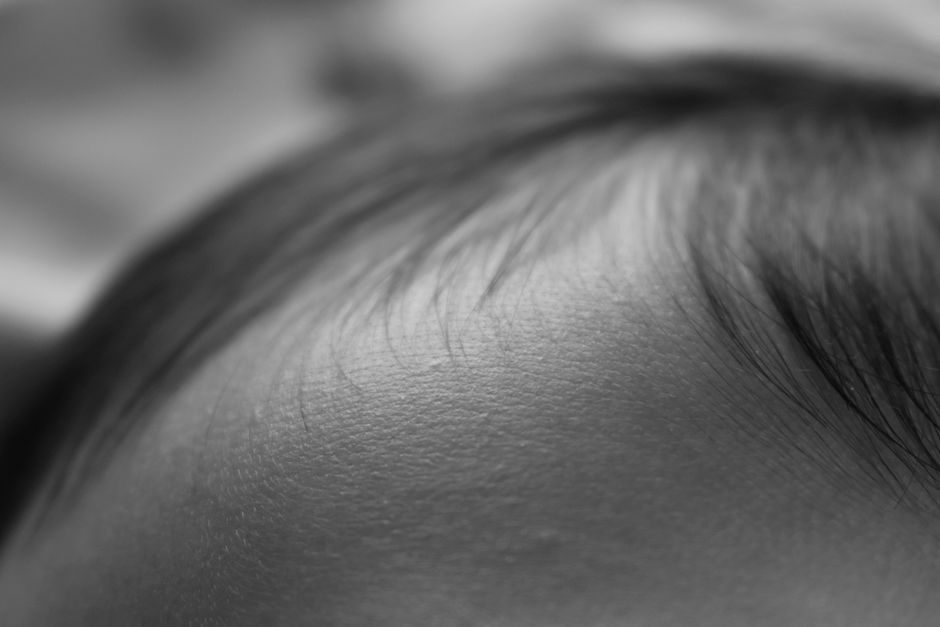
A metopic ridge is the bony bump that can form down the center of a baby’s forehead. In most cases it is a harmless variation of normal skull growth and it flattens out on its own as the child gets older. When the ridge is caused by a condition called metopic craniosynostosis, where the seam between the two frontal skull bones closes too early, the shape does not correct itself and surgery may be needed.
Parents often notice the ridge somewhere between two and six months of age. It can look like a narrow keel running from the soft spot down to the bridge of the nose. Whether it needs treatment depends entirely on why it formed, and that is something only a doctor can determine with an exam and sometimes imaging.
What Is a Metopic Ridge?
The metopic suture is the seam that runs down the middle of the forehead, separating the left and right frontal bones. It is one of several sutures in a baby’s skull that stay open during infancy so the brain has room to grow.
This particular suture normally begins to close sometime between three and nine months of age and is usually fully fused by around two years. In many babies, the edges of the two frontal bones thicken slightly as they come together. That thickening is what you feel and see as a ridge.
A visible ridge is common. A study published in the Journal of Neurosurgery: Pediatrics found that a noticeable metopic ridge appears in a meaningful share of healthy infants, most of whom never develop any problem. The ridge itself is a sign the suture is closing, not proof that something has gone wrong.
The important distinction is between a ridge that sits on an otherwise normal, rounded forehead and one that comes with a forehead that looks pinched, pointed, or triangular when viewed from above.
What Is the Difference Between a Normal Metopic Ridge and Metopic Craniosynostosis?
Both conditions produce a bump in the same place, but they are not the same thing. A normal ridge is a cosmetic feature of ordinary skull development. Metopic craniosynostosis is a birth defect in which the suture fuses far too early, before the brain has finished growing.
When the metopic suture closes prematurely, the forehead cannot widen normally. The brain keeps growing, so the skull compensates by pushing the forehead forward into a pointed shape. This is called trigonocephaly, from the Greek word for triangle.
Doctors look for several signs that point toward craniosynostosis rather than a simple ridge:
- A forehead that looks triangular or pointed when viewed from above
- Eyes that appear close together, sometimes called hypotelorism
- Ridging along the brow that creates a visible crease above the nose
- A narrow or pinched appearance across the temples
- An abnormal head shape that gets more noticeable over time rather than less
A plain ridge with a normally rounded forehead and normally spaced eyes is far more likely to be the harmless kind. Physical exam alone is not always enough to tell them apart, especially in young infants. That is why some doctors order a CT scan, though this is not done routinely because it exposes the baby to radiation.
Will a Metopic Ridge Go Away on Its Own?
A benign metopic ridge usually becomes less noticeable over time. As the skull grows and the frontal bones thicken and remodel, the sharpness of the ridge tends to soften. Many children have a barely visible bump by the time they start school, and some have none at all.
The timeline varies. Some ridges fade within the first year. Others remain subtly visible into early childhood. A small ridge that you can feel but can barely see is not a medical concern, and no treatment is needed.
What a benign ridge will not do is disappear overnight, and it will not vanish completely in every child. Some adults still have a slight midline bump on the forehead that has been there since infancy. This is a normal variation in skull shape, not a sign of anything wrong.
If the ridge is caused by craniosynostosis, it will not go away on its own. The premature fusion cannot reverse, and the head shape typically becomes more pronounced as the brain grows. This is why monitoring matters.





When Does a Metopic Ridge Need Treatment?
Treatment is considered when metopic craniosynostosis is confirmed and the head shape is significantly affected. The main goal of surgery is not cosmetic. It is to give the brain room to grow normally and to prevent or correct the increased pressure that can build inside a skull that cannot expand.
Not every child with confirmed craniosynostosis needs surgery. Some cases are mild, and surgeons may recommend observation with regular follow-up. The decision depends on how much the fusion is affecting skull growth, whether there are signs of raised intracranial pressure, and the child’s age.
Signs that would prompt a doctor to look more closely include:
- A head shape that keeps getting more abnormal instead of improving
- Signs of increased pressure inside the skull, such as vomiting, irritability, or a bulging soft spot
- Developmental concerns or delays
- Vision problems
These signs do not confirm craniosynostosis on their own. They simply mean a specialist evaluation is warranted.
What Does Surgery for Metopic Craniosynostosis Involve?
Surgery for metopic craniosynostosis reshapes the forehead and upper orbits to give the brain room and to create a more typical head shape. There are two main approaches, and the choice depends on the child’s age and the surgeon’s assessment.
The first is open cranial vault remodeling. This is typically done between about six and twelve months of age. The surgeon removes and reshapes the affected bone, then repositions it. It is a major operation with a longer recovery.
The second is endoscopic strip craniectomy, usually performed earlier, often before six months. The surgeon removes a narrow strip of bone along the fused suture using small incisions and a camera. The child then wears a molding helmet for several months to guide the skull into a more normal shape. This approach tends to involve less blood loss and a shorter hospital stay, but it requires the family to commit to helmet therapy and frequent follow-up.
Both approaches are well established. Which one is better for a given child is a decision made by a craniofacial team, and it depends on factors that vary from case to case. There is no single answer that applies to every child.
What Should You Do If You Notice a Ridge on Your Baby’s Forehead?
Bring it up at your baby’s next well-child visit. Most pediatricians can tell a benign ridge from a concerning one during a routine exam, and many will simply monitor it.
If the doctor is uncertain, or if the head shape looks abnormal, you may be referred to a craniofacial specialist or a pediatric neurosurgeon. These specialists see these cases regularly and can often make the distinction with a careful physical exam.
Take photos from above, from the front, and from the side. A record over time helps show whether the shape is changing. This is genuinely useful information for a specialist.
Do not press on the ridge or try to reshape it. Nothing you do at home will change how the suture closes. What matters is getting an accurate diagnosis and, if needed, timely treatment while the skull is still growing.
Does a Metopic Ridge Affect Brain Development?
A benign metopic ridge has no effect on brain development. The suture is closing on a normal schedule, and the brain has plenty of room to grow.
The picture is more complicated with true metopic craniosynostosis. Research indicates that some children with this condition have a higher risk of developmental delays and learning difficulties, though many do not. The reasons are not fully understood, and the relationship between the fused suture and development is an area of ongoing study.
Surgery is often recommended partly to reduce the risk of raised intracranial pressure, which can affect brain function if it goes untreated. Whether early surgery improves long-term developmental outcomes is a question researchers are still working on. The evidence suggests it may help in some cases, but it is not a guarantee, and outcomes vary.
This is one of the reasons early evaluation matters. If treatment is going to help, it works best while the skull is still flexible and the brain is still growing rapidly.
What Is the Outlook for a Child With a Metopic Ridge?
For a benign ridge, the outlook is excellent. No treatment is needed, and the appearance usually improves with age. There is no effect on health, development, or intelligence.
For metopic craniosynostosis treated with surgery, the outlook is generally good. Most children have a significantly improved head shape after surgery, and the procedure relieves pressure on the brain when it is present. Long-term follow-up is common to monitor growth and development.
As with any surgery, there are risks. These include bleeding, infection, and reactions to anesthesia. A craniofacial team will discuss these with you in detail. The risks are real but manageable in experienced hands, and the benefits of treating significant craniosynostosis generally outweigh them.
Frequently Asked Questions
Will a metopic ridge go away on its own?
In most cases, yes. A benign metopic ridge usually becomes less noticeable as the skull grows and remodels, often fading over the first few years of life.
How can I tell if my baby’s forehead ridge is serious?
A ridge with a normally rounded forehead and normally spaced eyes is usually harmless. A forehead that looks triangular or pointed from above, or eyes that appear close together, warrants a specialist evaluation.
At what age does the metopic suture normally close?
The metopic suture typically begins to close between three and nine months of age and is usually fully fused by around two years.
Does a metopic ridge always mean my child needs surgery?
No. A benign ridge never needs surgery. Surgery is considered only when metopic craniosynostosis is confirmed and the fusion is affecting skull growth or brain development.
