
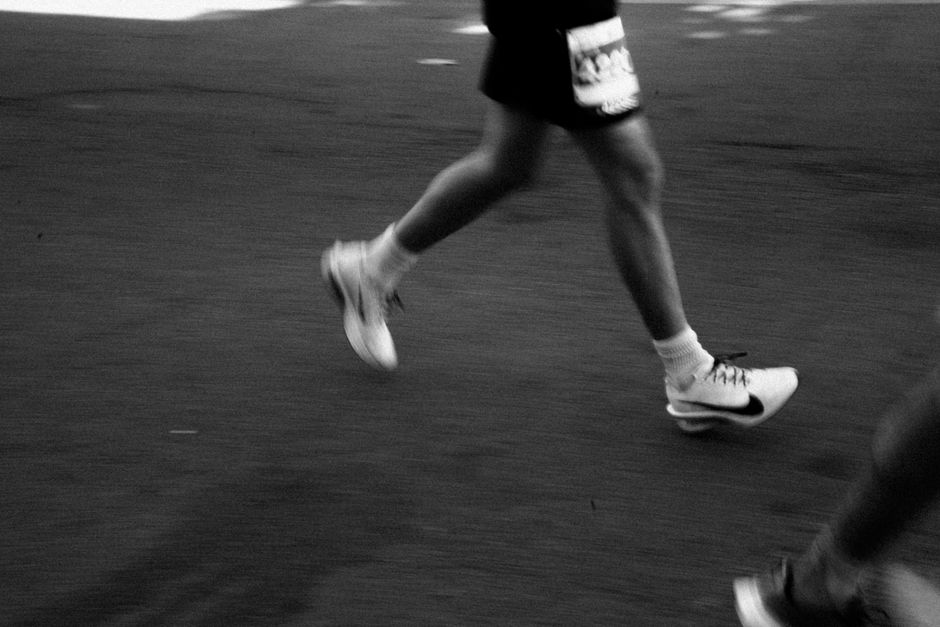
Runner’s knee is the most common running injury, and for most people it gets better without surgery. The mainstays of treatment are loading the hip and thigh muscles that control the kneecap, gradually returning to running, and correcting training habits that overload the joint. Rest alone rarely fixes it. A structured exercise program does.
What Is Runner’s Knee?
Runner’s knee is a broad term, not a single diagnosis. Most often it refers to patellofemoral pain syndrome — pain around or behind the kneecap where it glides against the thigh bone. The kneecap sits in a groove at the end of the femur. When it tracks poorly, or when the cartilage under it is stressed, the area becomes painful.
Tracking is the key idea. The kneecap does not move on its own. It is pulled by the quadriceps above and guided by the alignment of the hip, knee, and ankle below. Weakness or poor control anywhere along that chain can change how the kneecap loads.
Pain is usually felt around or under the kneecap. It tends to appear during running, squatting, stair climbing, or sitting with the knee bent for a long time. It is often described as a dull ache rather than a sharp stab.
It is worth being clear about what this is not. Runner’s knee is not the same as a ligament tear, a meniscus tear, or patellar tendinopathy, even though those can also cause knee pain. A clinician can usually tell them apart from the history and exam. Imaging is often not needed unless something else is suspected.
What Helps Runner’s Knee Exercises And Treatment?
Exercise is the most reliable treatment. Research consistently shows that targeted strengthening of the hip and quadriceps reduces pain and improves function in patellofemoral pain. The evidence for exercise is stronger than for most other approaches, including passive treatments. It is not a quick fix, but it is the one with the best support.
The exercises below are the ones most often used in rehabilitation programs. They are grouped by what they target. A physical therapist can tailor the specifics to your body, and that individual guidance matters.
Hip Strengthening
The hip muscles control how the thigh rotates and how the knee lines up. When the hip abductors and external rotators are weak, the knee tends to drift inward during running and squatting. That inward collapse increases load on the kneecap.
- Side-lying leg raises — lie on your side and lift the top leg, keeping it straight.
- Clamshells — lie on your side with knees bent and open the top knee against resistance.
- Lateral band walks — step sideways against a band around the thighs.
- Single-leg bridges — lie on your back and lift the hips with one foot planted.
Quadriceps Strengthening
The quadriceps pull on the kneecap. Strengthening them helps the knee tolerate load. Some people find that deep bending hurts at first, so the starting range matters.
- Straight-leg raises — lift the leg with the knee locked straight.
- Wall sits — hold a seated position against a wall, starting shallow.
- Step-downs — lower slowly off a low step, controlling the knee.
- Leg press or knee extensions — done in a pain-free range.
A general principle from rehabilitation research: some discomfort during exercise is acceptable if it settles within a day. Sharp pain, swelling, or pain that worsens over days is a signal to ease back. This is a common clinical approach, not a strict rule.
Glute and Core Control
Controlling the trunk and pelvis reduces the demand on the knee. Exercises like planks, bird-dogs, and single-leg balance work support this. They are usually added alongside the hip and quad work rather than on their own.
How Long Does Runner’s Knee Take to Heal?
Most people notice improvement within a few weeks of consistent exercise, but full recovery often takes longer. Many rehabilitation programs run for several months. The timeline varies widely with how long the problem has been present and how consistently the exercises are done.
Patience matters here. Pain that has built up over months rarely resolves in days. Programs that gradually increase load tend to work better than stopping everything and waiting.
Returning to running is usually done in stages. A common approach is to reduce mileage, keep some running if pain allows, and build back up slowly. The exact pace depends on the individual. There is no single schedule that fits everyone.



Do You Have to Stop Running?
Complete rest is usually not required, and it is often not helpful. Many clinicians recommend relative rest — reducing volume and intensity rather than stopping entirely. Keeping some load on the knee can help it stay conditioned.
The guideline many physiotherapists use is a pain rule. If pain stays mild and settles quickly, continuing is generally fine. If pain climbs during a run or lingers into the next day, that is a sign to pull back. This is practical guidance rather than a strict protocol.
Cross-training can fill the gap. Swimming, cycling, and elliptical work keep fitness up while reducing the pounding on the knee. Cycling with a low resistance and a higher seat position is often easier on the kneecap.
What Training Mistakes Make It Worse?
Runner’s knee is often a load problem, not a structural one. Too much, too soon is the classic trigger. Sudden jumps in mileage, speed work, or hill running all increase the force through the kneecap.
Several training habits are commonly linked to flare-ups:
- Increasing weekly mileage too quickly.
- Running mostly downhill, which loads the kneecap heavily.
- Worn-out shoes with lost cushioning.
- Running on hard or cambered surfaces.
- Skipping warm-ups before harder efforts.
Strength training matters too. Runners who only run and never strengthen the hips and quads tend to be more prone to this problem. Adding two short strength sessions a week is a common recommendation, though the ideal frequency is not firmly established.
What About Braces, Taping, and Insoles?
These can help in the short term, but they are not a cure. Patellar taping and knee braces sometimes reduce pain enough to let someone exercise. The effect is usually temporary and best used alongside strengthening, not instead of it.
Foot orthotics are sometimes recommended for people with flat feet or unusual foot mechanics. The evidence here is mixed. Some studies suggest benefit in certain people, while others find little difference. They are reasonable to try if a clinician thinks foot mechanics are contributing.
What these tools do not do is fix the underlying weakness. Used alone, they tend to manage symptoms rather than address the cause.
When Should You See a Doctor?
Most cases of runner’s knee can be managed with exercise and training changes. Certain signs point to something that needs medical attention.
- Sudden swelling after a specific injury.
- The knee locking, catching, or giving way.
- Pain that does not improve after several weeks of consistent exercise.
- Pain at rest or at night that is getting worse.
- Redness, warmth, or fever around the knee.
Those signs can suggest a different problem, such as a ligament or meniscus injury, or in rare cases an infection. A clinician can sort out what is going on. Imaging is not always needed, but it may be used if the picture is unclear.
Can Runner’s Knee Be Prevented?
Not all cases are preventable, but some risk can be reduced. The most consistent factors are training load and muscle strength. Building strength before ramping up mileage is a sensible approach.
Gradual progression is the core principle. Increasing mileage slowly, avoiding sudden spikes in speed or hills, and replacing worn shoes all reduce stress on the knee. Strengthening the hips and quads on an ongoing basis supports the joint over time.
It is honest to say that prevention research is not as strong as treatment research. No single habit guarantees you will avoid runner’s knee. But the same factors that help treat it — strength and sensible loading — also appear to lower risk.
Frequently Asked Questions
What exercises are best for runner’s knee?
Hip and quadriceps strengthening exercises have the strongest evidence for reducing pain in patellofemoral pain. Examples include side-lying leg raises, clamshells, wall sits, and controlled step-downs.
Should I stop running with runner’s knee?
Complete rest is usually not necessary, and many clinicians recommend reducing volume rather than stopping entirely. Keeping some running is fine if pain stays mild and settles quickly.
How long does runner’s knee take to heal?
Most people notice improvement within a few weeks of consistent exercise, but full recovery often takes several months. The timeline depends on how long the problem has been present and how consistently you do the exercises.
Does runner’s knee ever need surgery?
Surgery is rarely needed for patellofemoral pain. Most cases improve with exercise and training changes, and surgery is usually considered only when other causes are found or conservative treatment fails.
