
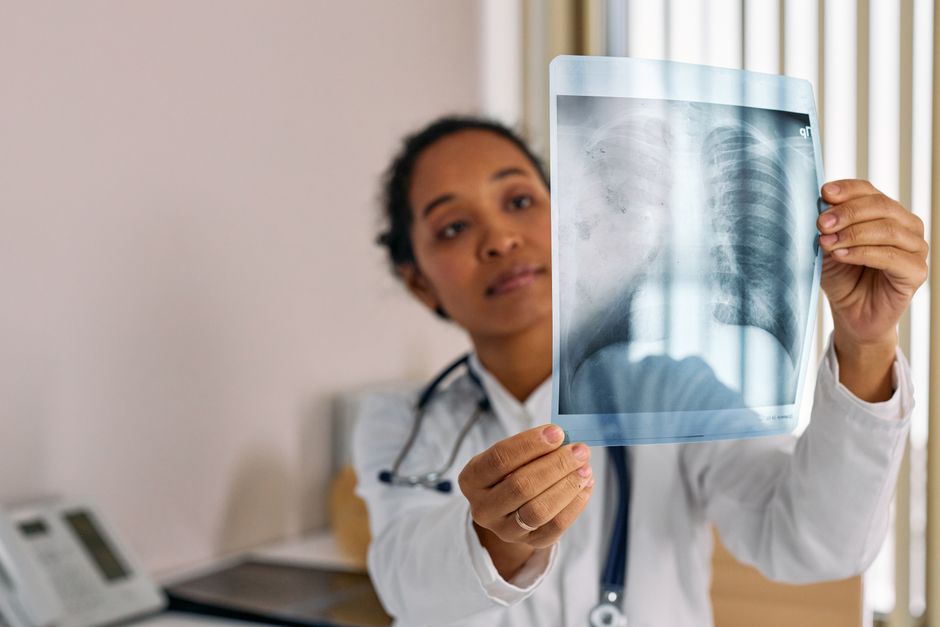
Pneumonia is an infection deep in the lungs, and diarrhea happens in the gut. So why do they so often show up together? The link is real, and it comes down to a few overlapping causes: the same germ can infect both places, swallowed mucus and bacteria can travel from the airways into the stomach, antibiotics used to treat the lung infection can disrupt the gut, and the body’s immune response to a serious infection can speed up digestion. In many cases more than one of these is happening at once.
That overlap is common enough that doctors treating pneumonia often expect digestive symptoms too. It is not a sign that the diagnosis is wrong. It is a sign that the lungs and the gut are connected by more than anatomy.
Why Pneumonia Causes Diarrhea The Lung Gut Link?
The lungs and the gut share a direct physical channel, a shared immune system, and in many cases the exact same infection.
There is a physical pathway. The airways and the digestive tract connect at the back of the throat. When you swallow, small amounts of mucus and fluid from the lungs and throat pass into the stomach. In a healthy person this happens constantly and causes no problem. During pneumonia, that swallowed material can carry live bacteria or viruses straight into the gut. The gut then reacts with the same inflammation that is happening in the lungs.
There is an immune pathway. The gut holds a large share of the body’s immune tissue. When the immune system mounts a strong response to a lung infection, it does not stay neatly confined to the chest. Inflammatory signals travel through the bloodstream and can reach the gut lining, where they change how the intestine moves and absorbs fluid. Faster movement means less water is absorbed, and that produces loose stools.
There is also a shared germ pathway. Several of the organisms that cause pneumonia are the same ones that cause gastroenteritis. When a single infection causes symptoms in both places, that is not two illnesses. It is one infection with two sites of action.
Can the Same Infection Cause Both Pneumonia and Diarrhea?
Yes. A number of respiratory pathogens are also gut pathogens, and this is one of the most direct explanations for why the two symptoms appear together.
Certain bacteria and viruses are known to infect the airways and the digestive tract. Some respiratory viruses are frequently found in the stool of infected people, and they can cause vomiting and diarrhea alongside cough and fever. Among bacteria, some of the organisms that cause atypical pneumonia are also recognized causes of diarrheal illness.
This matters for how the illness is understood. When a patient has pneumonia and diarrhea at the same time, the diarrhea is not always a side effect of treatment or a separate stomach bug. In some cases the infection itself is doing both.
It also means the diarrhea can appear before, during, or after the respiratory symptoms. Timing varies by the germ involved. There is no single pattern that applies to every case.
How Do Antibiotics for Pneumonia Cause Diarrhea?
Antibiotics are one of the most common reasons diarrhea shows up during pneumonia treatment, and the mechanism is well understood.
The gut holds trillions of bacteria that normally live there and help with digestion and immune balance. This community is often called the gut microbiome. Antibiotics cannot target only the pneumonia-causing germ. They affect bacteria throughout the body, including the ones that normally live in the gut.
When the normal gut bacteria are disrupted, several things can follow. The balance of organisms shifts. Some harmful bacteria that were previously kept in check can multiply. The gut lining can become more inflamed, and digestion and fluid absorption change. The result is often loose or frequent stools.
This is common enough that doctors generally expect it as a possible side effect of antibiotic treatment. In most cases it is mild and settles once the antibiotic course ends and the gut bacteria recover. Recovery of the gut community can take time, and it does not always happen at the same speed for everyone.
A more serious form of antibiotic-associated diarrhea is caused by a specific bacterium that can overgrow when the normal gut bacteria are wiped out. This type can be severe and is a reason to contact a doctor rather than wait it out.





Is Diarrhea With Pneumonia a Warning Sign?
Most diarrhea during pneumonia is not dangerous on its own. But some patterns deserve prompt medical attention.
The main concern with diarrhea is dehydration, especially in older adults and in anyone who is already weakened by a lung infection. Pneumonia itself can make it harder to drink enough fluids, and diarrhea adds to the fluid loss. Together they can tip a person toward dehydration faster than either would alone.
Signs that need medical attention include:
- Diarrhea that is severe, bloody, or lasts more than a few days
- Signs of dehydration such as dizziness, a dry mouth, dark urine, or urinating much less than usual
- High fever that is not improving, or fever that returns after getting better
- Severe belly pain or cramping that does not ease
- Trouble breathing that is getting worse
Anyone with pneumonia who develops these signs should contact a doctor. This is not a situation to manage at home without guidance.
Does Pneumonia Always Cause Diarrhea?
No. Plenty of people get pneumonia with no digestive symptoms at all.
Whether diarrhea appears depends on the germ involved, the person’s age and health, whether antibiotics are used, and how the individual immune system responds. Some people get only respiratory symptoms. Others get a mix of cough, fever, and loose stools. The pattern is not fixed.
It also runs the other way. Diarrhea during a respiratory illness does not automatically mean pneumonia is present. Many mild respiratory infections, including common colds, can come with mild stomach upset. The presence of diarrhea alone does not point to pneumonia.
What matters is the whole picture. Pneumonia is suspected based on breathing difficulty, chest symptoms, fever, and often a chest X-ray. Diarrhea is a supporting clue at most, not a diagnostic sign on its own.
How the Gut and Lungs Talk to Each Other
The relationship between the lungs and the gut is an active area of research, and the term often used for it is the gut-lung axis.
The idea is that these two systems influence each other in both directions. The gut microbiome can shape how the immune system responds to infections elsewhere in the body, including the lungs. In turn, infections and inflammation in the lungs can change the gut environment. This is not a one-way street.
Some research suggests that the state of the gut microbiome may influence how vulnerable a person is to respiratory infections, and how severe those infections become. This is an area where the evidence is still developing. It is not yet at the point of clear clinical guidance, and it should not be treated as settled science.
What is well established is that the two systems are connected. That connection helps explain why a lung infection so often comes with gut symptoms, and why the gut sometimes struggles during and after treatment.
What Helps During Recovery
Recovery from pneumonia takes time, and the digestive symptoms usually improve as the infection clears and the gut settles.
The most important practical step is staying hydrated. Diarrhea removes fluid and salts, and pneumonia makes it harder to keep up with that loss. Drinking fluids throughout the day helps replace what is lost. For more significant fluid loss, an oral rehydration solution can replace both water and electrolytes better than plain water alone.
Gentle, bland foods are often easier on the gut during recovery. This is common practice rather than a strongly proven treatment, but many people find it more comfortable. There is no single diet that has been shown to shorten the diarrhea.
If antibiotics were prescribed, they should be taken exactly as directed. Stopping early because of diarrhea is not a safe choice without talking to a doctor first, since an incompletely treated lung infection can worsen. Any concern about side effects should go to the prescribing clinician.
Do not use over-the-counter anti-diarrheal medications during a serious infection without checking with a doctor first. Some of these drugs can slow the gut in ways that are not helpful when an infection is involved.
Frequently Asked Questions
Why does pneumonia cause diarrhea?
It usually comes down to a shared germ, swallowed airway secretions reaching the gut, antibiotics disrupting gut bacteria, or the body’s immune response speeding up digestion. Often more than one of these is involved at the same time.
Is diarrhea a common symptom of pneumonia?
It is common enough that doctors expect it in some cases, especially with certain germs and with antibiotic treatment. But many people with pneumonia have no digestive symptoms at all.
Can pneumonia cause diarrhea without antibiotics?
Yes. Some of the same germs that infect the lungs also infect the gut, and the immune response to a lung infection can affect digestion on its own. Antibiotics are one cause, not the only one.
When should I worry about diarrhea with pneumonia?
Seek medical care if the diarrhea is severe, bloody, or lasts more than a few days, or if there are signs of dehydration such as dizziness, dark urine, or urinating much less than usual. Worsening breathing is also a reason to get help right away.
