
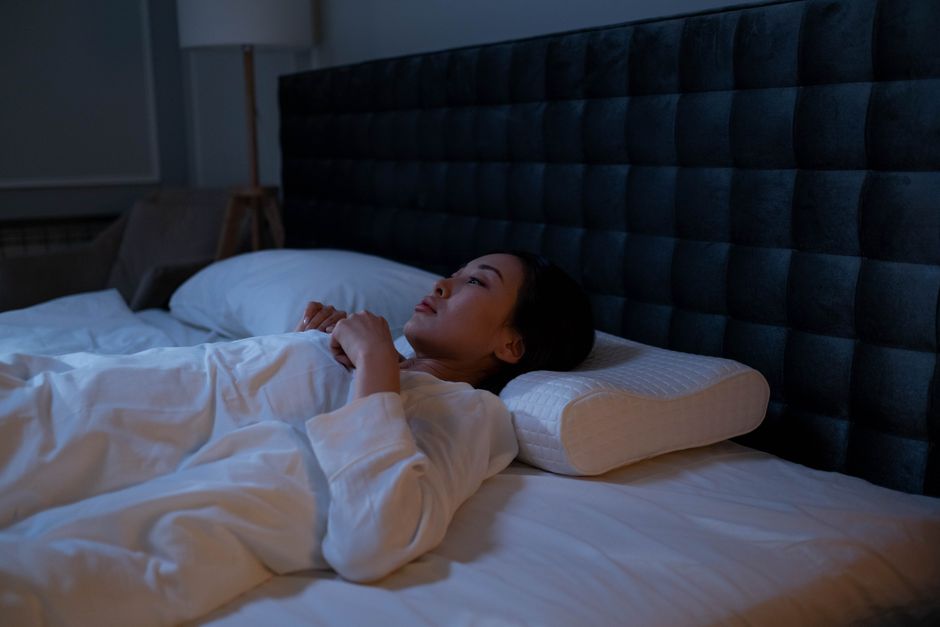
Nighttime paranoia happens because the brain’s threat-detection system stays active while the reasoning and reality-checking parts of the brain quiet down. Darkness removes the visual cues that normally keep that system calibrated, so ordinary sounds and shadows get misread as danger. The result is a real, measurable shift in how your brain processes threat — not a character flaw or a sign you are “losing it.”
Most episodes are brief and tied to identifiable triggers: stress, poor sleep, caffeine, alcohol, or a dark unfamiliar room. Some are linked to medical conditions or medications that need attention. Knowing which category you fall into is the first step to stopping the cycle.
Why does paranoia get worse at night?
The brain does not shut off at night. It shifts into a different mode, and that mode is more threat-sensitive.
During wakefulness, your prefrontal cortex — the region behind your forehead involved in reasoning, context, and reality-testing — helps you dismiss harmless noises and shadows. As you get tired and as light fades, that top-down control weakens. Meanwhile, the amygdala, a deep brain structure that flags potential threats, remains active. Some research suggests the amygdala’s response to threatening images is heightened when people are sleep-deprived.
Darkness also removes information. You cannot see the source of a creak or a shape in the corner, so your brain fills the gap. This is a normal perceptual process called pareidolia — the tendency to see faces or figures in ambiguous patterns. In low light, with a tired brain, ambiguous patterns are more likely to be interpreted as threatening.
There is a second factor that gets less attention: the transition into sleep itself. As you drift off, the boundary between waking and dreaming becomes porous. Brief dream fragments can bleed into wakefulness, especially in the first minutes after falling asleep or during a middle-of-the-night awakening. What feels like a presence in the room can be a hypnagogic experience — a normal phenomenon at sleep onset — rather than a psychiatric symptom.
What causes nighttime paranoia?
Nighttime paranoia has many possible causes, and they fall into a few broad groups. Most people fit into the first group.
Everyday triggers are the most common. These include:
- Sleep deprivation, which impairs reality-testing and increases threat sensitivity
- High stress or anxiety, especially worry that surfaces when the day’s distractions stop
- Caffeine consumed in the afternoon or evening, which can fragment sleep and increase arousal
- Alcohol, which helps people fall asleep but disrupts sleep architecture and can cause middle-of-the-night awakenings with heightened anxiety
- Unfamiliar environments — a hotel room, a new home, a dark hallway
- Sensory deprivation in a very dark, quiet room, which can make the brain generate its own input
Medical and psychiatric conditions can also produce nighttime paranoia. These include anxiety disorders, post-traumatic stress disorder, bipolar disorder, schizophrenia, and certain neurological conditions such as Parkinson’s disease, where nighttime hallucinations and paranoia can occur. Delirium — an acute state of confusion — can cause paranoia and is more common in older adults, especially in unfamiliar settings or during illness.
Medications and substances are an underrecognized cause. Some medications, including certain sleep aids, steroids, and drugs that affect dopamine, can trigger paranoia or hallucinations. Withdrawal from alcohol or sedatives can also cause nighttime confusion and fear. If paranoia started after a new medication, that timing matters and is worth raising with a clinician.
One clarification that often helps: nighttime paranoia is not the same as a psychotic disorder. Most people who experience it do not have schizophrenia or any serious mental illness. The experience is distressing, but it is usually a stress-and-sleep response, not a sign of permanent psychiatric disease.
Why Nighttime Paranoia Happens And How To Stop It: what actually helps?
Stopping nighttime paranoia starts with addressing the triggers you can control and getting a clear picture of anything you cannot.
Protect sleep first. Sleep deprivation amplifies threat perception. Consistent sleep and wake times, a dark but not pitch-black room, and a cool temperature all support better sleep. If you wake in the night and feel afraid, avoid checking the time repeatedly — clock-watching feeds anxiety.
Reduce evening stimulants and alcohol. Caffeine has a long half-life, meaning a meaningful amount can still be in your system many hours after drinking it. Cutting caffeine after early afternoon is a reasonable step. Alcohol is trickier: it may help you fall asleep but often causes a rebound awakening a few hours later, when anxiety and heart rate can spike.
Use light and sound deliberately. A small nightlight or a dim light in the hallway can reduce the ambiguity that feeds paranoia. A fan or white-noise machine can mask the small sounds that trigger fear. These are simple environmental fixes, not treatments, but they address the mechanism directly.
Ground yourself when it happens. When fear spikes at night, the goal is to bring the reasoning brain back online. Slow breathing, naming objects in the room, and reminding yourself that the feeling is a stress response rather than a prediction can help. Some clinicians recommend a brief, boring activity — reading a few pages under dim light — rather than lying in bed spiraling.
Address anxiety during the day. Nighttime paranoia often reflects daytime anxiety that surfaces when distractions stop. Cognitive behavioral therapy for insomnia (CBT-I) is well-supported for sleep problems, and cognitive behavioral therapy more broadly is well-supported for anxiety. These are evidence-based approaches, not quick fixes.
Review medications and substances with a clinician. If paranoia began after a new prescription, a dose change, or a period of heavy drinking, that is worth discussing. Do not stop a prescribed medication on your own.



When should nighttime paranoia worry you?
Occasional nighttime fear is common and usually harmless. Certain patterns warrant a medical evaluation.
Seek professional assessment if any of the following apply:
- The paranoia persists into the daytime or affects your ability to function
- You hear voices or see things that others do not, especially if this is new
- You feel convinced that someone is in the house or watching you, and the belief does not fade with reassurance
- Episodes are accompanied by confusion, disorientation, or memory gaps
- Paranoia started after a new medication or during withdrawal from alcohol or sedatives
- You have thoughts of harming yourself or others
These signs do not automatically mean a serious diagnosis. They do mean a clinician should help sort out the cause. In older adults, sudden nighttime confusion can be a sign of delirium, which is a medical issue that needs prompt attention — not something to wait out.
Does nighttime paranoia mean something is wrong with my brain?
No. In most people, nighttime paranoia reflects normal brain function operating under difficult conditions — fatigue, darkness, and stress.
The brain is a prediction machine. It constantly guesses what is out there based on incomplete information. Darkness gives it less to work with, and fatigue weakens the checks that normally correct bad guesses. The result is a false alarm, not a broken alarm system.
That said, persistent or worsening nighttime paranoia is worth investigating. It can be the first sign of a condition that benefits from treatment. The distinction is between an occasional stress response and a pattern that is new, worsening, or disruptive.
Can sleep itself cause paranoia?
Yes — disrupted sleep can directly produce paranoia-like experiences. This is one of the more counterintuitive findings in sleep research.
Studies have found that sleep deprivation increases suspiciousness and mistrust in otherwise healthy people. Sleep loss also increases the likelihood of hypnagogic and hypnopompic experiences — dream-like perceptions at sleep onset and on waking. These can include a sense of a presence in the room, which people often describe as paranoia.
The reverse is also true: paranoia and anxiety at night make sleep harder, which worsens the next night’s paranoia. Breaking that loop is often the most effective single step. Prioritizing sleep is not a soft recommendation here — it targets a core mechanism.
What about children and older adults?
Nighttime fear is common in children and usually reflects normal development. A child who is afraid of the dark or reports a “monster” is typically expressing a normal imagination and a need for reassurance, not a psychiatric problem. Night terrors and nightmares are also common in childhood. Persistent or severe fear that disrupts sleep regularly is worth raising with a pediatrician.
In older adults, new nighttime paranoia deserves more attention. It can be linked to dementia, delirium, medication side effects, or sensory changes such as hearing loss. Hearing loss in particular is associated with paranoia and suspiciousness, likely because missing auditory information makes the world harder to interpret. If an older adult develops new nighttime fear or confusion, a medical evaluation is appropriate.
Frequently Asked Questions
Why do I feel paranoid at night but fine during the day?
Darkness reduces visual information and fatigue weakens the brain’s reality-checking, so ordinary sounds and shadows are more likely to be misread as threats. Daytime distractions and light help keep that system calibrated.
Is nighttime paranoia a sign of mental illness?
Most people who experience it do not have a serious mental illness; it is usually a stress-and-sleep response. New or persistent paranoia that continues into the day should be evaluated by a clinician.
How do I stop feeling paranoid at night?
Protect your sleep, cut evening caffeine and alcohol, use a dim nightlight or white noise, and ground yourself with slow breathing when fear spikes. If it persists or worsens, talk to a clinician about causes and treatment.
Can lack of sleep cause paranoia?
Yes. Research has found that sleep deprivation increases suspiciousness and mistrust in healthy people, and it can also trigger dream-like perceptions at sleep onset that feel like paranoia.
