
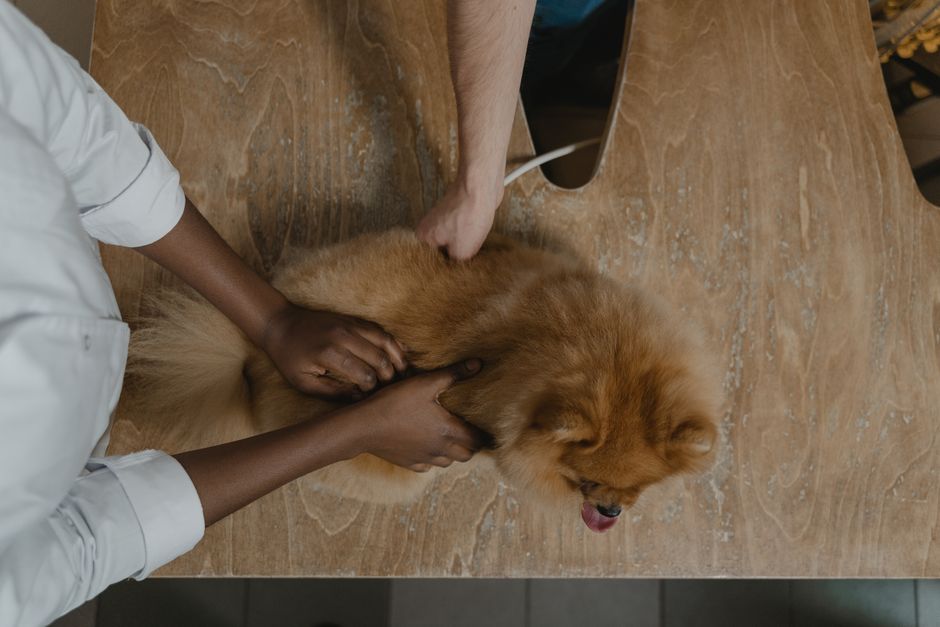
If your puppy is throwing up yellow, that yellow color is almost always bile — a digestive fluid made by the liver and stored in the gallbladder. Vomiting bile usually means the stomach is empty, and in many puppies this happens once or twice and settles on its own. But it can also be a sign of a blockage, an infection, or a liver problem, so the color alone does not tell you how serious it is.
The real question is not the color. It is how often your puppy is vomiting, whether they are still eating and drinking, how they are acting, and whether anything else looks wrong. Those details matter far more than the shade of the fluid.
What Does Yellow Vomit Actually Mean?
Bile is a yellow-green fluid your puppy’s liver produces to help digest fat. Between meals, it collects in the gallbladder. When the stomach sits empty for a while, that bile can flow back up into the stomach and irritate the lining, which triggers a vomit.
This is why the timing often gives a clue. Vomiting that happens first thing in the morning, or after a long gap between meals, is commonly bile reflux from an empty stomach. Some veterinarians call this bilious vomiting syndrome. It is more common in adult dogs than puppies, but young dogs can have it too.
Here is the part people miss: yellow does not mean “worse” and clear does not mean “better.” A puppy with a serious intestinal blockage can vomit yellow fluid. A puppy with simple empty-stomach reflux can vomit the exact same color. Color tells you what fluid is coming up, not how sick the dog is.
Why Is My Puppy Throwing Up Yellow And Is It Serious?
For most puppies, an occasional yellow vomit is not serious. The situation becomes serious when vomiting repeats, when your puppy cannot keep water down, or when vomiting comes with lethargy, pain, or a swollen belly.
Vomiting is a symptom, not a diagnosis. The same yellow fluid can point to very different problems depending on the rest of the picture. In young puppies, a few causes deserve faster attention than others because puppies dehydrate and lose energy much faster than adult dogs.
Call your veterinarian the same day if you see any of these:
- Vomiting more than once or twice in a day, or repeating over several hours
- Refusing to eat, or refusing water
- Lethargy, weakness, or a puppy who seems “off”
- A swollen, painful, or hard belly
- Blood in the vomit, or vomit that looks like coffee grounds
- Diarrhea alongside the vomiting
- Any suspicion your puppy swallowed a toy, sock, bone, or object
Any one of these moves the situation from “watch and see” to “call the vet.” When several appear together, treat it as urgent.
What Causes Yellow Vomiting In Puppies?
The causes fall into a few broad groups, and a veterinarian sorts them out by asking about timing, diet, and what your puppy may have eaten.
Empty stomach reflux. The most common and least serious cause. Bile irritates an empty stomach, often overnight or before breakfast. The puppy usually acts completely normal otherwise.
Dietary upset. A sudden food change, eating something greasy or spoiled, or too many treats can inflame the stomach lining and trigger vomiting.
Intestinal parasites. Roundworms and other worms are common in puppies and can cause vomiting and diarrhea. Many puppies are dewormed on a schedule for this reason.
Infections. Viral and bacterial infections of the gut can cause repeated vomiting. Parvovirus is a serious concern in unvaccinated puppies and needs immediate veterinary care.
Foreign object or blockage. Puppies chew and swallow things. A toy, string, or bone fragment can block the intestine. This is a medical emergency and often requires surgery.
Organ or systemic problems. Liver disease, pancreatitis, and other conditions can cause bile-colored vomiting, though these are less common in very young dogs than the causes above.
Notice that the color is the same across all of these. That is why a vet relies on the whole picture, not the vomit’s shade.





When Is Yellow Vomit An Emergency?
An emergency is defined by how sick your puppy looks and how fast things are changing — not by the color of the vomit. Puppies have small bodies and little reserve. They can go downhill within hours.
Treat it as an emergency and seek care right away if your puppy:
- Cannot stop vomiting, or vomits repeatedly in a short time
- Cannot keep water down
- Is very weak, unresponsive, or hard to wake
- Has a belly that looks bloated or feels tight and painful
- Is straining to vomit with nothing coming up
- Has bloody vomit or bloody diarrhea
- Is an unvaccinated puppy with vomiting and diarrhea
Repeated vomiting and diarrhea together can cause dangerous dehydration and blood sugar drops in puppies quickly. Waiting to “see if it passes” is the most common mistake owners make with a very young dog.
What Should You Do If Your Puppy Vomits Yellow Once?
If your puppy vomits yellow a single time, then acts bright, playful, and wants to eat, you can usually watch closely at home for the next several hours. Offer small amounts of water rather than a large bowl at once, since a big drink can trigger more vomiting.
If your puppy keeps it down and seems normal, offer a small, plain meal rather than a large one. Some veterinarians suggest feeding several small meals through the day instead of one or two big ones, which can help with empty-stomach bile reflux. If the vomiting returns, or your puppy stops acting normal, call your vet.
Do not give human medications for nausea or stomach upset. Several common human drugs are toxic to dogs, and dosing a puppy without veterinary guidance can cause serious harm. There are no home remedies that safely replace a veterinary exam when a puppy is genuinely sick.
How Do Veterinarians Figure Out The Cause?
A veterinarian starts with a physical exam and a detailed history. They will ask when the vomiting happens, what your puppy eats, whether they could have swallowed something, and how their energy and appetite have been.
Depending on what they find, they may recommend blood work to check organ function and hydration, a fecal test for parasites, or imaging such as X-rays or ultrasound to look for a blockage. These tests are how a vague symptom like “yellow vomit” becomes a specific diagnosis and a specific plan.
Treatment depends entirely on the cause. Empty-stomach reflux may be managed with feeding changes. Parasites are treated with deworming medication. A blockage may need surgery. Dehydration is often treated with fluids. There is no single treatment for yellow vomit, because yellow vomit is not a single condition.
Can You Prevent Yellow Vomiting In Puppies?
You cannot prevent every cause, but you can lower the odds of the common ones. Keep your puppy on a consistent diet and avoid sudden food changes. Feed on a regular schedule so the stomach is not empty for long stretches. Keep small, safe chew toys and pick up anything your puppy might swallow.
Stay current on deworming and vaccinations, since these protect against two of the more serious causes. Puppies explore with their mouths, so supervision during play is one of the simplest things you can do. If your puppy has a pattern of morning bile vomiting, mention it to your vet — a feeding schedule change often helps.
Frequently Asked Questions
Is yellow vomit in puppies always serious?
No. A single episode in a puppy who still eats, drinks, and acts normal is often just empty-stomach bile reflux. It becomes serious when vomiting repeats or comes with lethargy, pain, or refusal to eat or drink.
Why does my puppy throw up yellow in the morning?
Morning yellow vomit usually means bile has built up in an empty stomach overnight and irritated the lining. Feeding smaller, more frequent meals often reduces this pattern, but check with your vet if it keeps happening.
Should I feed my puppy after it vomits yellow?
If your puppy seems normal, offer a small, plain meal and see if it stays down. If vomiting continues or your puppy looks unwell, contact your veterinarian before feeding more.
When should I take my puppy to the vet for yellow vomit?
Go the same day if vomiting repeats, your puppy cannot keep water down, or you see lethargy, a painful belly, blood, or diarrhea. Any unvaccinated puppy with vomiting and diarrhea needs urgent care.
