
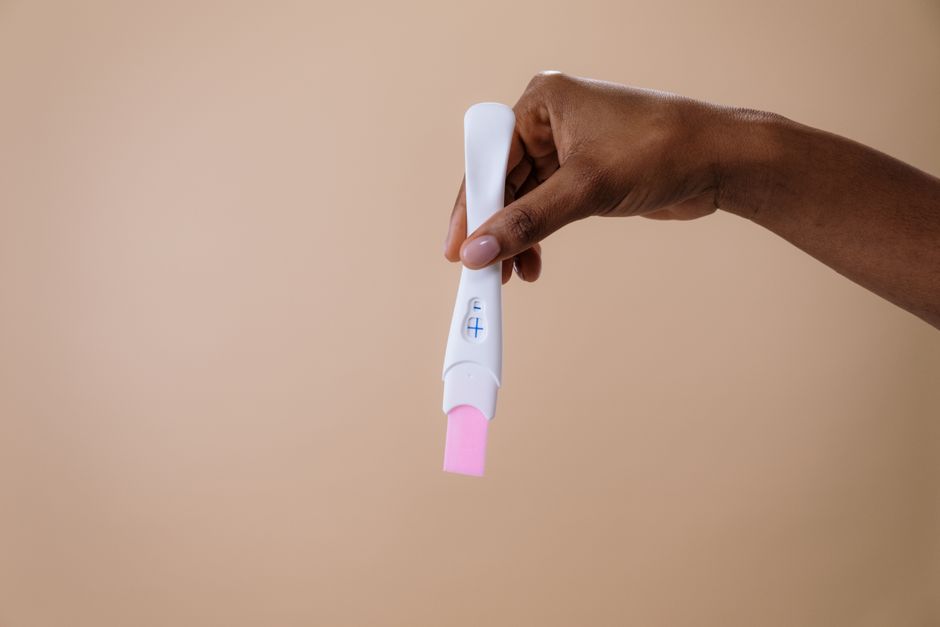
A blank pregnancy test is almost always a test that did not work, not a test that gave a negative result. A negative test shows one clear line. A blank test shows no line in the control window at all, which means the strip never absorbed enough urine or the test itself failed. The result is invalid and tells you nothing about whether you are pregnant.
That distinction matters more than most people realize. A blank test can look like a negative test to someone who is anxious and reading the stick quickly. But they are different failures, and they call for different next steps. Here is what actually causes a blank result and what to do about it.
Why Is My Pregnancy Test Blank?
A pregnancy test is blank because the control line did not appear, and the control line only appears when urine has moved through the strip and reached the test’s built-in verification zone. If that flow does not happen, or the test’s antibodies are damaged, you get an empty window.
Every home pregnancy test is designed with two zones. The test zone reacts to hCG, the hormone produced after a fertilized egg implants in the uterus. The control zone reacts to nothing in your urine — it is there purely to prove the test worked. It should light up every single time, pregnant or not.
When the control line is missing, the test has failed its own self-check. The manufacturer’s instructions treat this as an invalid result. It is not a “maybe.” It is a discard and retest situation.
The most common reasons a test comes back blank:
- Not enough urine on the strip. Dipping too shallow, too briefly, or holding the stick at the wrong angle can starve the strip.
- Too much urine or over-saturation. Some tests flood if held in the stream too long.
- Expired test. The antibodies in the strip degrade over time and stop reacting.
- Improper storage. Heat, freezing, or high humidity can damage a test before you open it.
- Reading too early or too late. Most tests need a set window, often a few minutes, to develop properly.
- Manufacturing defect. Rare, but real. Some batches fail.
What Does a Blank Pregnancy Test Look Like Compared to a Negative One?
A negative test shows one line in the control window. A blank test shows no lines at all. That single line is the entire difference, and it changes what the result means.
On a standard two-line test, the control line is usually the one closest to the handle or the top of the strip, depending on the brand. The test line sits closer to the absorbent tip. A negative result means the control line appears and the test line does not. A blank result means neither appears.
Digital tests handle this differently. Many digital readers display an error message or refuse to show a result when the control line fails, rather than showing a blank window. If you see a blank screen on a digital test, treat it the same way — the test did not complete.
One thing worth knowing: a very faint control line still counts as a control line. Faint is not blank. If you can see any line in the control zone within the reading window, the test worked. If you genuinely see nothing, it did not.
Can a Blank Test Mean You Are Pregnant?
No. A blank test carries no information about pregnancy either way. It cannot confirm pregnancy and it cannot rule it out.
This is the part that catches people. Someone takes a test, sees a blank window, and either panics or feels relieved depending on what they were hoping for. Neither reaction is grounded in a result, because there is no result.
The hCG detection system in the strip never got a fair chance to run. The control line failure means the test’s chemistry did not complete. Any interpretation beyond “invalid” is guesswork.
If you are worried you might be pregnant, the answer is a fresh test done correctly, not a reading of the blank one.




How Do You Take a Pregnancy Test Correctly?
Follow the instructions that came with your specific test, because dip times and reading windows vary by brand. The general steps are consistent, but the exact seconds matter and only your test’s insert has the right numbers.
General guidance that applies to most home tests:
- Check the expiration date before you open anything.
- Store tests at room temperature and keep them sealed until use.
- Read the full instructions once before starting.
- Use the test within the time window after opening the wrapper.
- For dip tests, dip to the marked line and hold for the time stated in the insert.
- Lay the test flat and set a timer for the reading window.
- Read the result within that window — not before, not hours later.
Testing first thing in the morning is often recommended because urine is most concentrated after overnight. That advice is most relevant early in pregnancy, when hCG levels are still low. Later in pregnancy, timing of day matters much less.
If you are testing early, before a missed period, expect lower hCG concentrations and a higher chance of a false negative even with a correctly performed test. Some tests are marketed as early-detection tests and claim higher sensitivity, but no test detects pregnancy before implantation has occurred.
What Should You Do After a Blank Test?
Wait and retest. A blank result is not a medical event — it is a test that did not work. The correct response is a new test, done carefully, usually after a short wait.
Before you retest:
- Use a new test from a different package, ideally a different batch.
- Check the expiration date again.
- Read the instructions fully, even if you have used the brand before.
- If you used a dip test, try a midstream test or vice versa to rule out a technique issue.
If a second test also comes back blank, that points to a batch problem or a technique issue rather than bad luck. Try a different brand.
If you get a clear negative result and your period still does not come, wait a few days and test again. hCG rises quickly in early pregnancy, so a test taken too soon can miss it. If your period is significantly late and repeated tests are negative, that is worth a conversation with a clinician.
When Should You See a Doctor?
See a clinician if you have symptoms that could suggest an ectopic pregnancy, if your period is very late with repeated negative tests, or if you have concerns that testing at home cannot answer.
Home pregnancy tests are reliable when used correctly, but they are screening tools, not diagnoses. A blood test measuring hCG can detect pregnancy earlier and give a quantitative result. An ultrasound can confirm a pregnancy’s location and viability in a way no urine test can.
Symptoms that warrant prompt medical attention regardless of test results include severe one-sided pelvic pain, shoulder tip pain, dizziness or fainting, and heavy vaginal bleeding. These can be signs of an ectopic pregnancy, which is a medical emergency. Do not wait for a test result to seek care if these occur.
For anyone tracking fertility, a blank test is a data point about the test, not about your cycle. It is easy to read meaning into a failed strip. There is none to read.
Frequently Asked Questions
Is a blank pregnancy test positive or negative?
Neither. A blank test is invalid because the control line did not appear, which means the test did not work and the result cannot be interpreted.
Why did my pregnancy test show no lines at all?
The most common causes are not enough urine on the strip, an expired test, improper storage, or a manufacturing defect. Any of these can stop the control line from forming.
Can I still be pregnant if my test was blank?
Yes, it is possible, because a blank test gives no information either way. Take a new test correctly to get a valid result.
How long should I wait before retesting after a blank result?
You can retest right away with a new test, since the blank result was not a real reading. If you are testing before a missed period, waiting a day or two can improve the chance of detecting hCG if you are pregnant.
