
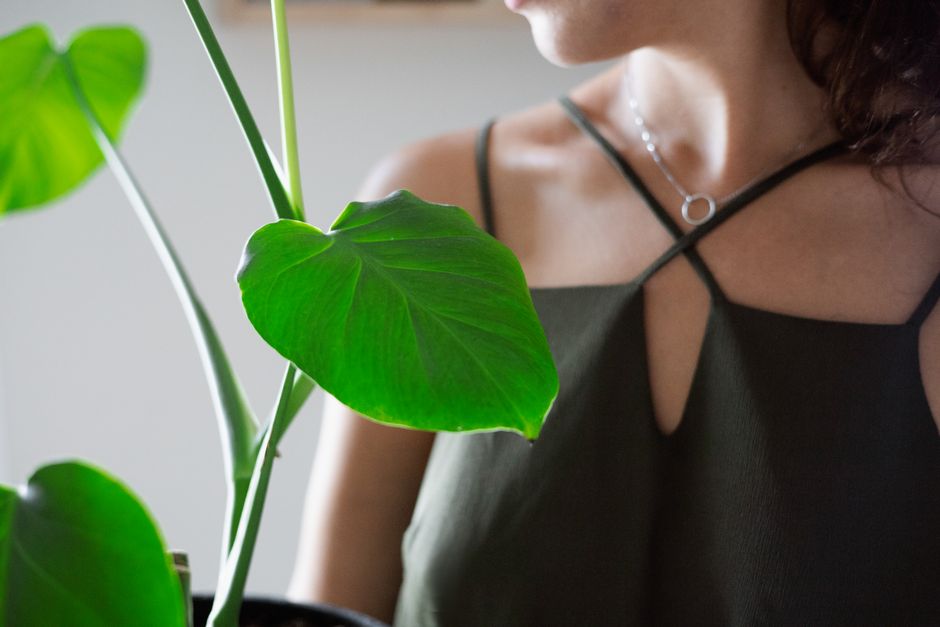
A philodendron falls over because its stem can no longer support the weight of the plant above it. This happens when the plant grows taller and heavier than its stem strength and root system can hold upright. The most common reasons are a lack of something to climb on, weak growth from too little light, and roots that are too small or damaged to anchor the plant.
Philodendrons are not designed to stand up on their own forever. Most of them are climbers in the wild. They lean, sprawl, and grab onto trees. When we grow them in pots, we remove the tree. If we do not replace it with something, the plant eventually tips.
Why Is My Philodendron Falling Over?
A philodendron falls over when the mechanical support fails. That support comes from two places: the stem itself and the roots gripping the soil. When either one gives way, the plant leans and then topples.
Stems get longer and heavier as the plant grows. A trailing philodendron like Heartleaf can produce vines several feet long. All that weight sits at the end of a stem that is essentially a flexible tube of water-filled cells. Without something to wrap around, that stem has no way to stay vertical.
Roots matter just as much. A healthy root system anchors the plant and holds the soil together. If the roots are small, damaged, or rotted, the plant has nothing to grip. The top-heavy stem then pulls the whole thing over.
There is a third factor many people miss. Pot size and soil weight. A plant in a pot that is too small for its height will tip. A plant in loose, lightweight potting mix gives roots less to hold onto than a plant in a denser mix.
Is Falling Over Normal for Philodendrons?
Leaning and sprawling are normal for most philodendrons. They are vining plants. In nature they grow along the ground until they find a tree to climb, then they attach and grow upward.
Falling completely out of the pot is not normal. That points to a support problem, a root problem, or both. A plant that suddenly flops over is telling you something changed.
Some philodendrons grow in a more upright, self-supporting rosette shape. These are the exceptions. Even they can lean as they age and the lower stem thickens and the plant gets top-heavy.
What Causes a Philodendron to Fall Over?
Several problems produce the same result. Often more than one is happening at the same time.
- No support structure. Vining philodendrons need a moss pole, trellis, or stake to climb. Without one, they sprawl.
- Weak, stretched growth. Too little light makes stems grow long and thin as the plant reaches for brighter conditions. These stems cannot hold weight.
- Root rot. Overwatering damages roots. Soft, mushy roots cannot anchor the plant.
- Root-bound or undersized root ball. A large plant in a small pot has more top weight than the roots and pot can balance.
- Pot too small or too light. A tall plant in a small, lightweight pot tips easily. Plastic pots tip more than heavy ceramic ones.
- Loose or depleted soil. Old potting mix breaks down and loses structure. Roots have less to grip.
- Physical damage. A cracked or bent stem from a fall, a pet, or rough handling weakens the plant.
Notice how many of these are about balance. A philodendron is a lever. The longer and heavier the top, the more force it puts on the base. Anything that weakens the base or lengthens the top makes a fall more likely.




How Do I Know If It Is a Light Problem or a Root Problem?
Look at the stems and the soil. The two problems leave different clues.
If light is the issue, the stems between leaves will be unusually long and the leaves will be smaller and spaced far apart. The plant looks stretched and leggy. New growth points toward the nearest window. The stems feel thin and flexible when you bend them gently.
If roots are the issue, the plant may look wilted even when the soil is moist. The soil may stay wet far longer than usual. When you slide the plant out of its pot, healthy roots are firm and pale. Rotted roots are dark, soft, and fall apart when touched. You may smell something sour or musty.
Both problems can exist at once. A stretched plant in soggy soil is a common combination, especially in low-light rooms where the soil dries out slowly.
How Do You Fix a Philodendron That Keeps Falling Over?
Match the fix to the cause. If the plant is healthy and just sprawls, it needs support. If the roots are damaged, support alone will not solve it.
For a healthy, sprawling plant, add a moss pole, trellis, or stake. Guide the stem toward it and tie it loosely with soft plant ties. Do not tie tightly. Stems need room to thicken. Many philodendrons will grow aerial roots that attach to a moss pole on their own over time.
For a stretched plant, move it closer to a bright window. Avoid direct harsh midday sun, which can scorch leaves. Better light produces shorter, sturdier stems over the next few months. You can also trim a long vine back. Cuttings can be rooted in water or soil to start new plants.
For root rot, stop watering and let the soil dry. Remove the plant from the pot, trim away soft dark roots with clean scissors, and repot in fresh, well-draining mix in a clean pot. Water less going forward. Check that the pot has drainage holes.
For a top-heavy plant in too small a pot, move it up one pot size. Choose a pot with a heavy base if tipping is a recurring problem. Do not jump to a much larger pot. An oversized pot holds excess moisture around the roots and raises the risk of rot.
Can You Prevent a Philodendron From Falling Over?
Prevention comes down to giving the plant what it needs before it tips. Most of it is routine care.
- Give vining types a support structure early, before the stem gets long and heavy.
- Place the plant where it gets bright, indirect light.
- Water when the top inch or two of soil feels dry, not on a fixed schedule.
- Use a pot with drainage holes and fresh, well-draining potting mix.
- Repot when roots circle the inside of the pot or grow out the drainage holes.
- Rotate the pot every week or two so the plant grows evenly instead of leaning toward one side.
Rotation is a small habit that helps more than people expect. Plants lean toward light. Turning the pot keeps that lean from building up in one direction.
When Should You Repot Instead of Just Staking?
Stake the plant if it is otherwise healthy and the pot is the right size. Repot if the roots are crowded, damaged, or the plant has outgrown its container.
Signs it is time to repot include roots growing out of the drainage holes, roots circling the inside of the pot, soil that dries out very fast, and a plant that needs water far more often than it used to. A plant that wilts soon after watering may also be root-bound.
When you repot, go up one pot size at most. Spring and early summer are generally the best times because the plant is actively growing. Avoid repotting a stressed or sick plant unless you are treating root rot, which requires immediate action.
One thing worth knowing: staking and repotting solve different problems. Staking supports the stem. Repotting supports the roots. A plant that is both leggy and root-bound may need both.
Frequently Asked Questions
Why is my philodendron falling over?
It falls over because the stem can no longer support the weight above it or the roots cannot anchor the plant. The usual causes are no climbing support, weak growth from low light, or damaged roots.
Do philodendrons need a moss pole?
Vining philodendrons grow best with something to climb, and a moss pole is one common option. Without support, most vining types will sprawl or tip as they grow longer and heavier.
Can a philodendron recover after falling over?
Yes, if the stem and roots are still healthy. Add support, fix the light or watering problem, and the plant usually recovers; if roots are rotted, trim the damaged roots and repot in fresh mix.
Should I cut back a philodendron that keeps falling over?
Trimming a long vine is a reasonable option when the plant is healthy but top-heavy. Cut just above a node, and the cutting can be rooted to grow a new plant.
