
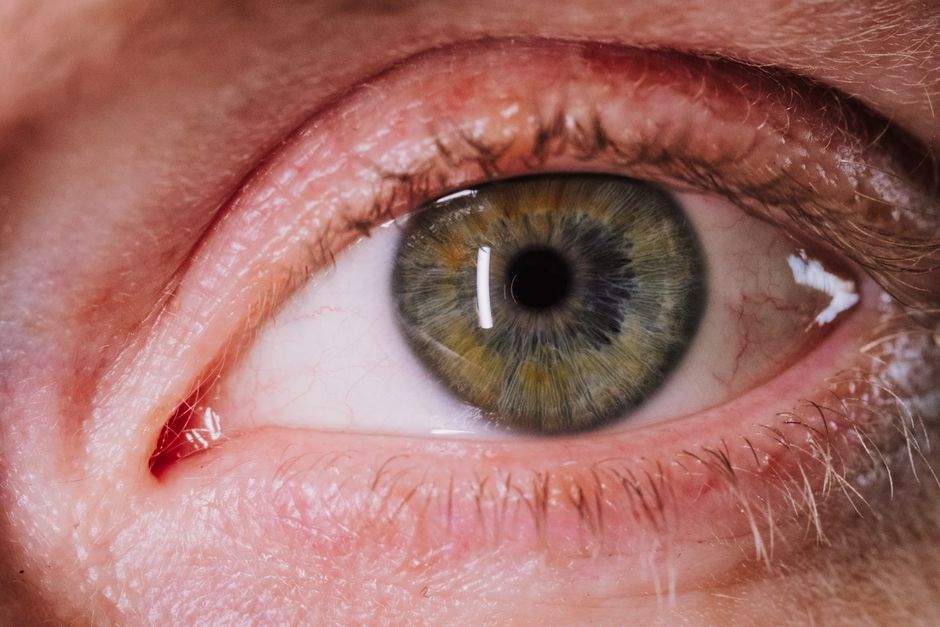
An irregular pupil shape is a visible change in the eye that deserves attention. When the pupil is not perfectly round, it often points to a problem with the iris muscles or the nerves that control them. The most common causes include trauma to the eye, inflammation inside the eye, or a condition called coloboma, which is present from birth. Some causes are harmless, but others signal a medical emergency. If you notice a sudden change in pupil shape, see an eye doctor promptly.
What Does an Irregular Pupil Look Like?
The pupil is the black circle in the center of the iris. The iris is the colored part of the eye, and it works like a camera shutter. Muscles in the iris open and close the pupil to control how much light enters the eye.
Normally, the pupil is round and centered. An irregular pupil may look oval, jagged, notched, or off-center. The change can happen in one eye or both eyes. It may be present at birth or develop later in life.
The shape change itself is not the disease. It is a sign. The underlying cause determines whether you need treatment and how urgent that treatment is.
Why Is My Iris Not Round Causes Of An Irregular Pupil
Several distinct conditions can change the shape of the pupil. Each has a different mechanism and a different level of urgency.
Trauma is one of the most common causes. A blow to the eye can tear the iris at its root, where it attaches to the eye wall. This is called an iridodialysis. The pupil may look like a “D” shape or have a flat edge. Blunt force can also damage the sphincter muscle that constricts the pupil. When that muscle tears, the pupil becomes irregular and may not react normally to light.
Uveitis is inflammation inside the eye. The iris is part of the uvea, the middle layer of the eye. When the iris becomes inflamed, it can stick to the lens behind it. These adhesions, called synechiae, pull the iris into an irregular shape. The pupil may look scalloped or off-center. Uveitis requires medical treatment, often with steroid eye drops, to prevent permanent damage.
Coloboma is a birth defect. During fetal development, a structure called the embryonic fissure fails to close completely. This leaves a gap in the iris, often looking like a keyhole or a cat-eye shape. Coloboma can affect just the iris or extend deeper into the retina and optic nerve. It is not progressive and does not require treatment unless vision is affected.
Iris atrophy is thinning of the iris tissue. This can occur with age or as part of a condition called iridocorneal endothelial syndrome, or ICE syndrome. ICE syndrome mostly affects women in their 30s to 50s. It causes progressive iris atrophy, pupil distortion, and can lead to glaucoma. This condition requires ongoing monitoring by an eye specialist.
Postsurgical changes can also alter pupil shape. After cataract surgery or other intraocular procedures, the iris may heal with slight distortion. This is usually cosmetic and does not affect vision quality.
When Is an Irregular Pupil an Emergency?
Some causes of an irregular pupil are emergencies. Others are not. Knowing the difference matters.
Seek emergency care if the irregular pupil appears after a head injury. Head trauma can cause a condition called traumatic mydriasis, where the pupil becomes fixed and dilated. More seriously, it can signal bleeding or swelling in the brain. A blown pupil — one that is large and does not react to light — after head trauma requires immediate medical evaluation.
Sudden onset of an irregular pupil with eye pain, redness, and blurred vision suggests acute uveitis or angle-closure glaucoma. Both need prompt treatment. Angle-closure glaucoma is a true emergency because it can cause permanent vision loss within hours.
If the irregular pupil appears gradually and is painless, it is less urgent but still warrants an eye exam. Conditions like ICE syndrome progress slowly, and early diagnosis allows for better management of complications like glaucoma.
There is no home test that can distinguish between these causes. Only a slit-lamp examination by an eye doctor can provide a clear diagnosis.




How Is an Irregular Pupil Diagnosed?
An eye doctor will start with a complete history. They will ask about recent injuries, eye surgeries, and any symptoms like pain, light sensitivity, or vision changes.
The slit-lamp exam is the key diagnostic tool. This microscope allows the doctor to see the iris in detail. They can identify tears, adhesions, thinning, or congenital gaps. They will also check the angle where the iris meets the cornea to assess drainage of fluid from the eye.
The doctor will test pupil reactivity. They will shine a light in each eye and observe how the pupils constrict. They will also check for a relative afferent pupillary defect, which indicates damage to the optic nerve.
Imaging may be needed in some cases. Ultrasound can evaluate the back of the eye if the view is blocked. Optical coherence tomography, or OCT, provides detailed cross-sections of the iris and surrounding structures.
What Are the Treatment Options?
Treatment depends entirely on the cause.
For traumatic iris tears, small tears often heal on their own without treatment. Larger tears that cause double vision or glare may require surgical repair. This surgery, called iridodialysis repair, reattaches the iris to its normal position.
For uveitis, treatment focuses on controlling inflammation. Steroid eye drops are the first line of treatment. In severe cases, oral steroids or immunosuppressive medications may be necessary. Treating the inflammation prevents further adhesion formation and protects vision.
For coloboma, there is no treatment needed for the iris itself. If the coloboma extends to the retina, the vision loss is permanent. Some people choose cosmetic contact lenses to improve the appearance of the eye.
For ICE syndrome, there is no cure. Management focuses on controlling glaucoma, which develops in most affected eyes. This may involve pressure-lowering eye drops, laser treatment, or surgery.
Cosmetic contact lenses are an option for anyone bothered by the appearance of an irregular pupil. These lenses are custom-made to match the healthy eye and do not interfere with vision correction.
Can an Irregular Pupil Affect Vision?
The pupil controls how much light reaches the retina. An irregular shape can disrupt this function.
Some people experience glare and light sensitivity. The irregular pupil may not constrict evenly, allowing too much light into the eye. This is most noticeable in bright conditions or when driving at night.
Others experience double vision. This happens when the irregular pupil edge scatters light in different directions. The scattered light creates overlapping images on the retina.
However, many people with an irregular pupil have no visual symptoms at all. The brain adapts to the subtle changes in light entry. The impact on vision depends on the size and location of the irregularity, not just its presence.
Vision loss is not caused by the pupil shape itself. It is caused by the underlying condition. Uveitis can cause cataract and glaucoma. Trauma can damage the lens or retina. Coloboma can affect the retina directly. The pupil shape is a clue, not the source of the problem.
Is There a Connection Between Irregular Pupils and Other Health Conditions?
In rare cases, an irregular pupil is a sign of a systemic condition.
Syphilis can cause an irregular pupil known as an Argyll Robertson pupil. These pupils are small, irregular, and do not react to light but do constrict when focusing on near objects. This finding is now rare because syphilis is usually treated early.
Sarcoidosis, an inflammatory disease that can affect multiple organs, can cause uveitis and subsequent pupil irregularity. The eye findings may be the first sign of the disease.
Certain autoimmune conditions, including rheumatoid arthritis and lupus, can cause uveitis. The pupil irregularity develops as a complication of the inflammation, not as a primary feature of the disease.
These systemic connections are uncommon. Most irregular pupils result from local eye problems, not whole-body disease. But the possibility is why a thorough medical history matters during the eye exam.
What Should You Do If You Notice an Irregular Pupil?
Do not wait to see if the shape returns to normal on its own.
If the change follows a head injury, go to an emergency room immediately. If the change appears suddenly with pain, redness, or vision loss, seek urgent care. If the change is gradual and painless, schedule an appointment with an eye doctor within a few days.
Take note of any other symptoms. Headache, nausea, eye pain, and vision changes provide important clues for the doctor. Write down when you first noticed the change and whether it has been stable or progressive.
An irregular pupil is a finding that warrants professional evaluation. Most causes are treatable. Some require urgent care. The only way to know which one you have is to be examined.
Frequently Asked Questions
Can an irregular pupil be normal?
Yes, some people are born with a slightly oval or off-center pupil that is harmless. If the shape has been stable since birth and an eye doctor has confirmed it is benign, no treatment is needed.
Does an irregular pupil always mean a serious problem?
No, but it requires evaluation to determine the cause. Trauma and uveitis are common causes, while serious conditions like ICE syndrome are rare.
Can an irregular pupil be fixed with surgery?
Yes, in some cases. Traumatic iris tears can be surgically repaired, and cosmetic contact lenses can mask the appearance in other cases. Surgery is not appropriate for all causes, so the underlying diagnosis matters.
Is an irregular pupil a sign of a brain tumor?
Very unlikely. Brain tumors can affect pupil function, but they usually cause other symptoms like headaches, weakness, or vision loss. An isolated irregular pupil is far more likely to come from an eye problem.
