
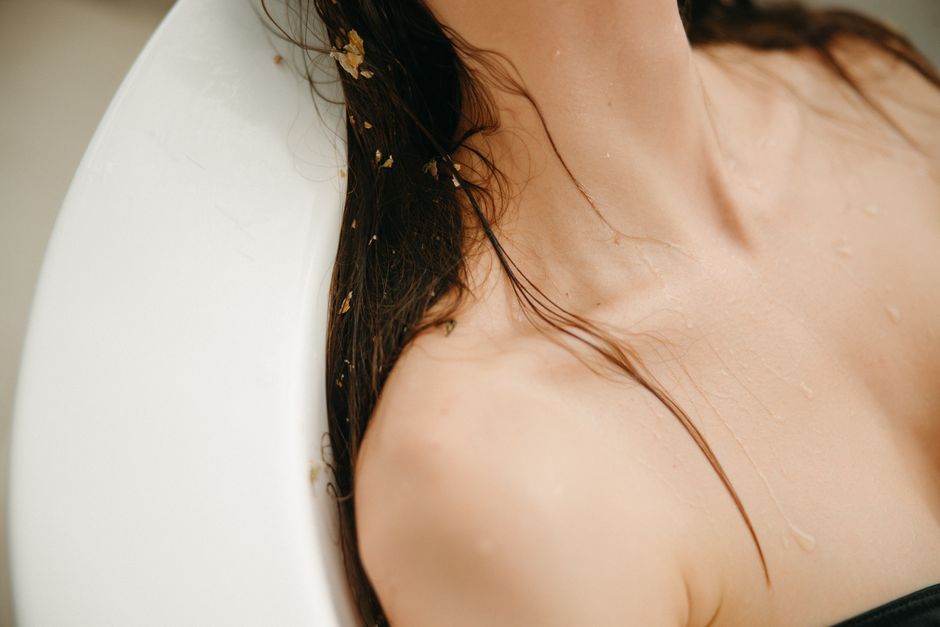
Finding crusty, stiff, or gritty patches in your hair is unsettling. You run your fingers through your strands and hit something that feels like dried glue or rough sand. This is not normal oiliness or simple product buildup. It is a sign that something on your scalp or hair has dried into a hard layer. The most common reasons are a buildup of hair products mixed with dead skin cells, or a scalp condition like seborrheic dermatitis that produces scales which then harden. The fix depends entirely on what is causing the crust, so identifying the source is the first real step.
What Causes Crusty Hair and Scalp?
Crusty hair usually starts at the scalp. The crust itself is a mixture of dried oils, skin cells, and any products you have applied. When your scalp produces excess oil, or when you do not wash often enough, these materials bind together. Heat from styling can bake this mixture onto the hair shaft, making it feel hard and brittle.
There are three main categories of causes. The first is simple buildup from styling products like gels, mousses, dry shampoos, and hairsprays. The second is a skin condition where the scalp sheds cells too quickly. The third is an infection or infestation that creates discharge or residue. Each one looks and feels slightly different, and each needs a different approach.
Is It Just Product Buildup or Something More?
Product buildup is the most straightforward cause. If you use heavy waxes, pomades, or leave-in conditioners daily, the residue accumulates. Water alone cannot dissolve these ingredients. They are designed to be water-resistant so they stay in your hair through sweat and humidity. Over weeks, this layer thickens and hardens, especially at the roots where products are applied first.
Scalp conditions are the second major cause. Seborrheic dermatitis is a common inflammatory condition. It causes greasy, yellowish scales that can crust over. Psoriasis is another possibility. It creates thicker, silvery scales that flake off in larger pieces. Both conditions involve rapid skin cell turnover, meaning your scalp produces new cells faster than it sheds old ones. The dead cells pile up, mix with oil, and form a crust.
Less common but important to rule out are fungal infections and lice. A fungal infection like tinea capitis can cause scaly patches and broken hairs. Lice can leave behind a sticky residue, though the itching is usually the first symptom.
Why Is My Hair Crusty And How To Fix It: The Simple Buildup Fix
If your scalp looks healthy underneath the crust — no redness, no bleeding, no large flakes — the problem is likely product residue. The fix is a clarifying wash. A clarifying shampoo is formulated with stronger detergents than regular shampoo. It is designed to remove waxes, silicones, and oils that standard cleansers leave behind.
Use it once a week at most. Clarifying shampoos strip everything, including the natural oils your scalp needs. Overusing them leaves hair dry and brittle, which can trigger your scalp to produce even more oil to compensate. After washing, condition only the middle and ends of your hair, not the scalp.
If you use heavy styling products daily, consider switching to water-based formulas. These rinse out more easily and are less likely to form hard layers. Also check your shampoo. Some “moisturizing” shampoos contain heavy conditioning agents that can build up on their own, especially if you have fine hair.





How to Treat Crust From Scalp Conditions
When the crust comes with visible flakes, redness, or itching, you are likely dealing with seborrheic dermatitis or a similar condition. This is not a hygiene failure. It is a chronic inflammatory response. The crust forms because the scalp sheds cells abnormally fast.
A shampoo containing ketoconazole, zinc pyrithione, or salicylic acid is the standard first step. These ingredients slow cell turnover, reduce the fungus that contributes to flaking, or help dissolve the scales so they wash away. Leave the shampoo on your scalp for the time listed on the bottle — usually three to five minutes — before rinsing. This contact time matters. Rinsing immediately does not give the active ingredient time to work.
For thick crusts, applying a small amount of mineral oil or baby oil to the scalp and leaving it for an hour before washing can soften the layer. Gently combing with a fine-tooth comb after the oil treatment helps lift the softened scales. Do not pick or scrape at the crust with your fingernails. This opens the skin and invites infection.
If over-the-counter medicated shampoos do not improve the crust within four to six weeks, see a dermatologist. Prescription-strength treatments are available, and a doctor can confirm the diagnosis. Some conditions that look like seborrheic dermatitis are actually something else, and treating the wrong condition wastes time.
What Not to Do With Crusty Hair
Do not scrub harder. Aggressive scrubbing with your fingernails or a stiff brush damages the skin barrier. A damaged barrier lets in irritants and loses moisture, making the flaking worse.
Do not apply more oil to the crust without washing it out. Some people try coconut oil or olive oil to soften the crust. These can help soften it, but if you leave them on, they mix with the dead cells and create a thicker, greasier layer. Oil is a treatment step, not a leave-in solution, for this specific problem.
Do not ignore signs of infection. If the crust is accompanied by oozing, a strong odor, pus, or patches of hair loss, that is not simple buildup. Those symptoms require a medical evaluation. Hair loss with crusting can indicate a fungal infection or an inflammatory condition that needs prescription treatment.
Preventing Crust From Coming Back
Once the crust is gone, prevention is about balance. Wash your scalp regularly enough to remove oil and product residue, but not so often that you strip it completely. For most people, washing two to three times a week is enough. If you sweat heavily or use styling products daily, you may need to wash more often.
Alternate your shampoos. Use a regular gentle shampoo most days and a clarifying or medicated shampoo once a week. This keeps buildup from forming while avoiding the dryness that comes from over-stripping.
Rinse thoroughly. Product residue and shampoo both leave a film if not fully rinsed. Spend an extra minute under the water, especially along the hairline and the crown where products tend to collect.
When to See a Doctor
See a dermatologist if the crust does not respond to over-the-counter treatments after several weeks. Also see one if the crust is painful, if you notice circular bald patches, or if the skin underneath is bleeding. These signs point to conditions beyond simple buildup or mild dermatitis.
If you have a weakened immune system, do not wait. Scalp infections can spread quickly and become serious in immunocompromised individuals. The same applies if you notice the crust spreading beyond your scalp to your forehead, ears, or neck.
Frequently Asked Questions
Can I scrape the crust off my scalp?
No. Scraping or picking at the crust damages your skin and can cause bleeding, infection, and scarring. Soften the crust with oil or a medicated shampoo and let it lift away naturally.
How often should I wash crusty hair?
Wash every other day with a gentle shampoo, and use a medicated or clarifying shampoo once a week. Washing more often can irritate the scalp and make the problem worse.
Is crusty hair a sign of poor hygiene?
Not necessarily. Product buildup can happen even with regular washing, and seborrheic dermatitis is a medical condition unrelated to cleanliness. Hygiene matters, but it is not the only factor.
Will coconut oil fix crusty hair?
Coconut oil can soften the crust before washing, but it is not a fix on its own. Leaving oil on the scalp without washing it out will make the crust thicker and greasier.
