
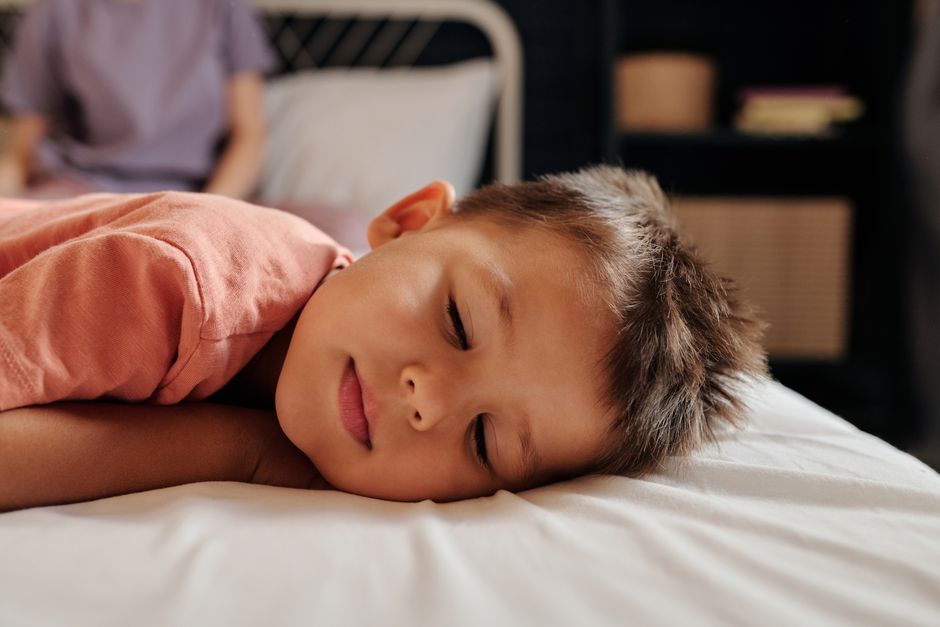
If you have ever peeked in on a sick child and seen their eyes partly open while they sleep, it can be unsettling. The most common reason is that illness makes sleep lighter and less complete, so the eyes do not settle into the fully closed position they normally hold during deep sleep. Congestion, fever, and the simple discomfort of being sick all play a part. It is usually a harmless sleep-phase effect, not a sign that something is wrong with your child’s eyes.
That said, “usually” is doing real work in that sentence. Most of the time this is a passing quirk that fades as your child recovers. A small number of cases point to something that deserves a doctor’s attention. Knowing the difference is what this article is about.
Why Is My Child Sleeping With Eyes Half Open When Sick?
Sleep happens in stages, and the eyelids are not equally relaxed in all of them. During the deepest stage of sleep, the muscles that hold the eyelids shut are fully relaxed, so the eyes stay closed. During lighter sleep and the dreaming stage, muscle tone changes, and the eyelids can drift partly open.
When a child is sick, sleep gets choppy. Fever, a stuffy nose, a sore throat, and body aches all push a child toward lighter sleep and more frequent waking. More time in light sleep means more chances for the eyelids to sit partly open.
There is a second factor specific to the eyes themselves. The eyelids do not close by muscle power alone. They also rely on the blink reflex and on the eyeball sitting at the right position within the socket. Anything that changes the surface of the eye or the way the lids rest can leave a small gap. Mild swelling of the tissue around the eyes from a cold or sinus pressure can do exactly that.
This is why the half-open look tends to show up most during illness and disappears afterward. It is a temporary change in how deeply your child is sleeping and how the lids are resting, not a new problem with the eyes.
Is It Normal for a Sick Child to Sleep With Eyes Open?
Yes, in most cases. Sleep with the eyes partly open has a name: nocturnal lagophthalmos. It is common in healthy people of all ages, and most of the time it causes no problems.
Estimates vary, but some research suggests a meaningful share of healthy adults sleep with their eyes at least partly open at some point. Children are no different. The difference during illness is that it becomes more noticeable and lasts longer than a single night.
What makes it normal rather than concerning is the pattern:
- It shows up mainly when your child is sick or very tired.
- The eyes look moist, not dry or crusty.
- It goes away as your child recovers.
- Your child wakes up without eye pain, redness, or blurry vision.
If those four things are true, there is no reason to treat it as a problem. It is a sleep quirk, not a symptom.
What Causes the Eyelids to Stay Open During Sleep?
Several things can pull the eyelids apart during sleep. Illness is only one of them, and understanding the others helps you judge what you are seeing.
The eyelids are thin sheets of skin and muscle. When the muscles relax fully, gravity and the shape of the eye socket decide how far they fall. In some children, the lids are naturally a little short or the eyes sit slightly forward, so a small gap remains even in deep sleep. This is a physical trait, not a disease.
Other contributors include:
- Lighter sleep from illness. Fever and discomfort keep a child in the stages where lids are less firmly shut.
- Nasal congestion. A blocked nose changes how a child breathes and can affect the position of the face and lids.
- Swelling around the eyes. Colds, sinus pressure, and allergies can puff the tissue around the eye, changing how the lids rest.
- Genetics. If a parent sleeps with eyes partly open, a child is more likely to as well.
- Certain medications. Some medicines affect muscle tone. If your child takes a prescription and this started around the same time, mention it to your doctor.
One clarification worth making: the half-open eye is not the eye “stuck” open. The lid is simply resting in a partly open position. It still moves and closes normally when your child is awake.

When Should I Worry About My Child Sleeping With Eyes Open?
Most cases need no action. A small number of signs mean the eye is not getting the protection it needs, and those deserve a call to your child’s doctor.
The main concern with eyes that stay open is dryness. When the lids do not cover the eye, the surface can dry out overnight. Over time, that can lead to irritation, a scratchy feeling, redness, or a higher risk of infection. This is why the duration matters more than the fact itself. One night of half-open eyes during a cold is nothing. Weeks of it, every night, is different.
Contact your child’s doctor if you notice:
- Eyes that look red, irritated, or unusually dry in the morning.
- Your child complains of eye pain, burning, or blurry vision that does not clear.
- A sticky or crusty discharge that keeps coming back.
- The half-open eyes continue long after the illness has passed.
- One eye stays open while the other closes normally.
- Any change in your child’s facial movement or ability to close the eye when awake.
That last point matters. If your child cannot fully close one eye even when awake, or if one side of the face looks different, that is not a sleep issue. It needs medical attention promptly.
Does Sleeping With Eyes Open Harm the Eyes?
Occasional half-open sleep during a brief illness does not harm the eyes. The eye’s tear film and the blink reflex handle small gaps well, and the surface recovers quickly.
Long-term or frequent exposure is a different story. When the eye is exposed night after night, the tear film cannot keep the surface moist. This can lead to a condition called exposure keratopathy, where the clear front surface of the eye becomes irritated and, in serious cases, damaged. This is uncommon in children and usually only develops when the eyes stay open most of the night for an extended period.
The evidence here is clear on the mechanism but limited on how often mild cases progress. Most children with occasional half-open eyes never develop a problem. The reason to watch for dryness is not that it is likely, but that it is easy to miss and easy to address when caught early.
What Helps a Child With Eyes Half Open During Sleep?
For a child who is sick and sleeping with eyes partly open, the goal is comfort and moisture, not correction. The eyes will close on their own as your child recovers.
Practical steps that are widely used and low risk:
- Keep the room at a comfortable humidity. Dry air pulls moisture from the eye surface.
- Treat the underlying illness as your doctor advises. Bringing down a fever and clearing congestion helps your child sleep more deeply.
- If the eyes look dry in the morning, ask your child’s doctor whether preservative-free artificial tears are appropriate. Do not use medicated drops without guidance.
- Avoid rubbing the eyes, which can irritate the surface further.
- Keep the sleep area free of irritants such as strong scents or smoke, which dry and inflame the eyes.
Do not tape the eyelids shut or use any home method to hold them closed. That is not safe and is not something to try at home.
If your child’s doctor is concerned about ongoing exposure, they may recommend a simple lubricating ointment at bedtime or, in specific cases, a referral to an eye specialist. Those are clinical decisions, not home remedies.
How Long Does It Usually Last?
In most children, half-open eyes during sleep last only as long as the illness that triggered them, plus a night or two of catch-up sleep afterward. As sleep deepens again, the lids settle back into their usual closed position.
If the pattern continues for more than a couple of weeks after your child is well, or if it comes and goes without any illness, it is worth mentioning at the next checkup. Persistent cases are not emergencies, but they are worth a look because of the dryness concern.
Some children simply sleep this way for years and never have a problem. Others have it only during illness. Both are common, and both are usually nothing to treat.
Frequently Asked Questions
Is it normal for a sick child to sleep with eyes half open?
Yes, it is common and usually harmless. Illness causes lighter sleep and mild swelling around the eyes, which lets the eyelids rest partly open until your child recovers.
Can sleeping with eyes open damage a child’s eyes?
Occasional half-open sleep during a short illness does not harm the eyes. Damage is a concern only when the eyes stay open most of the night for a long time and the surface dries out.
When should I call the doctor about my child’s eyes staying open in sleep?
Call if the eyes look red or dry in the morning, if your child has eye pain or blurry vision, or if the half-open eyes continue well after the illness ends. Also call promptly if one eye cannot close even when your child is awake.
Does sleeping with eyes open mean my child has a serious condition?
No, most cases are a normal sleep variation made more noticeable by illness. A serious cause is unlikely unless the eyes stay open long term or one side of the face is affected.
