
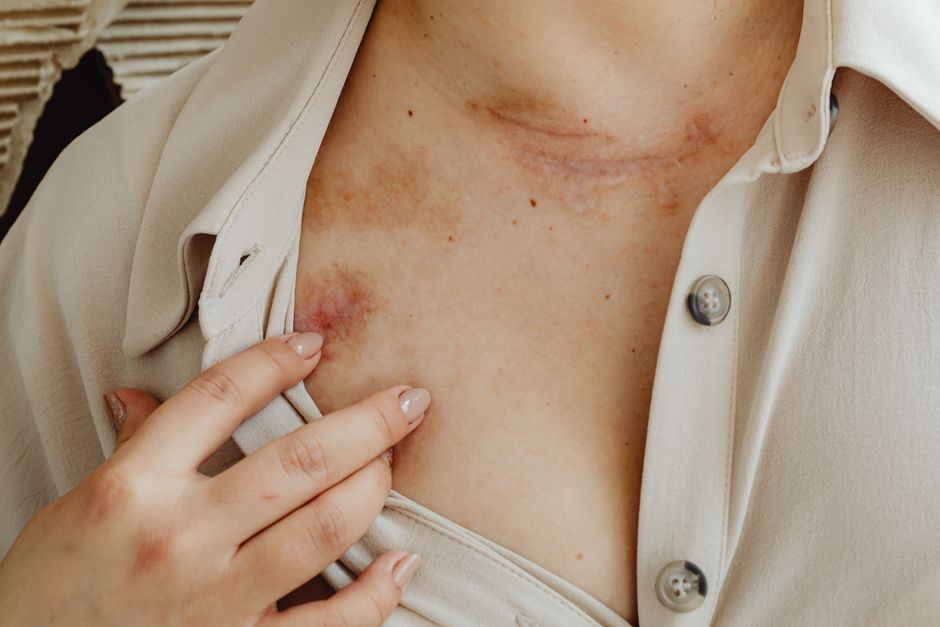
If you had your appendix removed and your scar is on the left side of your abdomen, you are not imagining things. Standard appendix surgery leaves a scar on the lower right side. A left-sided scar is unusual, but it happens for specific anatomical or surgical reasons. The most common explanation is that your appendix was located on the left side of your body during surgery, a condition known as left-sided appendix or situs inversus. Another possibility is that your surgeon used a laparoscopic approach that placed one of the small incisions on the left for better access.
Why Is My Appendix Scar On The Left Side Instead of the Right?
The standard location for an appendectomy scar is the lower right quadrant of the abdomen. This matches where the appendix normally sits. But your body may not be “normal” in this way. The appendix is attached to the cecum, which is the beginning of the large intestine. In most people, the cecum is on the right side. In some people, it is not.
Research published in the Journal of the American Medical Association has documented that about 1 in 10,000 people have situs inversus. This is a condition where the major organs are mirrored from their usual positions. The heart is on the right, the liver is on the left, and the appendix is on the left. If you have this condition and needed an appendectomy, your surgeon would have made the incision on the left side. The scar matches the location of the organ.
A more common reason is a mobile cecum. The cecum and appendix are not always firmly fixed in place. Some people have a longer mesentery, the tissue that holds the intestine in position. This allows the cecum and appendix to drift to the left side of the abdomen. A surgeon operating on a patient with a mobile cecum may find the appendix on the left and make the incision there. This is not a disease. It is a normal variation in human anatomy.
Could the Surgeon Have Made a Mistake With the Incision Location?
This is a common fear, but it is almost never the case. Surgeons are trained to locate the appendix by feel and by visual landmarks during open surgery. They do not guess. If a surgeon makes an incision on the left side, it is because they found the appendix there.
During laparoscopic surgery, the situation is different. The surgeon makes several small incisions for the camera and tools. One of these incisions is often placed near the belly button. Another might be on the left side of the abdomen. This is done to create the best angle for the instruments. After the surgery, you may have a small scar on the left that looks like a surgical scar. It is not the main incision for organ removal. It is a port site.
The main incision for an open appendectomy is about 2 to 4 inches long. Laparoscopic incisions are usually less than half an inch. If your left-sided scar is small and round, it is likely a port site. If it is longer and more linear, it could be the actual incision site for organ removal. Your surgeon should have explained this in your discharge paperwork. If you are unsure, call the surgeon’s office. They can look at your records and tell you exactly what was done.
What Does Research on Left-Sided Appendix Scars Show?
Medical literature is clear that a left-sided appendix is a real but rare finding. A 2020 review in Surgical and Radiologic Anatomy looked at over 50 studies on appendix position. The researchers found that the appendix sits in the right lower quadrant in about 65 percent of people. The rest have it in other positions, including the pelvis, behind the cecum, or in the left upper or lower quadrant.
The same review noted that surgeons report finding a left-sided appendix in roughly 1 in 500 to 1 in 1,000 appendectomies. This is more common than situs inversus alone. It suggests that many people have a mobile cecum that allows the appendix to shift left during life or during surgery.
Another study in World Journal of Emergency Surgery from 2018 examined cases of “left-sided appendicitis.” The authors found that delayed diagnosis was common because doctors assumed the pain was on the right. Patients with left-sided pain were often misdiagnosed with diverticulitis or kidney stones. The takeaway is clear: if your appendix was on the left, your surgeon did the right thing by cutting on the left. The alternative would have been to cut on the right and miss the appendix.





What Are the Possible Complications of a Left-Sided Appendix Surgery?
The location of the scar does not change the risks of the surgery itself. Appendectomy is a safe procedure with low complication rates. The CDC reports that about 1 to 3 percent of patients experience a surgical site infection. This rate is the same whether the incision is on the left or the right.
What changes is the risk of diagnostic delay. If your appendix is on the left, you might not get the right diagnosis quickly. Doctors may not think of appendicitis when the pain is on the left. This delay can lead to a ruptured appendix before surgery. A ruptured appendix increases the risk of infection and requires a longer hospital stay.
If you already have a left-sided scar and you have had a previous appendectomy, you are fine. The surgery is done. The risk is only for future episodes of abdominal pain. If you ever have pain on the left again, tell your doctor about your left-sided appendix. They will need to consider other causes like diverticulitis or ovarian issues, not a recurring appendix.
Can a Left-Sided Scar Be a Sign of Something Else?
In rare cases, a left-sided scar could be from a different surgery entirely. Some people confuse an appendectomy scar with a scar from a hernia repair, a gallbladder removal, or a colon resection. The gallbladder is on the right side, but some surgeons place the incision in the upper midline or left for better access during laparoscopic cholecystectomy.
If you are not sure what surgery you had, check your medical records. The operative report will state exactly what was done and where the incisions were placed. You can also look for a scar near the belly button. Most laparoscopic appendectomies use an incision inside the navel that heals nearly invisibly. If you have a left-sided scar and no belly button scar, it is more likely you had an open surgery.
Another possibility is that the scar is from a drain site. After some abdominal surgeries, surgeons place a temporary drain to remove fluid. The drain exit site is often on the left side of the abdomen. This leaves a small scar that looks like a surgical incision. It is not the main scar for organ removal.
What Should You Do If You Are Concerned About Your Scar?
If your scar is healing well and you have no pain, there is usually nothing to worry about. The scar itself is not a problem. The concern is only about understanding why it is there.
You can call the hospital where your surgery was done. Ask for a copy of your operative report. This document describes the surgery in detail. It will say whether the appendix was found on the left side. It will also list the incision locations.
If you cannot get your records, ask your primary care doctor. They can often request them for you. Some hospitals have online patient portals where you can view your records directly.
The most important thing is to know your anatomy. If you have a left-sided appendix, tell every new doctor you see. This is especially important for emergency room visits. A doctor who does not know about your left-sided appendix might miss the diagnosis of appendicitis if you ever have pain on the right. Yes, you read that correctly. If your appendix was removed from the left, it is gone. But if you have a different condition that causes right-sided pain, the doctor needs to know your history.
Common Misconceptions About Left-Sided Appendix Scars
One myth is that a left-sided scar means the surgeon operated on the wrong side. This is not true. Surgeons are trained to find the appendix. They do not guess based on the scar location. If they cut on the left, the appendix was on the left.
Another myth is that a left-sided appendix is a birth defect that causes health problems. It is not a defect. It is a normal anatomical variation. Having your appendix on the left does not cause any symptoms or health issues. The only time it matters is if you get appendicitis.
Some people believe that a left-sided scar means the appendix was not fully removed. This is false. The appendix is a small organ. It is removed completely regardless of which side it is on. The scar location has nothing to do with how much of the appendix was taken.
| Scar Location | Likely Reason | Frequency |
|---|---|---|
| Lower right | Standard appendix position | ~95% of people |
| Lower left | Situs inversus or mobile cecum | ~1 in 500 to 1,000 |
| Upper left (small scar) | Laparoscopic port site | Common in laparoscopic surgery |
| Midline or upper abdomen | Different surgery (gallbladder, hernia) | Varies |
Frequently Asked Questions
Frequently Asked Questions
Can my appendix scar be on the left if I had laparoscopic surgery?
Yes. Laparoscopic surgery uses multiple small incisions for tools. One of these incisions is often placed on the left side to improve the surgeon’s angle. This leaves a small left-sided scar.
Is a left-sided appendix dangerous?
No. It is a normal anatomical variation. It only becomes a concern if you develop appendicitis and doctors assume the pain is on the right, which can delay diagnosis.
How do I know if my left-sided scar is from my appendix or another surgery?
Check your medical records. The operative report will state exactly what surgery was performed and where the incisions were made. You can request this from the hospital or your doctor.
Should I tell my doctor about my left-sided appendix scar?
Yes. Tell every new doctor you see, especially in an emergency room. It helps them understand your surgical history and avoid confusion if you have abdominal pain in the future.
