
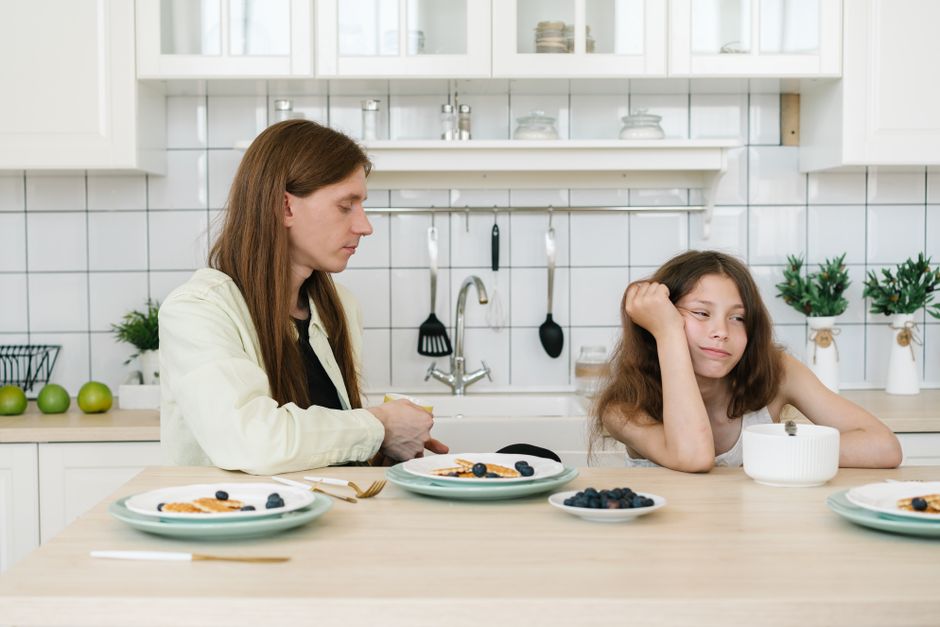
If your 10-year-old daughter has suddenly turned angry, tearful, or both within minutes, you are watching normal development, not a personality change. At this age, the brain’s emotional alarm system is fully active while the part that calms it and reasons through feelings is still years from mature. Add rising hormones, heavier school demands, and a social world that suddenly feels fragile, and big reactions make sense. Anger and tears at 10 are usually a sign of a brain under construction, not a child going wrong.
Why Is My 10 Year Old Daughter So Angry And Emotional?
The short answer is that her emotional reactions are running ahead of her ability to regulate them. That gap is biology, not defiance.
Two systems matter here. The limbic system, which generates emotion, develops early. The prefrontal cortex, which puts the brakes on impulses and helps a child think before reacting, keeps developing well into the mid-twenties. At 10, the alarm bell is loud and the brakes are still being built.
On top of that, puberty is beginning or approaching for many girls around this age. The average age of first menstruation in the US is roughly 12, but breast development and other early signs of puberty commonly start between ages 8 and 13. Estrogen and other hormones are rising before any visible signs appear, and hormones affect mood regulation directly.
There is also a cognitive shift. Around 9 to 11, children become far more aware of social comparison. They notice who was invited and who was not. They read tone and facial expressions more sharply. This new social radar makes everyday moments feel bigger than they used to.
Put those three things together — a loud emotional system, a developing brake system, and a newly sensitive social world — and you have a child whose reactions can look out of proportion to the event. Often they are proportionate to what is happening inside her, not outside.
What Normal Emotional Development Looks Like At Age 10
Ten sits in a transition zone that researchers sometimes call the “tween” years. It is not childhood and it is not full adolescence. It is its own stage.
Typical patterns include:
- Mood swings that shift quickly, sometimes within the same hour
- Increased sensitivity to criticism, especially from peers
- Wanting more privacy and more independence
- Sudden tears over things that would not have bothered her a year ago
- Anger that flares fast and fades fast
- Strong opinions about fairness and rules
What separates normal development from something that needs a closer look is not the intensity of a single reaction. It is the pattern. A child who is mostly functioning — sleeping, eating, going to school, keeping friendships — is usually on track even if home feels like a storm some days.
One thing worth knowing: girls at this age often express distress as anger rather than sadness. Anger can feel safer than vulnerability. When your daughter snaps at you, the feeling underneath may be hurt, embarrassment, or fear.
Hormones, Puberty, And Mood: What The Evidence Shows
Puberty does affect mood, but the relationship is more complex than most people assume.
Research has not found a simple one-to-one link between a specific hormone level and a specific mood on a given day. What studies do consistently show is that the hormonal changes of puberty coincide with a period of increased emotional intensity and higher rates of mood symptoms in girls. The timing overlaps, but the mechanism is not just hormones acting alone.
Sleep is a major factor. During puberty, the body’s internal clock shifts, making it biologically harder for tweens and teens to fall asleep early. Many 10-year-olds need more sleep than they are getting. Sleep loss reliably worsens irritability, emotional control, and mood in both children and adults. If your daughter is staying up later than she used to, that alone can explain a lot.
Social stress is another factor. The transition into middle school often brings a larger, less familiar peer group and more complex social dynamics. Some research indicates that girls may be more affected by relational stress — conflict within friendships, exclusion, gossip — than boys of the same age.
So hormones matter, but they are one thread in a larger pattern that includes sleep, social stress, and brain development.





When Anger And Big Emotions Are More Than A Phase
Most emotional intensity at 10 is developmental. Some of it signals something that deserves attention.
Consider a closer look if you notice:
- Anger or sadness that lasts most of the day, most days, for weeks
- Withdrawal from friends, family, or activities she used to enjoy
- Major changes in sleep or appetite that persist
- Falling grades or refusal to go to school
- Self-harm, talk of not wanting to be here, or expressions of hopelessness
- Aggression that puts her or others at risk
The last two are not wait-and-see situations. Contact a pediatrician or a mental health professional promptly. If there is any concern about safety, treat it as urgent.
Anxiety can also look like anger in children. A child who is anxious may become irritable, controlling, or explosive rather than appearing nervous. This is common and often missed. Depression in children can present as irritability too, not just sadness.
Attention and learning challenges can also surface as frustration. A child who is struggling quietly with schoolwork may blow up at home where it feels safe to let go.
None of these can be diagnosed from a list. If something feels off beyond the usual ups and downs, a pediatrician is the right first stop.
How To Respond In The Moment
When your daughter is mid-meltdown, reasoning rarely works. The thinking part of her brain is temporarily offline. What helps is calm, short, and steady.
A few approaches that many clinicians recommend:
- Lower your voice rather than raise it. Volume tends to escalate, not settle, a dysregulated child.
- Name the feeling without arguing about it: “That sounds really frustrating.”
- Give space if she needs it. Some kids regulate alone before they can talk.
- Save the conversation about rules and consequences for later, when everyone is calm.
- Avoid matching her intensity. Two activated nervous systems rarely calm each other.
After the storm passes is when the real work happens. Ask what was going on underneath. Listen more than you talk. Many kids cannot name the feeling in the moment but can describe it an hour later.
It also helps to separate the emotion from the behavior. Feeling furious is allowed. Hitting, breaking things, or screaming at people is not. You can validate the feeling and still hold the limit.
What Actually Helps Over Time
There is no single fix, but several things reliably support emotional regulation in tweens.
Sleep is the highest-leverage factor. Most 10-year-olds need roughly 9 to 12 hours of sleep per night according to pediatric sleep guidelines. Screens close to bedtime, caffeine, and late activities all push against this. Protecting sleep often reduces irritability more than any conversation about behavior.
Physical activity helps mood and stress regulation. It does not need to be organized sports. Walking, biking, or any regular movement counts.
Connection matters more than correction. Kids who feel securely attached to at least one adult tend to weather emotional storms better. A few minutes of undivided attention daily can do more than a long lecture once a week.
Naming feelings builds the skill she is missing. Over time, a child who can say “I’m embarrassed” is less likely to explode. This is a skill, and it develops with practice and modeling.
Consistency gives her a stable base. Predictable routines, clear expectations, and calm responses even when she is not calm help her nervous system learn what safety feels like.
If things are not improving despite your best efforts, or if the intensity is affecting her daily life, a pediatrician, school counselor, or child therapist can help. Therapy for children this age often focuses on coping skills, emotional identification, and family communication. It is not a sign of failure to seek it.
What Does Not Help
Some common reactions tend to make things worse.
Dismissing the feeling — “You’re overreacting” or “That’s nothing” — teaches her that her emotions are wrong. They are not wrong. They are just bigger than her current tools.
Punishing the emotion itself, rather than the behavior, tends to increase intensity over time. The feeling is not the problem. What she does with it is where limits belong.
Comparing her to siblings or peers — “Your brother never acted like this” — rarely motivates and often wounds.
Assuming it is all hormones and waiting it out can miss something real. Hormones explain a lot at this age, but they do not explain everything. If your gut says something is different, trust it enough to ask a professional.
Frequently Asked Questions
Is it normal for a 10-year-old girl to be angry and emotional?
Yes, it is common and usually developmental. At 10, the brain’s emotional system is mature while the self-control system is still developing, and early puberty can add to the intensity.
Can puberty start at 10 and cause mood swings?
Puberty commonly begins between ages 8 and 13 in girls, so 10 is within the normal range. Rising hormones during this period often overlap with increased emotional intensity, though sleep and social stress also play large roles.
When should I worry about my 10-year-old’s anger?
Seek help if anger or sadness lasts most days for weeks, if she withdraws from friends and activities, or if school and sleep are affected. Any talk of self-harm or hopelessness needs prompt professional attention.
How can I help my 10-year-old daughter calm down?
Stay calm yourself, lower your voice, and name the feeling without arguing about it. Save discussions about rules and consequences for after she has settled.
