
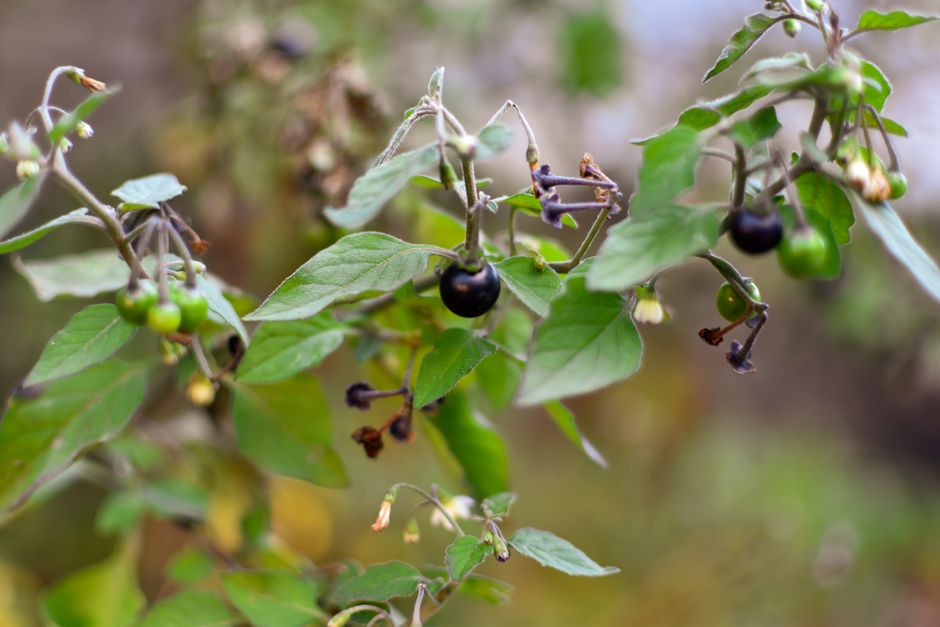
Nightshades earned their deadly reputation honestly. The name comes from solanaceous plants like belladonna — known historically as deadly nightshade — which contain tropane alkaloids that can kill. When people later grouped tomatoes, potatoes, peppers, and eggplant into the same botanical family, the fear transferred with the name. That fear was never justified for the edible ones. The “poison” label is a historical accident, and the “shadow” is what happens when a real danger from one group of plants gets cast over an entire family that includes some of the most nutritious foods people eat.
Why Is It Called Nightshade Poison Myth Shadow?
The word “nightshade” describes a family of plants, not a single poisonous species. Solanaceae contains roughly 2,700 species. Some are genuinely dangerous. Most are not. The confusion starts because the most infamous member — deadly nightshade, or Atropa belladonna — shares a family name with the tomato on your counter.
The “poison” part of the phrase comes from real alkaloids. Deadly nightshade produces atropine, scopolamine, and hyoscyamine. These compounds block acetylcholine receptors in the nervous system. In high enough doses they cause delirium, paralysis, and death. The “shadow” is the cultural fallout — centuries of suspicion that spread from one toxic plant to everything related to it.
Here is the part most people miss. The toxic alkaloids in deadly nightshade are not the same compounds found in edible nightshades. Tomatoes contain tomatine. Potatoes contain solanine and chaconine. These are different molecules with different effects and very different dose thresholds. Grouping them together because of shared plant lineage is like avoiding apples because oleander is also a plant.
What Makes a Plant a Nightshade?
Nightshades belong to the genus-rich family Solanaceae. Botanists classify them by flower structure, fruit type, and chemical profile — not by whether they are safe to eat.
Common edible nightshades include:
- Tomatoes
- Potatoes (white, red, yellow — not sweet potatoes, which are a different family)
- Bell peppers, chili peppers, and paprika
- Eggplant
- Tomatillos and ground cherries
- Goji berries
Common toxic nightshades include:
- Deadly nightshade (Atropa belladonna)
- Jimsonweed (Datura stramonium)
- Henbane (Hyoscyamus niger)
- Mandragora (mandrake)
Nicotine comes from Nicotiana species, also in this family. So does the capsaicin in hot peppers. Same family, wildly different biological effects.
The botanical grouping tells you about evolutionary relationships. It does not tell you whether a plant is safe to eat.
Are Edible Nightshades Actually Poisonous?
No. Tomatoes, peppers, and eggplant sold as food are not poisonous in any practical sense. Potatoes are safe when stored and prepared correctly. The confusion comes from a real but narrow issue: green potatoes and potato sprouts.
Potatoes naturally contain solanine and chaconine, two glycoalkaloids that serve as the plant’s natural pest defense. In a normal potato, levels are low. When potatoes are exposed to light, they turn green and produce more of these compounds. The green color itself comes from chlorophyll, which is harmless. The solanine rise is the actual concern.
According to guidance from the USDA and food safety authorities, green potatoes should be discarded rather than trimmed. Sprouted potatoes should also be avoided. This is established food safety guidance, not speculation.
Tomatoes contain tomatine, mostly in the leaves and unripe fruit. Ripe tomatoes have very low levels. The amount in a normal serving is not considered a health risk. Some research suggests tomatine may have immune-modulating properties, but that research is preliminary and does not mean unripe tomatoes are safe to eat in quantity.
Peppers and eggplant do not contain the same alkaloids as potatoes. Their reputation as “poisonous” comes entirely from family association, not from their own chemistry.





Where Did the Fear of Nightshades Come From?
The fear has several historical roots that stacked on top of each other.
First, deadly nightshade was genuinely lethal and widely known. In medieval and early modern Europe, it was used as a poison. Its berries look like small cherries. Its name — belladonna, meaning “beautiful lady” — came from the practice of women using it to dilate their pupils for cosmetic effect. That practice was dangerous. The plant’s reputation was earned.
Second, when tomatoes arrived in Europe from the Americas in the 1500s, many Europeans were suspicious of them. Tomatoes are acidic and were sometimes served on pewter plates. The acid could leach lead from the pewter, causing lead poisoning. The tomato got blamed. The plate did not.
Third, the tomato’s leaves and stems contain tomatine, and their appearance resembles deadly nightshade. Wealthy Europeans grew tomatoes as ornamental plants for decades before anyone ate them widely. The visual similarity reinforced the fear.
Fourth, the Doctrine of Signatures — a pre-scientific belief that a plant’s appearance revealed its purpose — led some to assume that any plant resembling a known poison must also be poisonous.
None of these roots hold up to modern chemistry. But they shaped cultural attitudes that persist in folk medicine and internet health claims today.
What About Solanine and Tomatine — Are They Dangerous?
Solanine and tomatine are real compounds. The question is dose and route.
Solanine is a glycoalkaloid found in potatoes, especially in the skin, sprouts, and any green areas. At high doses it causes gastrointestinal symptoms — nausea, vomiting, diarrhea — and in severe cases neurological effects. Documented human poisonings have occurred from eating large amounts of green or sprouted potatoes. These are real cases, not theoretical.
Normal potato consumption does not cause solanine poisoning. A standard baked potato contains solanine levels well below the threshold that causes symptoms. The threshold for toxicity is generally described in food safety references as requiring consumption of several hundred milligrams of solanine, which would require eating a large quantity of heavily greened potatoes.
Tomatine is a different compound. It is present in tomato leaves and green tomatoes. Ripe tomatoes contain very little. Some laboratory research has explored tomatine’s effects on immune cells and cholesterol. That research is at the cell and animal level. It does not establish clinical effects in humans, and it does not mean green tomatoes are a health food or a poison. They are simply not a typical food source.
Capsaicin, the compound that makes chili peppers hot, is not a poison. It binds to TRPV1 receptors involved in pain and heat sensation. That is why it feels hot. It is not toxic in food amounts.
Do Nightshades Cause Inflammation or Arthritis?
This claim circulates widely. The evidence does not support it.
The idea is that solanine and other alkaloids promote inflammation, especially in joints. No large human trials have confirmed this. Some people report symptom improvement when they eliminate nightshades from their diet. That is a real report, but it is not the same as evidence that nightshades caused the problem.
Elimination diets can produce placebo effects and can also coincidentally remove other triggers. If someone removes tomatoes, peppers, and potatoes and feels better, the change might come from removing something else in those meals — or from the general shift in eating patterns that comes with any elimination diet.
Arthritis has well-established causes: autoimmune processes in rheumatoid arthritis, cartilage breakdown in osteoarthritis, uric acid crystals in gout. Nightshade alkaloids are not established contributors to any of these. Some clinicians acknowledge that a small number of patients report sensitivity and may suggest a trial elimination. That is different from saying nightshades cause arthritis.
The evidence here is limited. Anyone considering an elimination diet for joint symptoms should discuss it with a clinician rather than assuming nightshades are the cause.
Are There People Who Should Avoid Nightshades?
For most people, no. Edible nightshades are nutritious and widely consumed. Tomatoes provide lycopene, vitamin C, and potassium. Peppers provide vitamin C and antioxidants. Potatoes provide potassium, vitamin C, and fiber.
There are a few situations where caution is reasonable:
- Potato allergies are rare but documented. Symptoms can include hives, digestive upset, or in severe cases anaphylaxis.
- Nightshade sensitivity is reported by some individuals, though it is not a formally recognized diagnosis in mainstream allergy or immunology practice. If someone consistently reacts to multiple nightshades, they should work with a clinician.
- Green or sprouted potatoes should be avoided by everyone. This is food safety guidance, not a personal sensitivity issue.
- People taking certain medications — particularly those affected by solanine metabolism — should discuss diet with their pharmacist. This is a narrow concern and not a general rule.
For the general population, there is no established reason to avoid edible nightshades.
Why Does the Myth Persist?
The myth persists for three reasons.
First, the name is genuinely confusing. “Nightshade” sounds ominous. It sounds like a poison. People hear “nightshade” and think “deadly nightshade.”
Second, the family does contain real poisons. That gives the fear a kernel of truth. The problem is that the kernel gets applied to the wrong plants.
Third, elimination diets and alternative health narratives benefit from having something to eliminate. “Avoid nightshades” is a simple, memorable rule. It gives people a sense of control. That does not make it correct.
The accurate position is straightforward. Deadly nightshade is dangerous. Edible nightshades are not. The shared family name is a botanical classification, not a safety warning. Green potatoes are a real food safety issue. Ripe tomatoes, peppers, and eggplant are not.
Frequently Asked Questions
Are tomatoes actually poisonous?
No. Ripe tomatoes are safe to eat. The leaves and stems contain small amounts of tomatine, but the fruit itself has very low levels that are not considered a health risk.
Why are potatoes called nightshades if they are safe?
Potatoes belong to the Solanaceae family, the same botanical family as deadly nightshade. Family classification is based on evolutionary relationships, not on whether a plant is safe to eat.
Can eating green potatoes make you sick?
Yes. Green potatoes contain higher levels of solanine, which can cause nausea, vomiting, and diarrhea at high doses. Food safety authorities recommend discarding green or sprouted potatoes rather than trimming them.
Do nightshades cause arthritis or inflammation?
No large human trials have confirmed that nightshades cause arthritis or systemic inflammation. Some people report symptom changes when they eliminate nightshades, but that is not the same as evidence that nightshades caused the problem.
