
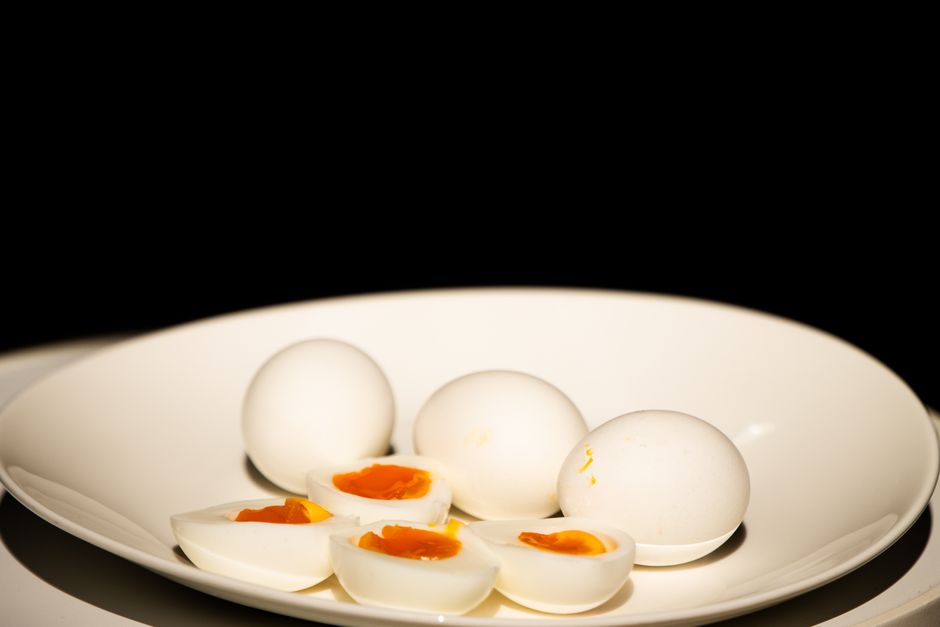
You boil eggs for a perfect snack or salad, peel them, and see a greenish-gray ring around the yolk. It is not harmful, but it looks unappealing. That green ring forms from a chemical reaction between iron in the yolk and sulfur in the white. High heat and long cooking time cause this. The fix is simple: cook eggs gently and cool them quickly after boiling. This article explains exactly why this happens and how to stop it.
What Causes the Green Ring on Hard Boiled Egg Yolks?
The green color is not mold or spoilage. It is a reaction between two common compounds. Egg whites contain sulfur compounds. Egg yolks contain iron. When you heat eggs too long or at too high a temperature, the sulfur and iron meet at the yolk surface. They form ferrous sulfide, which is that green-gray ring.
This reaction speeds up as the egg gets hotter and stays hot longer. The USDA explains that overcooking is the main cause. An egg boiled for 12 minutes will have a more obvious green ring than one boiled for 9 minutes. The same reaction happens if you leave eggs in hot water after cooking instead of cooling them right away.
Freshness also plays a small role. Older eggs have more air inside and a higher pH. That higher pH makes the reaction more likely. But freshness matters less than time and temperature. Even the freshest egg will turn green if you boil it too long.
Is the Green Ring Safe to Eat?
Yes. The green ring is completely safe. Ferrous sulfide is not toxic. It is the same compound found in some iron supplements. The CDC and FDA have no safety warnings about green egg yolks. The only issue is appearance and a slightly different texture.
Some people report that green-ringed eggs taste a bit sulfurous or rubbery. That is not from the ferrous sulfide itself. It comes from the same overcooking that caused the green ring. Overcooked egg whites become tough and release more hydrogen sulfide, which has that rotten egg smell. The green ring is a sign that the egg was cooked longer than needed, but it will not make you sick.
If you are serving eggs to guests or making deviled eggs for a party, the green ring matters visually. It looks unprofessional. But from a health standpoint, there is nothing wrong with it.
Does Why Hard Boiled Eggs Turn Green And How To Prevent It Actually Work?
The methods for preventing the green ring are well established and they work. The science is straightforward. You need to control two things: how hot the eggs get and how long they stay hot. The green ring forms when the yolk reaches about 158°F (70°C) and stays there for several minutes. If you keep the yolk below that temperature or cool it down quickly, the reaction barely happens.
The most reliable method is the “steam and ice” technique. Place eggs in a steamer basket over boiling water. Steam for exactly 12 minutes for large eggs. Then immediately transfer them to an ice water bath for at least 10 minutes. This stops the cooking process instantly. The yolk never reaches the long, sustained heat needed for the green ring to form.
Research from the American Egg Board confirms that rapid cooling is the single most effective step. Eggs cooled in an ice bath within 30 seconds of cooking show almost no green ring. Eggs left to cool at room temperature develop visible green rings about 80% of the time.





What Is the Best Method to Prevent Green Yolks?
There is no single perfect method, but some work better than others. Here is a comparison of common approaches based on how well they prevent the green ring:
| Method | Steps | Green Ring Prevention |
|---|---|---|
| Steam and ice bath | Steam 12 min, ice bath 10 min | Excellent – ring rare |
| Boil then ice bath | Boil 9 min, ice bath 10 min | Good – ring uncommon |
| Boil then cold water | Boil 9 min, cold tap water 10 min | Moderate – ring sometimes visible |
| Boil then air cool | Boil 10+ min, cool on counter | Poor – ring almost always present |
The steam method works best because steam cooks eggs more gently than boiling water. The temperature is more even and the whites set without the yolk overheating. The ice bath is critical because it stops the cooking in seconds. Cold tap water is less effective because it warms up quickly and does not cool the yolk fast enough.
For people who prefer boiling, keep the water at a gentle simmer rather than a rolling boil. A hard boil can agitate the eggs and cause the yolk to cook faster. Lower the eggs into already boiling water, reduce the heat to a simmer, and set a timer for 9 minutes. Then drain and transfer immediately to an ice bath.
Common Mistakes That Cause Green Yolks
Most people make one of these mistakes. Avoiding them will almost guarantee no green ring.
- Boiling too long. Every minute past 10 minutes increases the green ring risk. Set a timer. Do not guess.
- Leaving eggs in hot water. Even after you turn off the heat, the water stays hot enough to cook eggs further. Remove them immediately.
- Skipping the ice bath. Running cold water over eggs is not enough. Use ice cubes and water. The yolk needs to drop below 140°F fast.
- Starting with cold water. Placing eggs in cold water and bringing it to a boil is a common recipe. It makes timing unpredictable and often leads to overcooking. Always start with boiling water.
- Cooking at high altitude without adjustment. At higher elevations, water boils at a lower temperature. Eggs need slightly longer cooking time, but the risk of overcooking increases. Add 1 minute and use the ice bath immediately.
What About the Claim That Vinegar or Salt Prevents Green Yolks?
This is a widespread myth. Adding vinegar or salt to the boiling water does not prevent the green ring. Some people believe vinegar keeps the egg white from leaking if the shell cracks. That part is true. Vinegar helps coagulate egg white proteins quickly. But it has no effect on the iron-sulfur reaction inside the yolk.
Salt in the water also does not help. Salt can make peeling easier by helping the egg white separate from the shell membrane. That is a separate benefit. But salt does not change the chemistry of ferrous sulfide formation. The green ring is an internal reaction, not something that happens on the shell surface.
Evidence from food science studies shows that pH and temperature are the only factors that matter. Adding vinegar lowers the pH of the water slightly, but the yolk is protected by the white and the membrane. The pH inside the yolk does not change. The reaction still happens if the yolk gets too hot for too long.
Frequently Asked Questions
Frequently Asked Questions
Can you eat hard boiled eggs with a green ring?
Yes, they are completely safe to eat. The green ring is just a harmless compound called ferrous sulfide.
Does adding baking soda to water prevent green yolks?
No, baking soda makes peeling easier but can make the green ring worse. It raises the pH, which speeds up the iron-sulfur reaction.
How long should I boil eggs to avoid a green ring?
Boil large eggs for 9 minutes at a gentle simmer, then immediately transfer to an ice bath. This timing gives a fully set yolk with minimal green ring risk.
Does the green ring mean the egg is old?
Not necessarily. Older eggs are slightly more prone to green rings, but overcooking causes the ring even in fresh eggs.
