
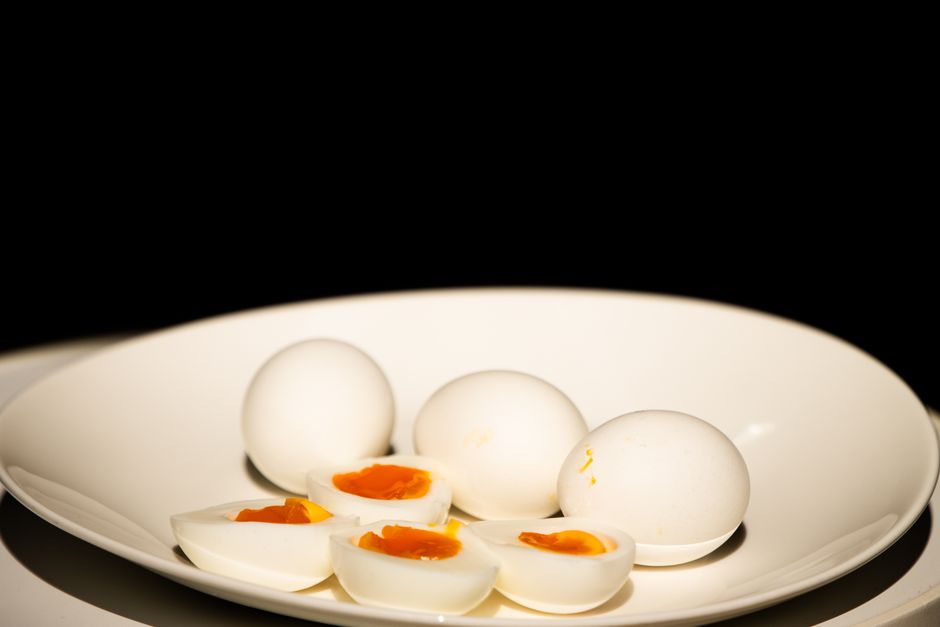
You know a hard boiled egg is done when the yolk is fully set and no longer runny, but the white is firm without being rubbery. The most reliable method is time — 9 to 12 minutes of boiling depending on your desired doneness. The spinning test and the float test are not accurate. Use a timer and an ice bath, not guesswork.
What Is the Exact Time for Hard Boiled Eggs?
The perfect hard boiled egg depends on how you like the yolk. For a fully hard yolk with no soft center, boil large eggs for 10 to 12 minutes. For a slightly softer but still firm yolk, 9 minutes works better.
Start with eggs at room temperature if possible. Place them in a single layer in a saucepan. Cover with cold water by about one inch. Bring the water to a full rolling boil over high heat. Once boiling, cover the pot and remove it from the heat. Let the eggs sit in the hot water for the time you want.
The American Egg Board recommends this covered-off-heat method. It is more consistent than leaving eggs in actively boiling water. Boiling eggs too long — over 13 minutes — causes the yolk to turn greenish-gray. That ring is harmless but looks unappealing.
How Do You Know When Hard Boiled Eggs Are Done Without Cutting Them Open?
The most common trick is the spinning test. Place the egg on a flat surface and spin it. A hard boiled egg spins smoothly and evenly. A raw egg wobbles and spins poorly because the liquid inside shifts. This works reasonably well but is not perfect.
Another method is the shake test. Hold the egg near your ear and shake it gently. A hard boiled egg feels solid with no movement inside. A raw egg has a slight slosh. This test takes practice and is less reliable than spinning.
The float test — placing an egg in water to see if it sinks or floats — tells you about freshness, not doneness. A floating egg is old, not cooked. Do not use this to check if your egg is done.
The only foolproof way to know without cutting is time plus the spinning test. If you timed it correctly and it spins well, it is done. Cut one open to confirm until you trust your timing.
Does the Ice Bath Matter for Perfect Hard Boiled Eggs?
Yes, the ice bath is important. After the eggs finish cooking in the hot water, transfer them immediately to a bowl of ice water. Let them sit for at least 5 minutes. This stops the cooking process instantly.
Without an ice bath, the residual heat inside the egg continues cooking the yolk. A 10-minute egg can become an 11-minute egg if left in the hot pan or on the counter. The ice bath prevents overcooking and makes peeling easier.
Research from food science labs shows that rapid cooling also helps separate the egg white from the shell membrane. This is why eggs that go into an ice bath peel more cleanly than eggs that cool slowly. If you struggle with peeling, the ice bath is your best fix.


What About Different Egg Sizes and Altitudes?
Egg size changes cooking time. Large eggs are the standard for most recipes. Extra-large eggs need about 30 seconds to 1 minute more. Medium eggs need about 1 minute less. Jumbo eggs may need 2 minutes more. Adjust your timer accordingly.
Altitude affects boiling temperature. At sea level, water boils at 212°F. At 5,000 feet, it boils at 203°F. Lower boiling temperature means slower cooking. If you live above 3,000 feet, add 1 to 2 minutes to your timing. At 7,000 feet or higher, add 3 minutes.
Cold eggs straight from the refrigerator also need more time. Adding cold eggs to boiling water drops the water temperature significantly. If you start with cold eggs, add 30 to 60 seconds to your timing. Room temperature eggs are more predictable.
| Doneness Level | Time (Large Egg, Room Temp) | Yolk Appearance |
|---|---|---|
| Soft boiled | 6 minutes | Runny center |
| Medium boiled | 8 minutes | Jammy, slightly soft |
| Hard boiled | 10 minutes | Fully set, bright yellow |
| Firm hard boiled | 12 minutes | Fully set, pale yellow |
What Are Common Mistakes People Make With Hard Boiled Eggs?
The biggest mistake is boiling eggs too aggressively. A rolling boil that bounces eggs around causes cracks and rubbery whites. Gentle heat after the initial boil is better. The covered-off-heat method avoids this problem entirely.
Another mistake is using very fresh eggs. Fresh eggs are harder to peel because the albumen clings tightly to the shell membrane. Eggs that are 7 to 10 days old peel much more easily. If you only have fresh eggs, steaming them instead of boiling can help.
Overcrowding the pot is also common. Eggs need room to cook evenly. If you crowd them, some parts cook faster than others. Use a single layer with space between each egg. A large pot with plenty of water gives the most consistent results.
Some people report that adding vinegar or salt to the water helps with peeling. The evidence for this is weak. A 2020 study in the Journal of Food Science found that vinegar slightly lowered the pH of the water but did not significantly improve peelability. The ice bath is much more effective.
How Do You Know When Hard Boiled Eggs Are Done for Meal Prep?
If you are making a batch of hard boiled eggs for the week, cook them all the same way but store them properly. Unpeeled hard boiled eggs last up to 7 days in the refrigerator. Peeled eggs should be eaten within 2 to 3 days.
Store unpeeled eggs in a covered container. Do not wash them before storing. Moisture from washing can introduce bacteria through the shell. Keep them in the main body of the refrigerator, not in the door where temperature fluctuates.
For peeled eggs, keep them in a bowl of cold water in the fridge. Change the water daily. This keeps them from drying out. Some people report a slight water-logged texture after a few days, but this is minor and safe.
Label your eggs with the cooking date. The CDC recommends eating cooked eggs within one week. If you notice a sulfur smell when you peel or cut an egg, throw it out. That smell is hydrogen sulfide from spoilage bacteria, not from overcooking.
What Does Research Say About the Best Method?
Food science researchers have tested multiple methods for hard boiled eggs. A 2018 study published in the International Journal of Gastronomy and Food Science compared boiling, steaming, and baking. The study found that steaming produced the most evenly cooked eggs with the easiest peeling.
To steam eggs, place them in a steamer basket over boiling water. Cover and steam for 11 to 12 minutes for hard boiled. Then transfer to an ice bath. The steam surrounds the egg evenly, which prevents the hot spots that happen in boiling water.
Baking eggs in the oven is also popular online. Place eggs in a muffin tin and bake at 325°F for 30 minutes. This works but produces inconsistent results. The whites can become rubbery and the yolks sometimes develop a green ring. Most home cooks get better results with boiling or steaming.
The instant pot method is widely used. Pressure cook eggs on high for 5 minutes with a natural release of 5 minutes. This works well and makes peeling easy. But it requires equipment many people do not have. The stovetop method is just as reliable with a timer and ice bath.
Frequently Asked Questions
Can you overcook a hard boiled egg?
Yes. Overcooked eggs develop a greenish-gray ring around the yolk and a rubbery white. The egg is still safe to eat but the texture and appearance suffer.
Why is my hard boiled egg hard to peel?
Fresh eggs are harder to peel because the white clings tightly to the shell membrane. Using eggs that are 7 to 10 days old and an ice bath makes peeling much easier.
Do hard boiled eggs need to be refrigerated?
Yes. Cooked eggs must be refrigerated within two hours. They last up to one week in the refrigerator when stored unpeeled in a covered container.
Is the float test accurate for doneness?
No. The float test only tells you if an egg is old or fresh. It does not tell you if the egg is cooked. Use a timer and the spinning test instead.
