
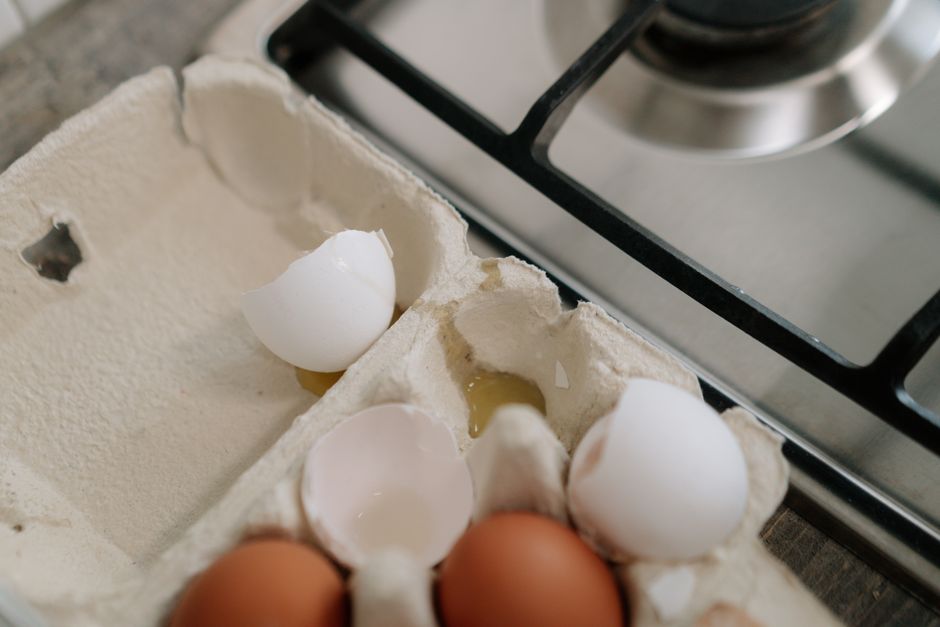
Eggs crack during boiling because the shell expands faster than the egg can handle, usually from a sudden temperature change or too much movement. The fix comes down to a few simple steps: start with room-temperature eggs, lower them gently into water, and keep the water at a gentle simmer instead of a rolling boil. When you understand what causes the shell to fail, you can prevent most cracks before they happen.
Why Do Eggs Crack When You Boil Them?
The shell of an egg is mostly calcium carbonate. It is strong when pressure is even, but it is brittle. When you drop a cold egg into boiling water, the shell expands quickly. The air pocket inside the egg also heats up and expands. That internal pressure pushes against the shell from the inside while the hot water pushes from the outside. The shell cannot always handle both forces at once.
Another common cause is the egg hitting the bottom or side of the pot. As water boils vigorously, the egg bounces around. Each knock weakens the shell. After a few hits, a hairline crack forms. Once water gets inside the shell, the egg white leaks out and cooks into the white foam you see on the surface of the water.
Eggs that are very fresh are also more likely to crack. Fresh eggs have a smaller air pocket and a tighter membrane. The membrane is the thin layer just inside the shell. When the air pocket expands during heating, a fresh egg has less room to absorb that pressure. Older eggs have a larger air pocket, which gives the expanding gas somewhere to go.
Does Starting With Cold Water Prevent Cracking?
Yes, and this is the most reliable method. Place the eggs in a pot and cover them with cold water by about one inch. Put the pot on the stove and bring the water to a boil. Then turn off the heat, cover the pot, and let the eggs sit in the hot water for the time you need.
This method works because the temperature rises gradually. The egg warms up slowly along with the water. There is no sudden shock to the shell. The air pocket expands gently instead of all at once. This is the method most professional kitchens use for boiled eggs.
If you are in a hurry, you can add eggs to already boiling water, but you must lower them in gently. Use a spoon or a ladle. Do not drop them. Even with gentle handling, boiling-water starts risk more cracks than cold-water starts. The temperature difference between a cold egg and boiling water is simply more stress on the shell.
What Is The Best Way To Lower Eggs Into Water?
Use a slotted spoon or a wire basket. Place the egg on the spoon, lower it to just above the water, and tilt the spoon slowly. Let the egg slide into the water. Keep the spoon close to the surface. Do not let the egg fall from a height.
Some people use a pin to poke a small hole in the wide end of the egg before boiling. The wide end contains the air pocket. Poking a tiny hole gives the expanding air an escape route. This can reduce cracking, but it is not always necessary. If you try this, use a clean pin and make the hole very small. A hole that is too large will let the egg white leak out.
Another option is to add a teaspoon of salt or a splash of vinegar to the water. Salt raises the boiling point of water slightly. Vinegar helps coagulate egg white proteins. Neither of these prevents cracking reliably, but if an egg does crack, the vinegar or salt helps the white set quickly so less of it leaks out.





Does Egg Temperature Really Matter?
Yes. Room-temperature eggs crack less than cold eggs. Take the eggs out of the refrigerator 15 to 30 minutes before boiling. This is not a long wait, and it makes a real difference. The smaller the temperature difference between the egg and the water, the less stress on the shell.
If you forget to take the eggs out ahead of time, you can place them in a bowl of warm tap water for five minutes. This brings them closer to room temperature quickly. Do not use hot water. Hot water can start cooking the egg before it goes into the pot.
How Should You Boil Eggs Without Cracking Them?
Follow these steps in order. They cover the most common causes of cracking.
- Start with eggs that are at room temperature.
- Place eggs in a single layer in the pot. Do not crowd them.
- Cover with cold water, about one inch above the eggs.
- Bring the water to a boil over medium-high heat.
- As soon as the water reaches a full boil, turn off the heat and cover the pot.
- Leave the eggs in the covered pot for 9 to 12 minutes for hard-boiled eggs. Shorter times give softer yolks.
- Transfer eggs to an ice bath immediately after the time is up.
The ice bath stops the cooking process. It also makes the eggs easier to peel. Eggs left in hot water continue to cook. A hard-boiled egg left too long develops a green ring around the yolk. That ring is harmless. It is a reaction between iron in the yolk and sulfur in the white. It does not change the taste much, but it looks unappealing.
What If An Egg Cracks Anyway?
Do not throw it out. A cracked egg is still safe to eat as long as the shell has not broken open completely and the egg is cooked fully. The white may look messy, but the egg is fine. If a large piece of shell has fallen off and the egg white is floating in the water, the egg is still safe if cooked through.
For eggs that crack during cooking, the best way to minimize the mess is to add a little vinegar to the water before boiling. The vinegar helps the egg white set quickly when it meets the water. This keeps the white from spreading out into a foam. The egg will look less perfect, but it will taste the same.
If you are serving boiled eggs to guests or want perfect-looking eggs for a recipe, keep a few extra eggs on hand. Even with the best technique, some eggs crack. The air pocket size varies from egg to egg, and you cannot control that.
Does Altitude Affect Egg Cracking?
Yes. At higher altitudes, water boils at a lower temperature. This means the water is not as hot as it is at sea level. Eggs take longer to cook. The lower boiling point also means the water is less turbulent, which can actually reduce cracking. But the longer cooking time can dry out the egg white.
If you live above 3,000 feet, you may need to add a few minutes to the cooking time. The general rule is to add about one minute for every 1,000 feet above sea level. This is not a precise rule, and results vary. The best approach is to test an egg and adjust from there.
Is There A Way To Tell If An Egg Will Crack Before Cooking?
Not reliably. You can check for existing cracks by feeling the shell. Run your fingers over the entire surface. A hairline crack you cannot see may still be felt. If you find a crack, use that egg for scrambling or baking instead of boiling.
The float test tells you about freshness, not about cracking. A fresh egg sinks and lies flat on the bottom. An older egg stands upright or floats. Older eggs are less likely to crack because they have a larger air pocket. But the float test is not a guarantee either way.
One thing you can control is the cooking method. A gentle simmer cracks fewer eggs than a rolling boil. The water should have small bubbles rising to the surface, not large bubbles churning the eggs around. If your stove runs hot, turn the heat down after the water reaches a boil.
Frequently Asked Questions
Should I poke a hole in the egg before boiling?
A tiny hole in the wide end can help release pressure and reduce cracking. It is optional and not necessary if you start with cold water and room-temperature eggs.
Does salt in the water prevent eggs from cracking?
Salt does not reliably prevent cracking. It does help egg white set faster if an egg cracks, which reduces the mess in the pot.
Why do my eggs crack even when I start with cold water?
The most common reasons are eggs that are too fresh, eggs crowded in the pot, or water boiled too vigorously. Give the eggs room and keep the heat moderate.
Are cracked boiled eggs safe to eat?
Yes, as long as the egg is cooked through and the shell has not completely fallen apart. A cracked egg cooked fully is safe and tastes the same as a perfect one.
