
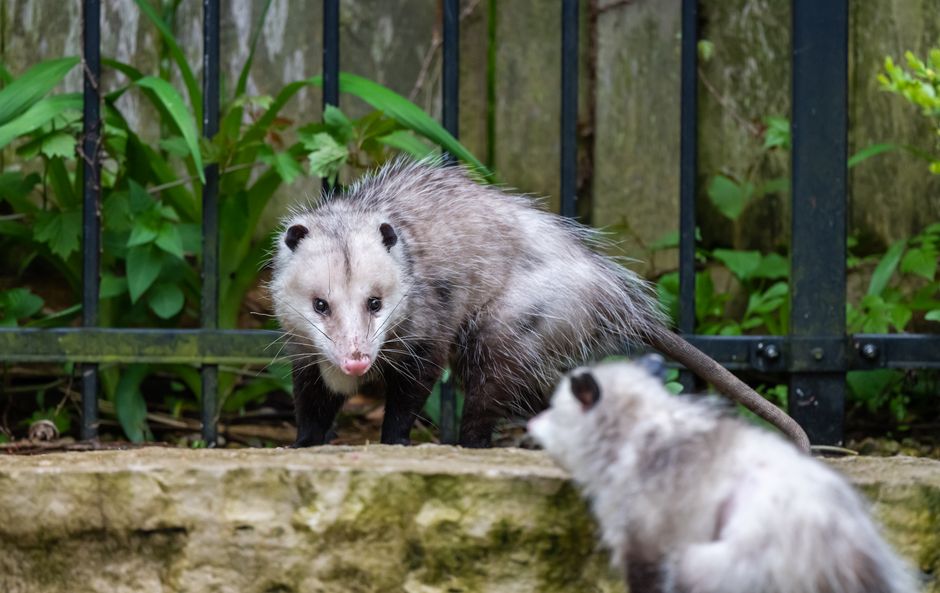
The opossum has a reputation that is part fact and part folklore. People say it never gets rabies. That is not quite true. Opossums can be infected with the rabies virus, and they can develop the disease. What is true is that this happens far less often than it does in raccoons, skunks, foxes, and bats. The reasons are biological, and they are more interesting than the myth.
Their body temperature is lower than that of most mammals, and the rabies virus reproduces best at warmer temperatures. Their immune system also appears to mount a fast, strong response to the virus. And their behavior — slow-moving, ground-dwelling, and largely solitary — gives them fewer chances to be exposed in the first place. None of these factors makes an opossum bite risk-free. It just makes rabies in opossums genuinely uncommon.
Why Dont Opossums Get Rabies The Biological Reasons
Rabies is caused by a virus that travels from the site of a bite along peripheral nerves toward the brain. Once it reaches the central nervous system, the disease is almost always fatal. The virus does not spread through the body evenly. It moves cell to cell, and it needs living, functioning nerve tissue to replicate.
Several features of opossum biology interfere with that process.
The first is body temperature. A typical opossum runs around 94 to 97 degrees Fahrenheit, lower than the roughly 98.6 degrees Fahrenheit of humans and the often higher temperatures of raccoons and foxes. Rabies virus replicates more efficiently at warmer temperatures. This is the same principle behind the old, largely abandoned practice of treating rabies exposure with induced fever. A cooler host is a less hospitable host.
The second is the immune response. Research on opossum sera has found unusually potent neutralizing activity against rabies virus compared with several other mammals. In plain terms, something in opossum blood appears to shut the virus down efficiently. The exact molecules involved are still being studied, and this is an active area of research rather than a settled mechanism.
The third is behavior and ecology. Opossums are solitary and mostly ground-bound. They do not form dense communal dens the way raccoons do, and they do not fly in colonies the way bats do. Rabies spreads fastest where animals crowd together. Opossums mostly do not.
Can an Opossum Actually Get Rabies?
Yes. This is where the popular claim falls apart. Opossums are susceptible to rabies virus, and confirmed cases exist.
What the data show is that the rate is low. In the United States, rabies surveillance consistently finds that raccoons, skunks, bats, and foxes account for the large majority of confirmed rabid wild animals. Opossums appear far down that list. The exact proportion varies year to year and by region, so a single fixed percentage would be misleading. The pattern, though, is stable: opossums are minor players in rabies transmission.
There is a second layer to this that often gets lost. Many opossums that test positive for rabies were likely exposed because they were already sick, injured, or cornered. A healthy opossum that avoids contact with other animals rarely encounters the virus at all. So part of the low rate is biology and part of it is simply opportunity.
Another point worth knowing: a low rate is not zero. Any wild mammal that bites a person is a potential rabies exposure, and the response should not change based on species.
What Makes the Rabies Virus So Dependent on Body Temperature?
Rabies virus is adapted to the warm bodies of mammals. Its replication machinery works best in a narrow thermal range, and it loses efficiency as temperature drops.
This is not unique to rabies. Many viruses have temperature-sensitive replication, which is one reason fever evolved as a defense. Raising core temperature makes the body a worse environment for some pathogens. Opossums, with their naturally lower body temperature, present a cooler environment from the start.
That said, temperature alone does not explain the whole picture. If it did, every cool-bodied mammal would be equally resistant, and that is not what surveillance shows. The immune component matters too.




How Strong Is the Opossum Immune Response to Rabies?
This is the part of the story that is real but often overstated.
Laboratory work has found that opossum serum can neutralize rabies virus, and in some studies it does so more effectively than serum from several other mammals. That is a genuine finding. It suggests opossums have an unusually effective first line of defense.
What is not established is the full mechanism. Scientists have not pinned down exactly which antibodies or other factors are responsible, or how much protection they provide in a living animal compared with a lab dish. A neutralizing effect in serum does not automatically translate to complete resistance in the wild. The honest summary is that opossums appear to have an unusually effective immune response to rabies, and the details are still being worked out.
This is also why claims that opossums are “immune” to rabies are wrong. Immune means the virus cannot infect them. Opossums can be infected. They are just unusually good at fighting it off, and usually are not exposed in the first place.
Do Opossums Carry Other Diseases People Should Worry About?
Rabies gets the attention, but it is not the main health concern with opossums.
Opossums can carry fleas, ticks, and other parasites, and those parasites can transmit disease to people and pets. They can also carry leptospirosis, a bacterial infection spread through urine-contaminated water and soil. And they can host Baylisascaris, a raccoon roundworm, though opossums are not the primary host.
One thing opossums are notably poor at: they are not efficient carriers of many of the pathogens that make raccoons a problem. Their lower body temperature appears to work against several viruses and bacteria, not just rabies. This has led to the popular claim that opossums “eat ticks” and reduce tick-borne disease. That claim is usually traced to a single small study, and the real-world effect is not well established. Treat it with caution.
The practical takeaway is simple. An opossum in your yard is not a rabies emergency. It is still a wild animal with parasites and a bite that can cause infection, and it should be left alone.
What Should You Do If an Opossum Bites You?
Treat any wild mammal bite as a medical matter, regardless of species.
- Wash the wound thoroughly with soap and water for several minutes. This is the single most important first step.
- Seek medical care promptly. A clinician will assess the wound and decide whether rabies post-exposure prophylaxis is needed.
- Do not try to catch or kill the animal yourself. Contact local animal control so the animal can be observed or tested if needed.
- Report the bite. Public health authorities track exposures and can help determine the right course.
Rabies post-exposure prophylaxis is highly effective when started promptly after exposure, before symptoms appear. Once symptoms begin, rabies is almost always fatal. This is why the response to a bite should never be delayed based on the species of the animal.
The lower risk from opossums is real. It is also not a reason to skip medical care.
Why the “Opossums Never Get Rabies” Myth Persists
The myth survives because it has a kernel of truth. Opossums really are less likely to carry rabies than several other common wild mammals. That gets simplified into “they never get it,” which is cleaner and more shareable.
There is also the opossum’s famous defense: playing dead. When threatened, an opossum may go limp, drool, and emit a foul smell. People see this and assume the animal is sick. In reality it is a stress response, not illness. Confusing normal opossum behavior with rabies symptoms adds to the confusion in both directions.
The accurate version is less dramatic but more useful. Opossums are not immune to rabies. They are biologically less hospitable to the virus than many other mammals, and they are less often exposed. That combination makes rabies in opossums uncommon — not impossible.
Frequently Asked Questions
Are opossums immune to rabies?
No. Opossums can be infected with rabies virus and can develop the disease, but confirmed cases are far less common than in raccoons, skunks, foxes, and bats.
Why do opossums rarely get rabies?
Their lower body temperature makes them a less favorable host for the virus, their immune system appears to neutralize rabies unusually well, and their solitary, ground-dwelling habits reduce exposure.
What should I do if an opossum bites me?
Wash the wound thoroughly with soap and water and seek medical care promptly to be evaluated for rabies post-exposure prophylaxis. Contact animal control rather than handling the animal yourself.
Can you get rabies from an opossum in your yard?
The risk is low because rabies is uncommon in opossums, but any bite from a wild mammal is a potential exposure that should be evaluated by a medical professional.
