
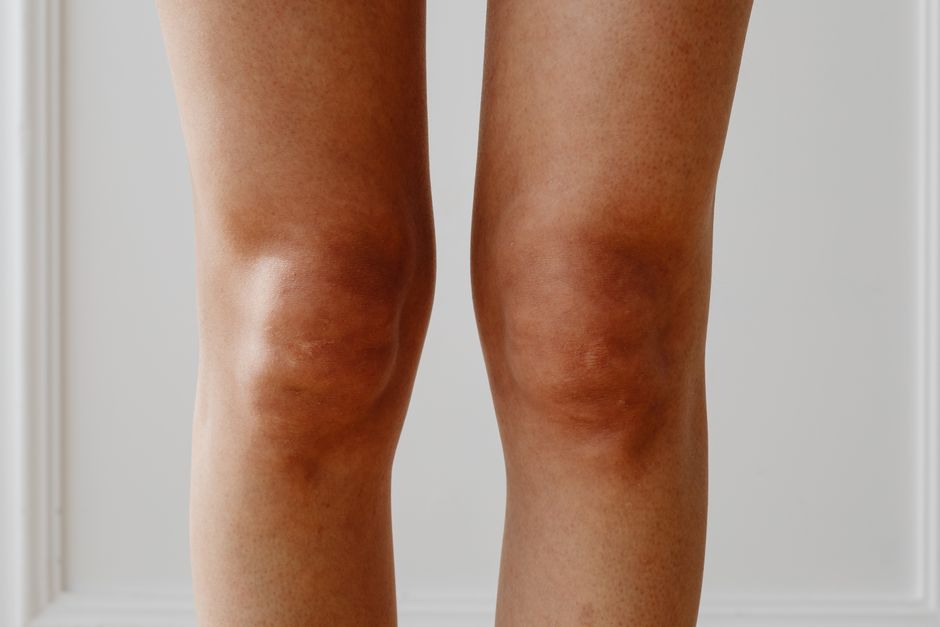
A knee that pops when you bend it is usually making a sound, not a problem. The noise most often comes from gas bubbles shifting inside the joint fluid, or from tendons and ligaments sliding over bony edges. When there is no pain, swelling, locking, or giving way, that popping is generally harmless and does not mean your knee is being damaged.
Why Does Your Knee Pop When I Bend It?
Joint noise has a few well-understood sources. The most common is called crepitus, a catch-all term for the crackling, popping, or grinding sounds a joint can make. Crepitus is not a diagnosis. It is a description of a sound.
Inside your knee is synovial fluid, a slippery liquid that lubricates the joint. That fluid contains dissolved gases, mostly carbon dioxide, nitrogen, and oxygen. When you bend or straighten your knee, the joint space changes shape and pressure shifts. Gases can form a small bubble and then collapse. That collapse makes a pop. The same basic mechanism explains why knuckles crack.
There is a common belief that cracking a joint releases a bubble that takes time to re-form, which is why you cannot crack the same knuckle twice in a row. That general idea is reasonable, but the exact timing and mechanics are still studied and not fully settled.
Tendons and ligaments can also cause popping. As you move, a tendon can snap across a bony bump and back again. The sound is the tissue moving, not tearing. This is common around the kneecap and along the outer side of the knee.
Is Knee Popping Without Pain a Problem?
Popping with no pain is not a sign of damage in most people. If your knee bends and straightens normally, does not swell, and does not hurt, the sound alone is not a reason for concern.
Some research has looked at whether knee noise predicts future joint problems. Results have been mixed. Some studies suggest that people who notice frequent knee crepitus may be more likely to develop knee osteoarthritis over time, but the relationship is not strong enough to say the noise causes anything. Noise without pain is generally treated as a normal finding, not a warning sign.
This is worth stating plainly because it is a common source of worry. A noisy knee that works well is usually just a noisy knee.
When Should Knee Popping Get Checked?
Popping becomes worth a medical visit when it comes with other symptoms. The sound by itself is rarely the issue. What matters is what happens alongside it.
- Pain that lingers or keeps coming back
- Swelling that appears after activity or does not go down
- Locking, where the knee gets stuck and you cannot fully straighten it
- Giving way, where the knee buckles under your weight
- A pop at the moment of an injury, followed by pain and rapid swelling
The last one deserves attention. If you twist your knee and feel a pop at that exact moment, with pain and swelling that builds quickly, that is a different situation. That pattern can point to a ligament injury, such as a tear of the anterior cruciate ligament, or to a meniscus tear. These are injuries, not harmless joint noise, and they need proper evaluation.
Locking is another specific signal. A meniscus tear can create a flap of tissue that physically blocks the joint from moving. If your knee catches, locks, or will not fully straighten, that is not something to wait out.





What Causes a Knee to Pop With Pain or Swelling?
When popping comes with pain or swelling, the list of possible causes is different. The sound is a clue, but the other symptoms do the real work of pointing to a cause.
Osteoarthritis is a common cause of knee crepitus in adults. As cartilage wears down over time, the joint surfaces become rougher. That roughness can produce grinding or crackling sounds during movement. The noise tends to come with stiffness, especially in the morning or after sitting, and pain that worsens with activity.
Meniscus tears are another cause. The meniscus is a pad of cartilage that cushions the knee. A tear can cause catching, clicking, or a sensation that something is in the way. Tears are common after a twisting injury, and they also become more frequent with age as the tissue weakens.
Patellofemoral pain syndrome involves the kneecap tracking imperfectly against the thigh bone. It often causes a grinding or popping feeling around the front of the knee, especially with stairs, squatting, or sitting for long periods.
Ligament injuries, including ACL and other ligament tears, often begin with a distinct pop at the time of injury. That first pop is usually followed by swelling within hours.
Identifying which of these is present requires an exam. The sound alone cannot tell you which structure is involved.
Does Cracking Your Knee Cause Arthritis?
No good evidence shows that cracking your knee causes arthritis. This idea is widespread and it is not supported.
Some studies have looked at whether habitual joint cracking leads to osteoarthritis. The results have not shown a clear link. The concern is understandable, but it does not match what the research shows.
That said, if cracking your knee hurts, or if you feel you need to crack it to get relief, that is worth mentioning to a clinician. The urge to crack a joint to relieve pressure can sometimes reflect an underlying issue, not a cause of one.
How Is Knee Popping Evaluated?
Evaluation starts with questions and a physical exam. A clinician will ask when the popping started, whether it hurts, whether there was an injury, and what movements bring it on. They will move your knee through its range and check for stability, swelling, and tenderness.
Imaging is used when there is a reason to look further. An X-ray can show arthritis and bone changes. An MRI can show soft tissues like ligaments, meniscus, and cartilage. Imaging is not routine for painless popping. It is ordered when the history and exam suggest a specific problem.
This is a key point. A painless pop on its own usually does not need imaging. Ordering a scan for every noisy knee tends to find minor changes that may never cause symptoms, which can lead to unnecessary worry.
Can You Prevent Knee Popping?
You cannot reliably prevent harmless joint noise, and there is little reason to try. What you can do is support the muscles around the knee, which helps the joint function well.
Strengthening the quadriceps and the muscles of the hip can improve how the kneecap tracks and how the knee handles load. This is a general principle supported by rehabilitation research, though the effect on popping specifically is not well studied.
Maintaining a healthy body weight reduces load on the knee joint. This is one of the more consistent findings in knee osteoarthritis research. Lower joint load means less stress on cartilage over time.
Low-impact activity such as walking, swimming, or cycling keeps the joint moving without the pounding of high-impact exercise. Movement supports joint health. Resting a painless noisy knee is not necessary.
What you should not do is try to force a pop or repeatedly crack a knee that hurts. If a movement causes pain, stop and get it checked.
What Is the Difference Between Popping and Grinding?
Popping and grinding are both forms of crepitus, but they can feel different and can point in different directions.
A single pop is often gas or a tendon snapping into place. A grinding or crackling sensation, sometimes described as a rough feeling under the hand, is more often linked to roughened joint surfaces. Grinding that comes with pain and stiffness is more suggestive of osteoarthritis than a lone pop.
This distinction is not absolute. People with osteoarthritis can have a single pop, and people with healthy joints can have grinding. The symptom pattern as a whole matters more than any single sound.
Frequently Asked Questions
Why does my knee pop when I bend it but it doesn’t hurt?
Painless popping is usually harmless and comes from gas bubbles in joint fluid or from tendons sliding over bone. Without pain, swelling, or locking, it does not indicate damage.
Is knee popping a sign of arthritis?
Not by itself. Arthritis-related crepitus usually comes with pain, stiffness, and grinding rather than a lone pop. A noisy knee without other symptoms is not a reliable sign of arthritis.
Should I worry about my knee cracking?
Only if the cracking comes with pain, swelling, locking, or giving way. Painless cracking alone is not a reason for concern, and it does not appear to cause arthritis.
When should I see a doctor for knee popping?
See a clinician if the popping started with an injury, or if it comes with pain, swelling, locking, or a knee that gives way. Painless popping with normal function usually does not need a visit.
