
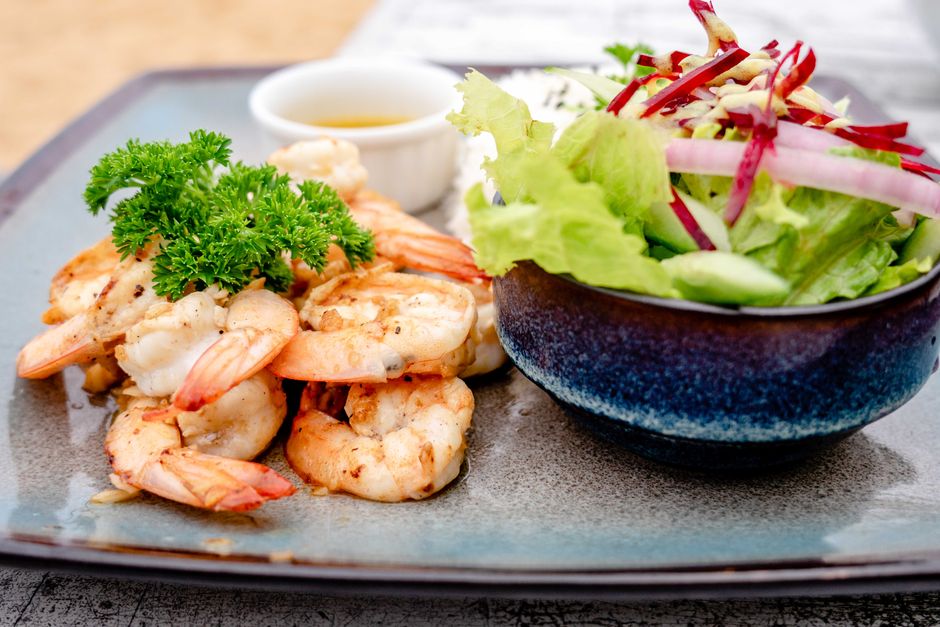
Yes, shrimp contains fat, but the amount is very small. A 3-ounce serving of cooked shrimp has roughly 1 to 2 grams of total fat, depending on whether it is cooked with added oil or butter. Plain cooked shrimp is one of the leanest animal proteins you can eat.
That single number surprises people. Shrimp has a reputation as a rich, buttery food, yet almost all of its calories come from protein. The fat it does contain is mostly the unsaturated kind. What changes the math is not the shrimp itself. It is what you cook it in.
Is There Fat In Shrimp Nutrition Facts Explained
Plain shrimp is a low-fat, high-protein food. A 3-ounce serving of cooked shrimp provides about 19 to 20 grams of protein and around 1 gram of fat. Nearly all of that fat is unsaturated.
For comparison, the same 3-ounce serving of cooked chicken breast has about 3 grams of fat, and a 3-ounce serving of cooked 85% lean ground beef has closer to 13 grams. Shrimp sits at the low end of the spectrum among animal proteins.
Most of the fat in shrimp is in the form of polyunsaturated and monounsaturated fatty acids. These are the fats that remain liquid at room temperature and are generally associated with favorable effects on blood cholesterol when they replace saturated fat in the diet. Saturated fat makes up a small fraction of shrimp’s total fat.
Shrimp also contains small amounts of omega-3 fatty acids, though far less than fatty fish like salmon or sardines. If you are eating shrimp specifically for omega-3s, it is not the most efficient source. It does provide some, but the amounts are modest.
How Many Calories And How Much Fat Are In A Serving Of Shrimp?
A 3-ounce serving of plain cooked shrimp has roughly 85 to 100 calories. That same serving has about 1 gram of fat, 19 to 20 grams of protein, and almost no carbohydrates.
Here is how shrimp compares to other common proteins in a 3-ounce cooked portion:
| Protein (3 oz cooked) | Calories | Total Fat | Protein |
|---|---|---|---|
| Shrimp (plain) | ~85-100 | ~1 g | ~19-20 g |
| Chicken breast (skinless) | ~140 | ~3 g | ~26 g |
| Salmon (Atlantic) | ~175 | ~10 g | ~19 g |
| 85% lean ground beef | ~210 | ~13 g | ~22 g |
| Canned tuna (in water) | ~100 | ~1 g | ~22 g |
These figures come from standard USDA nutrient data for plain cooked seafood and meats. They do not include any oil, butter, breading, or sauce used in cooking.
The protein-to-calorie ratio in shrimp is one of the highest among animal foods. That is why it shows up so often in weight management plans and high-protein diets. You get a large amount of protein for very few calories and very little fat.
Does Cooking Method Change The Fat Content Of Shrimp?
Cooking method changes the fat content more than anything else about shrimp. A plain boiled or steamed shrimp has about 1 gram of fat per serving. Saute the same shrimp in a tablespoon of butter and you add roughly 11 grams of fat and about 100 extra calories.
This is the single most important thing to understand about shrimp nutrition. The shrimp itself is lean. The preparation is where the fat comes from.
Common cooking methods and what they add per 3-ounce serving:
- Steamed or boiled: no added fat. Total stays near 1 gram.
- Grilled with a light brush of oil: adds roughly 3 to 5 grams depending on how much oil is used.
- Sauteed in butter or oil: adds 10 grams or more per tablespoon of fat used.
- Breaded and fried: can push total fat to 15 grams or higher per serving, plus added carbohydrates from the breading.
- Tossed in a cream or cheese sauce: the sauce can contribute more fat than the shrimp itself.
Shrimp scampi is a good example. The shrimp is lean, but the dish is traditionally made with a generous amount of butter. Most of the fat in that meal comes from the butter, not the shrimp.
If you are watching fat intake, the shrimp is rarely the problem. Look at what it is cooked in.
What Kind Of Fat Is In Shrimp?
The fat in shrimp is predominantly unsaturated. Polyunsaturated and monounsaturated fatty acids make up the majority of the total fat content. Saturated fat is present but represents a small portion.
Shrimp also contains cholesterol. A 3-ounce serving has roughly 150 to 190 milligrams of cholesterol. For decades, this led to warnings that shrimp might raise blood cholesterol and increase heart disease risk.
That concern has been largely reconsidered. Research has generally found that dietary cholesterol from shellfish has a smaller effect on blood cholesterol levels than saturated and trans fats do for most people. The relationship between dietary cholesterol and blood cholesterol is more complex than early guidance suggested.
The American Heart Association and other major health organizations have moved away from strict daily cholesterol limits for the general population. Current dietary guidance focuses more on limiting saturated fat and trans fat than on counting cholesterol from foods like shrimp.
That said, people who are hypersensitive to dietary cholesterol, sometimes called hyper-responders, may see a larger rise in blood cholesterol from cholesterol-rich foods. This varies from person to person. If you have a diagnosed lipid disorder, your doctor’s guidance takes priority over general population advice.
Is Shrimp A Healthy Choice For A Low-Fat Diet?
Shrimp fits well into a low-fat eating pattern when it is prepared simply. It provides high-quality protein, is low in saturated fat, and has very few calories from fat.
It also delivers nutrients beyond protein. Shrimp contains selenium, vitamin B12, iodine, and astaxanthin, a carotenoid pigment that gives cooked shrimp its pink color. These are real nutrients, though shrimp is not a major source of any single vitamin or mineral in the way that, say, salmon is a major source of vitamin D.
One consideration is sodium. Fresh shrimp is naturally low in sodium, but shrimp is often sold already peeled and treated with a sodium solution to preserve it. That can significantly raise the sodium content. Check the label if you are limiting salt.
Shrimp is also a common allergen. Shellfish allergy is one of the most common food allergies in adults and can be severe. If you have a shellfish allergy, shrimp is not an option regardless of its nutritional profile.
For most people without a shellfish allergy, shrimp is a lean protein that works well in a balanced diet. The nutrition case for it is strong. The preparation is what determines whether the final dish stays low in fat.
How Does Shrimp Compare To Other Seafood?
Shrimp is lower in fat than most other seafood, with the exception of some white fish and canned tuna in water. Fatty fish like salmon, mackerel, and sardines contain much more fat, but that fat is largely omega-3s, which are associated with cardiovascular benefits.
This is an important distinction. Lower fat does not automatically mean healthier. Salmon has roughly ten times the fat of shrimp, but it also provides substantial omega-3 fatty acids that shrimp does not. Both can be part of a healthy diet for different reasons.
If your goal is minimizing fat and maximizing protein per calorie, shrimp is the stronger choice. If your goal is omega-3 intake, fatty fish is the better source. They are not competing foods so much as different tools.
White fish like cod and tilapia are similar to shrimp in fat content, around 1 gram per 3-ounce serving. Canned tuna packed in water is also comparable. These are all lean seafood options.
Does Shrimp Have Any Fat-Related Downsides?
The fat in shrimp itself is not a concern for most people. The main issues are preparation and individual health context.
Fried shrimp, shrimp in cream sauces, and shrimp cooked in large amounts of butter carry far more fat and calories than the shrimp alone. These preparations can turn a lean protein into a high-fat dish.
For people with high LDL cholesterol who are sensitive to dietary cholesterol, shrimp may warrant a conversation with a doctor. The general evidence suggests dietary cholesterol from shrimp has a modest effect on blood cholesterol for most people, but individual responses vary.
There is no strong evidence that eating shrimp in normal amounts increases heart disease risk. Some research has even suggested that shrimp consumption does not adversely affect lipid profiles in healthy adults, though the evidence is not uniform across all studies. The picture is more nuanced than the old “shrimp is bad for cholesterol” message implied.
Frequently Asked Questions
How much fat is in 3 ounces of shrimp?
Plain cooked shrimp has about 1 gram of fat per 3-ounce serving. Nearly all of it is unsaturated fat.
Is shrimp high in fat or protein?
Shrimp is high in protein and low in fat. A 3-ounce serving has roughly 19 to 20 grams of protein and only about 1 gram of fat.
Does shrimp raise cholesterol?
Shrimp contains dietary cholesterol, but research generally shows it has a smaller effect on blood cholesterol than saturated and trans fats do for most people. Individual responses can vary.
Is fried shrimp still low in fat?
No. Breading and frying can raise the fat content of a 3-ounce shrimp serving to 15 grams or more. The shrimp is lean, but the frying oil and breading are not.
