
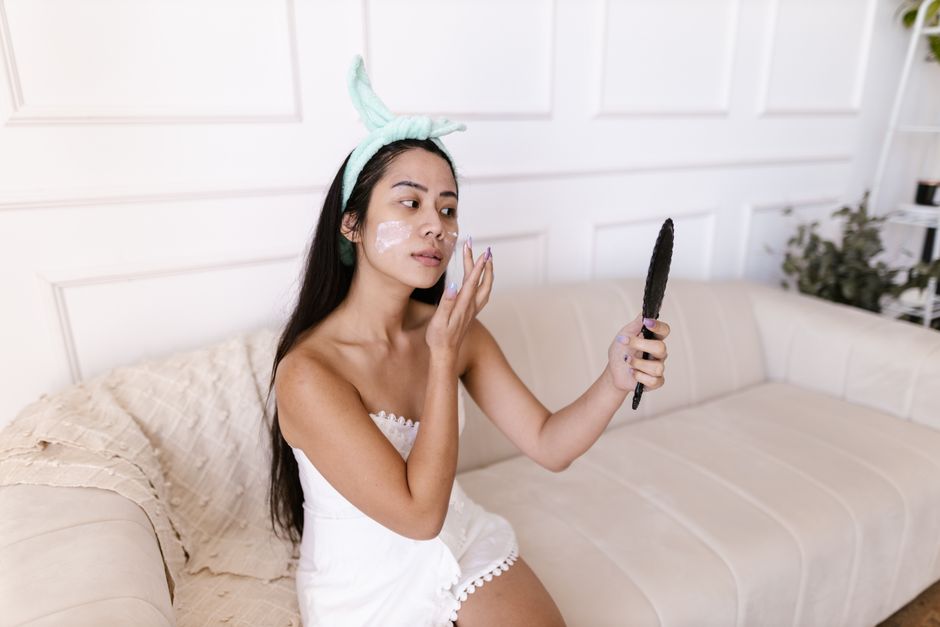
If you have ever skipped your moisturizer for a few days and thought your skin looked calmer, less shiny, or just plain better, you are not imagining it. Skin can look better without moisturizer when the product you were using was too heavy for your skin type, contained an ingredient your skin was reacting to, or was layered on more often than your skin needed. Quitting or cutting back removes that specific problem, so the skin you see is simply your skin without the interference.
That does not mean moisturizer is bad. It means the wrong moisturizer, or too much of it, can create the very problems people use it to fix. Understanding why this happens helps you tell the difference between skin that genuinely needs less product and skin that needs a different one.
Why Does My Skin Look Better Without Moisturizer?
Because many people are using a moisturizer that does not match their skin. The most common reasons skin improves when you stop are clogged pores clearing, irritation settling down, and surface oil returning to a more natural level.
Moisturizers work mainly by slowing water loss from the outer layer of skin and by pulling in water with ingredients called humectants. That is genuinely useful for dry or damaged skin. But the same occlusive and emollient ingredients that help a dry face can sit heavily on oily or acne-prone skin. When they trap oil and dead skin cells in the pore, you get more blackheads and small bumps, not fewer. Remove the product and the pores can clear on their own.
The second reason is irritation. Fragrance, certain preservatives, and some botanical extracts are common causes of contact irritation and allergic contact dermatitis. The reaction is often subtle — a low-grade redness or roughness rather than an obvious rash. Stop applying the product and the inflammation fades over days to weeks. People frequently describe this as their skin “breathing better,” though the real change is that an irritant is gone.
There is a third effect that surprises people. Heavy moisturizing can make skin feel dependent on it. When you constantly seal the surface, the skin’s own barrier lipids and natural moisturizing factors may not be stimulated the same way. The evidence here is not fully settled, and the effect is smaller than internet claims suggest, but some dermatologists do note that over-moisturizing can leave skin feeling tight when you stop. That tightness usually resolves as the barrier adjusts.
How Do You Know If Your Moisturizer Was the Problem?
The pattern is usually clear within one to two weeks. If your skin improves after you stop, the product was likely working against you rather than for you.
Signs that your moisturizer was the culprit include:
- Fewer blackheads or closed bumps in the days after you stop
- Less redness, stinging, or roughness
- Skin that feels less greasy through the day
- Makeup that sits better because the surface is less slick
- Fewer small breakouts along the jaw, forehead, or cheeks
Signs that your skin actually needs moisture look different. Tightness after washing, flaking, a rough texture, or a stinging sensation when you apply anything water-based all point to a barrier that needs support, not less of it. If those symptoms appear after you quit, the problem was not moisturizer itself — it was the specific formula.
One clarification worth making: “moisturizer” is not one thing. A lightweight gel with glycerin and hyaluronic acid behaves nothing like a thick cream with petrolatum and shea butter. Lumping them together is why advice about moisturizer so often contradicts itself.
What Happens to Your Skin Barrier When You Stop Moisturizing?
The outer layer of skin, called the stratum corneum, is built to manage water on its own. It contains ceramides, cholesterol, and fatty acids that form a barrier, plus natural moisturizing factors that hold water in place.
When that barrier is healthy, it does not require outside help to stay balanced. When it is compromised — by harsh cleansers, cold weather, sun exposure, or certain medications — it loses water faster and needs support. This is the key distinction. A healthy barrier does fine without a daily moisturizer. A damaged one usually does not.
Stopping a moisturizer on healthy skin typically causes no harm. Some people notice mild temporary dryness for a few days as the surface adjusts, then nothing. Stopping on compromised skin tends to make things worse — more flaking, more sensitivity, and a slower recovery.
This is also why dermatologists often recommend moisturizer alongside prescription treatments like retinoids or acne medications. Those treatments deliberately disrupt the surface to change skin behavior, and the moisturizer reduces the irritation that comes with it. In that context, moisturizer is not optional. It is part of making the treatment tolerable.




Does Skipping Moisturizer Help Oily and Acne-Prone Skin?
Often, yes — but not because oil is “balanced” by drying skin out. That idea is a myth. Skipping moisturizer helps oily skin mainly by removing a product that was adding to the problem.
Oily skin already produces plenty of sebum, the natural oil that lubricates the surface. Adding a rich cream on top does not reduce sebum production. It just adds another layer that can mix with dead skin cells and clog pores. For someone with oily or acne-prone skin, a heavy moisturizer can be the difference between clear skin and persistent congestion.
What does not help is stripping the skin aggressively. Harsh cleansers and alcohol-based toners can damage the barrier, which triggers inflammation and can make acne worse. The goal is not to dry skin out. It is to stop adding occlusive layers that trap what is already there.
For oily skin that still feels tight after washing, a light gel or lotion — not a cream — is usually the better fit. Many people with oily skin do well with no moisturizer in the morning and a light one at night, or with none at all if their skin feels comfortable.
When Should You Not Stop Using Moisturizer?
Some skin genuinely needs moisturizer, and stopping can cause real harm. Do not quit if any of the following apply to you.
- You are using prescription retinoids, acne treatments, or other actives that irritate the skin
- You have a diagnosed condition like eczema, psoriasis, or rosacea
- You are treating dry, cracked, or inflamed skin
- You live in a cold, dry climate or spend time in heated indoor air
- You are older and your skin produces fewer barrier lipids naturally
- You have been told by a clinician to use a specific moisturizer
In these situations, moisturizer supports the barrier rather than interfering with it. The right move is to find a formula that works, not to go without.
People with eczema, in particular, often have a measurable defect in barrier proteins, which means their skin loses water faster than normal. Moisturizer is a standard part of managing that. Stopping it can trigger flares.
How Do You Find the Right Moisturizer If You Still Need One?
Match the formula to your skin, not to marketing. The category matters more than the brand.
For oily or acne-prone skin, look for gels, lotions, and water-based formulas. These are lighter and less likely to clog pores. Ingredients like glycerin and hyaluronic acid draw in water without adding heavy oils.
For dry skin, creams and ointments work better. They contain occlusives like petrolatum or dimethicone that slow water loss, plus emollients that smooth the surface. Ceramides can help rebuild the barrier in people whose skin is deficient in them.
For sensitive or reactive skin, simpler is usually better. Fewer ingredients means fewer chances of a reaction. Fragrance-free formulas are generally the safer choice, since fragrance is one of the most common causes of contact irritation.
A practical approach is to change one thing at a time. If you suspect your moisturizer is the problem, stop it for one to two weeks and see what happens. If your skin improves, you have your answer. If it gets worse, you likely need a different formula, not none at all.
Does “Skin Breathing” Actually Happen?
No. Skin does not breathe in the way lungs do. The idea that moisturizer “suffocates” skin is not accurate.
Skin gets oxygen from the blood supply beneath it, not from the air. What people mean when they say their skin “breathes better” is usually that it feels less coated, less greasy, and less irritated. Those are real sensations, but the mechanism is about product residue and inflammation, not oxygen.
This distinction matters because it separates what is happening from what people think is happening. The benefit of skipping moisturizer comes from removing a mismatched product, not from letting air reach the skin.
What Is the Bottom Line?
Skin can look better without moisturizer when the product was too heavy, irritating, or simply unnecessary for your skin type. The improvement is real, and it comes from removing something that was working against your skin rather than for it.
That does not make moisturizer optional for everyone. Dry skin, compromised barriers, and skin under active treatment usually need it. The goal is not to use less product for its own sake. It is to use the right product, or none, based on what your skin actually needs.
If you are unsure which category you fall into, a dermatologist can help you tell the difference between skin that needs less and skin that needs something different.
Frequently Asked Questions
Why does my skin look better when I stop using moisturizer?
Your moisturizer was likely too heavy for your skin type or contained an ingredient that was irritating it. Removing it lets clogged pores clear and inflammation settle, so you see your skin without the interference.
Can skipping moisturizer damage my skin barrier?
Not if your barrier is healthy. A healthy outer layer manages water on its own, though skin that is dry, irritated, or under active treatment usually needs moisturizer to support it.
Does skin need moisturizer if it is oily?
Not always. Oily skin produces its own sebum, and a heavy cream can add to clogged pores rather than help, though a light gel or lotion may still be useful if skin feels tight after washing.
How long does it take to see a difference after stopping moisturizer?
Most people notice a change within one to two weeks. If skin improves, the product was likely the problem; if it gets drier or more irritated, you probably need a different formula instead.
