
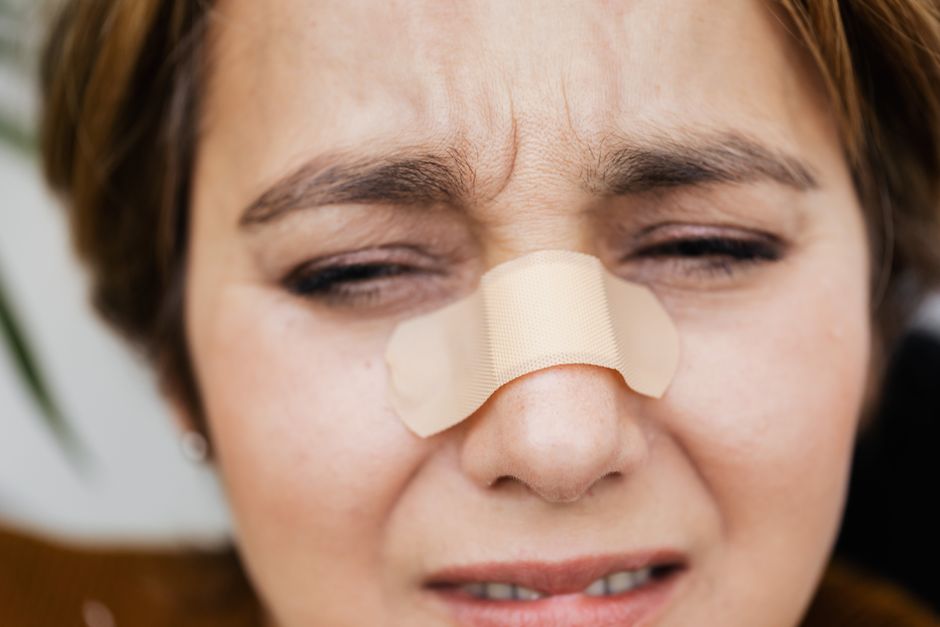
A nose piercing hurts more than an earlobe piercing because the needle passes through cartilage, a dense layer of tissue with far more nerve endings and blood vessels than the soft flesh of an earlobe. That same limited blood supply is also why nose piercings heal slowly and get infected more often. Cartilage receives less blood flow than most other body tissue, so immune cells arrive slowly and healing can take months instead of weeks.
Why Does My Nose Piercing Hurt Pain Infection More?
The short answer is anatomy. An earlobe is mostly fat and skin with a rich blood supply. The nostril wall is cartilage wrapped in a thin layer of skin and lined with mucous membrane. Cartilage has very little direct blood flow.
That single fact explains most of what makes nose piercings difficult. Less blood means fewer immune cells reach the site, slower tissue repair, and a longer window during which bacteria can take hold. More nerve endings per square millimeter means more pain at the moment of piercing and more lingering soreness afterward.
The placement matters too. A nostril piercing passes through the ala, the curved outer wing of the nose. A septum piercing goes through the thin membrane below the cartilage, which is why many people report it hurts less than a nostril piercing despite looking more intimidating. A bridge or high nostril piercing crosses thicker cartilage and tends to hurt more.
How Much Does a Nose Piercing Actually Hurt?
Most people describe a nostril piercing as a sharp, brief sting that fades within seconds, followed by a dull ache for a few days. Pain is subjective, so no single rating applies to everyone. What is consistent is the pattern: intense but short at the moment of piercing, then a sore, tender sensation during the first week.
Several factors shape how much it hurts:
- Cartilage thickness at the piercing site
- Whether the piercer uses a hollow needle (standard) or a piercing gun (not recommended for cartilage)
- Your individual pain tolerance, which varies widely
- Whether the area is already inflamed or irritated
Many professional piercers advise against piercing guns for nose cartilage. Guns force blunt jewelry through tissue rather than cutting a clean channel, which can cause more trauma and has been linked to higher complication rates. Hollow needles are the standard in professional studios.
After the initial piercing, the soreness usually eases over the first week. Any pain that intensifies after that point, rather than fading, is a signal worth paying attention to.
Why Do Nose Piercings Get Infected So Often?
Nose piercings get infected more often than earlobe piercings for two main reasons: poor blood supply to cartilage and constant exposure to bacteria.
Your nostrils are home to a dense population of bacteria, including Staphylococcus aureus, which lives harmlessly on skin and in the nose for many people. When a piercing creates an open wound in that environment, those bacteria have direct access to tissue that heals slowly.
On top of that, the nose is constantly in motion. You touch it, blow it, rub it, and it moves every time you breathe or speak. Each of those actions can introduce bacteria or irritate the healing channel.
Signs of infection include:
- Increasing pain or tenderness after the first week
- Redness and swelling that spreads beyond the piercing site
- Warmth around the piercing
- Yellow or green discharge with a foul odor
- Fever or feeling unwell
A small amount of clear or white fluid is normal during healing. That is lymph, part of the normal healing process. Thick yellow or green pus is not normal and suggests infection.



What Is the Difference Between Normal Healing and an Infection?
Normal healing produces some redness, mild swelling, and a clear or whitish crust that forms around the jewelry. This can continue for weeks or even months with a nose piercing.
Infection looks different. The redness spreads, the area feels hot, the discharge turns yellow or green, and the pain gets worse instead of better. Some people develop a small bump next to the piercing that is not an infection at all.
That bump is often a granuloma or hypertrophic scar, a collection of tissue that forms when the body reacts to irritation or trauma. It can look alarming but is not infectious. It usually responds to reducing irritation, though some cases need evaluation by a dermatologist or piercer experienced with these complications.
The key distinction is direction. Normal healing trends toward improvement over time. Infection trends toward worsening.
How Long Does a Nose Piercing Take to Heal?
A nostril piercing typically takes several months to heal fully. Some sources cite a range of two to four months, while others say up to six months or longer. Individual healing time varies based on aftercare, overall health, and whether the piercing gets irritated.
The healing process has stages. The initial wound closes within days, but the channel through the cartilage takes much longer to stabilize. During this time, the tissue is fragile and easily disrupted.
Septum piercings often heal faster, sometimes within six to eight weeks, because the tissue is thinner and has better blood flow. Nostril piercings through thicker cartilage take longer.
Even after the piercing seems healed, the tissue continues to mature for several more months. Changing jewelry too soon can reopen the wound and restart the healing clock.
What Makes a Nose Piercing Hurt More or Heal Slower?
Several factors can make a nose piercing more painful or slow its healing:
- Poor aftercare — touching the piercing with unwashed hands, using harsh products, or over-cleaning
- Trauma — bumping the jewelry, snagging it on clothing, or sleeping on that side of your face
- Jewelry material — nickel and other common metals can trigger allergic reactions; implant-grade titanium or surgical steel are typically recommended
- Jewelry fit — a ring that is too tight or too loose can irritate the healing channel
- Underlying health conditions — diabetes, autoimmune conditions, and some medications can slow wound healing
- Smoking — smoking reduces blood flow and impairs tissue repair throughout the body
Some clinicians recommend avoiding swimming pools, hot tubs, and natural bodies of water during healing because of bacterial exposure. This is common advice rather than a formally studied guideline, but the reasoning is sound.
How Should You Care for a Nose Piercing?
Standard aftercare is simple: clean the piercing gently with a sterile saline solution, usually sold as wound wash or piercing aftercare spray. Avoid alcohol, hydrogen peroxide, and antibacterial ointments unless a doctor specifically recommends them. These products can dry out the tissue and delay healing.
Do not rotate or twist the jewelry. This old advice has largely been abandoned because it disrupts the healing channel and introduces bacteria.
Keep your hands away from your face. If you must touch the piercing, wash your hands first. Pat the area dry with a clean paper towel after cleaning rather than rubbing it.
If you suspect an infection, do not remove the jewelry on your own. Removing it can trap bacteria inside a closing wound. See a healthcare provider. They can assess whether antibiotics are needed and advise on whether to keep or remove the jewelry.
When Should You See a Doctor?
See a doctor if you have spreading redness, increasing pain, fever, or pus that does not improve. These signs suggest the infection may be moving beyond the piercing site.
Some nose infections can spread to nearby structures. The nose sits close to the sinuses and the cavernous sinus, a vein behind the eye. In rare cases, untreated infections in this area can become serious. This is uncommon but worth taking seriously.
Also seek medical attention if you develop a large, painful bump that does not shrink with improved aftercare, or if the piercing causes difficulty breathing through that nostril.
Most nose piercing infections are treatable with antibiotics and resolve without lasting problems. The key is not waiting too long. An infection that has been worsening for more than a few days deserves a medical evaluation.
Frequently Asked Questions
How long does a nose piercing hurt for?
The sharp pain lasts only seconds, but a dull ache and soreness can persist for several days to a week. After that, the piercing may feel tender if bumped for several more weeks.
Can a nose piercing get infected even with good care?
Yes. Even with careful aftercare, the limited blood supply to cartilage and the bacteria naturally present in the nose make infections possible. Good hygiene reduces risk but does not eliminate it.
What does an infected nose piercing look like?
Signs include spreading redness, warmth, yellow or green pus with a bad smell, and pain that gets worse instead of better. A small clear or white crust is normal healing, not infection.
Should I take my nose piercing out if it is infected?
Do not remove it on your own. Removing the jewelry can trap infection inside the closing wound. See a healthcare provider first for guidance.
