
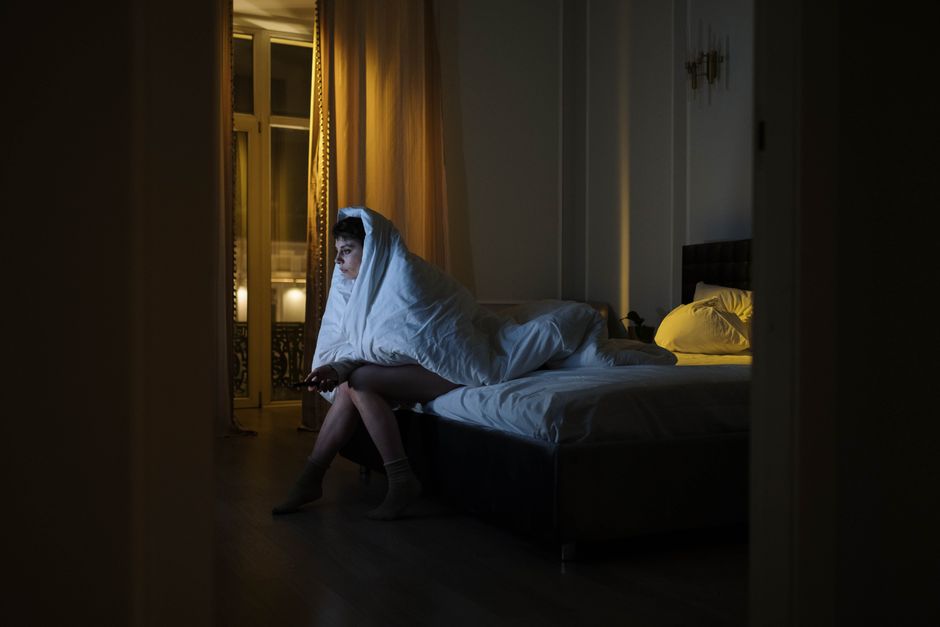
If you have ever lain awake at 3 a.m. with your heart racing and your mind replaying every conversation from the last week, you are not imagining things. Nighttime anxiety is a real and common experience, and it happens because your brain and body process worry differently after dark. The quiet, the darkness, and the lack of distractions combine with natural changes in your brain chemistry to make anxious thoughts louder and harder to ignore.
Why Does My Anxiety Get Worse at Night?
Your brain is wired to scan for threats, and at night it has fewer distractions to work with. During the day, work, conversations, and daily tasks keep your mind busy. When you finally lie down, there is nothing left to occupy your attention, so your brain turns inward. This is when small worries can grow into larger ones.
There is also a biological component. Your body’s stress hormone, cortisol, follows a daily rhythm. It normally peaks in the morning to help you wake up and gradually falls through the day. For some people, this rhythm shifts, and cortisol levels stay elevated into the evening. Higher cortisol at night can keep your mind alert when it should be winding down.
Sleep deprivation makes the cycle worse. When you do not get enough sleep, the part of your brain that regulates emotion, called the amygdala, becomes more reactive. Research consistently shows that a tired brain responds more strongly to negative stimuli. This means a small worry can feel like a major crisis when you are exhausted.
What Happens in Your Body at Night
Anxiety is not just in your head. It is a full-body response. When you feel anxious, your sympathetic nervous system activates, which triggers your fight-or-flight response. This releases adrenaline and cortisol, which increase your heart rate, quicken your breathing, and tense your muscles.
At night, this response can be triggered by something as simple as a passing thought. Once your body enters this state, it can be hard to calm down. Your breathing may become shallow, which reduces oxygen flow and can make you feel dizzy or lightheaded. These physical sensations can then fuel more anxiety, creating a loop that is hard to break.
Your body temperature also plays a role. Your core temperature naturally drops as you fall asleep, which helps initiate sleep. If you are anxious, your body may run slightly warmer, which can interfere with this natural cooling process and make it harder to drift off.
The Role of Racing Thoughts and Rumination
Racing thoughts are a hallmark of nighttime anxiety. Unlike daytime stress, which is often tied to a specific task or event, nighttime thoughts tend to be broader and more abstract. You might worry about the future, replay past mistakes, or imagine worst-case scenarios.
Psychologists call this rumination, and it is more common at night for a simple reason. When you are lying still in a dark room, there is no external input to interrupt your thought patterns. Your mind does not have a reason to stop, so it keeps going.
Rumination is also linked to how your brain processes memories. During sleep, your brain consolidates memories and processes emotions from the day. If you have unresolved stress, your brain may try to work through it while you are still awake. This can feel like your mind is spinning its wheels without making progress.





How Sleep Quality Affects Anxiety
The relationship between sleep and anxiety goes in both directions. Anxiety makes it harder to sleep, and poor sleep makes anxiety worse. This creates a feedback loop that can be difficult to escape.
When you do not get enough deep sleep, your brain does not have enough time to process emotional experiences. Studies have found that people who are sleep-deprived show stronger emotional reactions to negative images and events. Their brains are less able to regulate emotions because the prefrontal cortex, which helps control the amygdala, is not functioning at full capacity.
Sleep also affects your memory of anxious events. If you sleep poorly, you are more likely to remember negative experiences and less likely to remember neutral or positive ones. This can skew your perception and make the world seem more threatening than it is.
Lifestyle Habits That Make Nighttime Anxiety Worse
Some of the habits that seem relaxing can actually make nighttime anxiety worse. Alcohol is a common example. A drink may help you feel sleepy initially, but as your body metabolizes it, your sleep becomes fragmented. Alcohol disrupts REM sleep, which is the stage where emotional processing occurs. This can lead to waking up in the middle of the night feeling anxious.
Caffeine is another culprit. Its effects can last for hours, and even if you have your last cup in the afternoon, it can still interfere with your ability to fall asleep. Caffeine blocks adenosine, a chemical that builds up in your brain and makes you feel sleepy. If adenosine levels are suppressed, your brain stays alert longer than it should.
Screen time before bed also matters. The blue light from phones and computers can suppress melatonin, the hormone that regulates sleep. Beyond the light, the content you consume can be stimulating. Checking work emails or scrolling through stressful news can keep your mind active when it needs to wind down.
What You Can Do to Calm Nighttime Anxiety
If you experience nighttime anxiety, there are practical steps you can take. These are not cures, but they can help reduce the intensity of symptoms and make it easier to fall asleep.
Create a wind-down routine. Your brain needs time to transition from daytime alertness to nighttime calm. Try to spend the last 30 to 60 minutes before bed doing something quiet. Reading a physical book, taking a warm bath, or doing gentle stretching can signal to your body that it is time to rest.
Get out of bed if you cannot sleep. If you have been lying awake for more than 20 minutes, get up and go to another room. Do something quiet in dim light until you feel sleepy. This helps your brain associate your bed with sleep rather than with worry.
Try a breathing exercise. Slow, deep breathing activates your parasympathetic nervous system, which counteracts the fight-or-flight response. A simple pattern is to inhale for four counts, hold for four counts, and exhale for six counts. Repeat this for a few minutes. This is not a guaranteed fix, but many people find it helpful.
Write down your worries. Some people benefit from keeping a notebook by their bed. If a worry keeps circling in your mind, write it down and tell yourself you will address it tomorrow. This externalizes the thought and can reduce its power over you.
When to Seek Professional Help
Occasional nighttime anxiety is common and often manageable with lifestyle changes. However, if anxiety is interfering with your sleep most nights, or if it is affecting your daytime functioning, it is worth talking to a healthcare provider.
Anxiety disorders are among the most common mental health conditions, and effective treatments exist. Cognitive behavioral therapy for insomnia, known as CBT-I, is a structured program that helps address the thoughts and behaviors that interfere with sleep. Some clinicians also recommend therapy for anxiety that specifically addresses nighttime symptoms.
If you are considering medication, talk to a doctor about your options. Some medications are used to treat both anxiety and sleep difficulties. However, no medication should be started without a proper evaluation, and some sleep aids can be habit-forming. A healthcare provider can help you weigh the benefits and risks.
It is also important to see a doctor if your nighttime anxiety is accompanied by physical symptoms such as chest pain, shortness of breath, or a racing heart that does not go away. These symptoms can sometimes indicate a medical condition that needs evaluation.
Frequently Asked Questions
Why does my anxiety spike when I try to sleep?
When you lie down, your brain no longer has daytime distractions to focus on, so it turns inward and amplifies worries. Your body may also have elevated stress hormones in the evening, which keeps your mind alert.
Can lack of sleep cause anxiety?
Yes. Sleep deprivation makes the emotional centers of your brain more reactive, which can increase anxious feelings. Poor sleep can also make it harder to regulate your emotions the next day.
Is it normal to wake up in the middle of the night with anxiety?
Many people experience this, and it is often linked to stress or changes in sleep cycles. If it happens frequently, it is worth discussing with a healthcare provider.
What is the fastest way to calm anxiety at night?
Slow, deep breathing is one of the quickest ways to activate your body’s calming response. Getting out of bed and doing something quiet in dim light can also help break the cycle of worry.
