
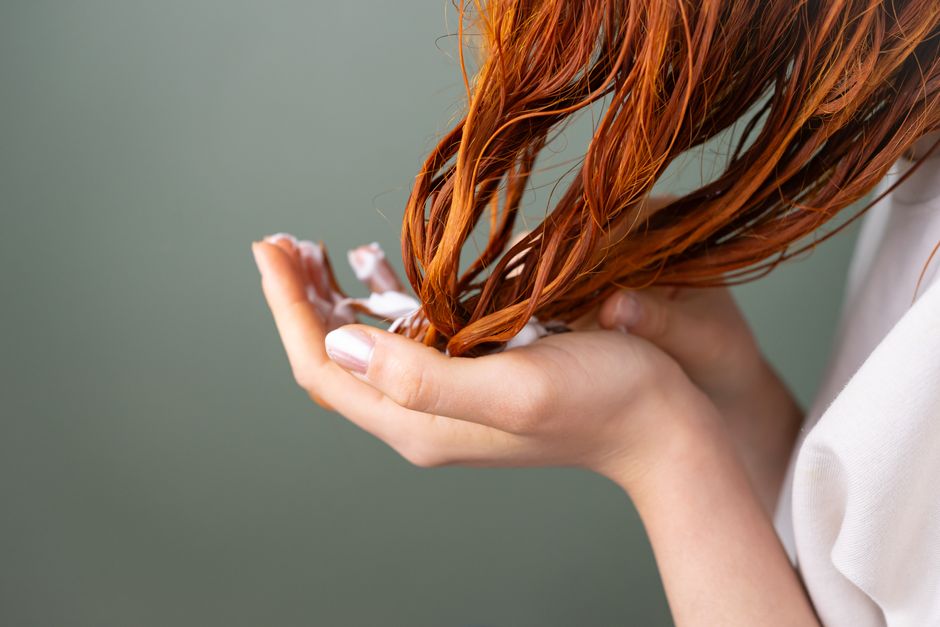
Leave-in conditioner makes hair greasy because it is designed to stay on the hair shaft. This leaves a film of oils, silicones, and conditioning agents on the surface. That film is the point — it smooths the cuticle and reduces friction. But when too much of it builds up, or when it lands on the scalp, it looks and feels exactly like oil. Because it is oil, or something that behaves like it.
Why Does Leave In Conditioner Make Hair Greasy?
Regular rinse-out conditioner gets partially washed away. Leave-in conditioner does not. Whatever you spray or smooth on stays there until your next wash. That is the whole design.
The ingredients that make it work are the same ones that create the greasy look. Most leave-in conditioners contain some combination of:
- Silicones — dimethicone, cyclomethicone, amodimethicone. These coat the hair and reflect light, which is why hair looks shiny.
- Oils and butters — argan, coconut, shea. These sit on the surface and can feel heavy.
- Fatty alcohols — cetyl and stearyl alcohol. These are not the drying kind of alcohol. They are waxy and add slip.
- Humectants — glycerin, panthenol. These pull water from the air, which can feel sticky in humid conditions.
None of these ingredients are inherently bad. The problem is quantity and placement.
Is It the Product or How You Are Using It?
Often it is both, but placement is the bigger issue. Most people who get greasy hair from leave-in conditioner are applying it too close to the scalp.
The scalp produces sebum. Sebum is the natural oil your skin makes to protect itself. It travels down the hair shaft over time. That is normal and healthy. When you add a leave-in product near the roots, you are stacking artificial oils on top of natural ones. The result is visible immediately.
Hair near the scalp is also the newest, healthiest hair on your head. It does not need heavy conditioning. The older ends — the parts that have been through more washing, heat, and friction — are the ones that benefit.
So the first fix is simple. Keep leave-in products on the mid-lengths and ends. Stay at least a few inches away from the scalp.
Does Hair Type Change How Leave-In Conditioner Behaves?
Fine hair and low-porosity hair show buildup faster than thick or high-porosity hair. This is not a marketing claim — it comes down to surface area and how tightly the cuticle layer is packed.
Fine hair has less total surface area per strand and fewer layers of cuticle. A coating that would be barely noticeable on coarse hair can weigh fine hair down and make it look stringy.
Low-porosity hair has a tightly closed cuticle. Products sit on top rather than absorbing. High-porosity hair has a raised, more open cuticle that takes in more product — which is why it often needs more conditioning and tolerates heavier formulas.
This is why a leave-in conditioner that works beautifully for one person can make another person’s hair look unwashed by lunchtime. Same product. Different hair.




What Ingredients Are Most Likely to Cause Greasiness?
Heavy silicones and occlusive oils are the usual suspects. Occlusive means they form a barrier that traps moisture underneath — and also traps whatever else is on the hair.
Dimethicone is a common one. It is not water-soluble, meaning it does not rinse out with water alone. Over several days of use, it can accumulate. This is sometimes called silicone buildup. It can make hair feel coated, dull, or greasy even after washing.
Some formulations use lighter silicones or water-soluble ones. Others use none at all. If you are prone to greasy-looking hair, reading the ingredient list matters more than the front label.
Glycerin deserves a mention too. It is a humectant, and in dry climates it can draw moisture from deeper skin layers rather than the air. In humid climates, it pulls water from the air onto the hair. Either way, some people find it leaves a tacky or heavy feel.
How Much Leave-In Conditioner Should You Actually Use?
Less than most people think. A common guideline is a dime-sized amount for fine or short hair, and a quarter-sized amount for thick or long hair. These are general starting points, not clinical recommendations — there is no standardized dosing for cosmetic hair products.
The better approach is to start with less and add more if needed. You cannot remove product once it is in. You can always add another small amount.
Application technique matters as much as quantity:
- Apply to damp hair, not soaking wet. Wet hair dilutes the product and can cause you to use more.
- Rub the product between your palms first. This spreads it evenly.
- Start at the ends and work upward. Stop before you reach the scalp.
- Comb through with a wide-tooth comb to distribute evenly.
If your hair still looks greasy after trying this, the product itself may be too heavy for your hair type.
Can Leave-In Conditioner Cause Buildup That Looks Like Grease?
Yes, and this is different from actual oiliness. Buildup is a layer of product residue that accumulates over multiple applications. It can feel waxy, stiff, or slick.
The difference matters because the fix is different. If your hair is genuinely oily from scalp sebum, you may need to wash more often or adjust your routine. If it is product buildup, you likely need a clarifying shampoo.
Clarifying shampoos contain stronger surfactants — the ingredients that lift oil and residue from hair. They are designed to remove what regular shampoo leaves behind. Most people do not need to use one every wash. Once every week or two is typical for those who use styling products regularly. Some people with dry or color-treated hair may find clarifying shampoos too stripping and should use them less often.
There is a common misconception that silicone buildup requires a special “silicone-free” clarifying product. In practice, most clarifying shampoos — regardless of marketing — will remove silicone residue because the surfactants do not distinguish between silicone and other oils.
What If You Want the Benefits Without the Grease?
You have options. The goal is to get conditioning where you need it without coating the areas you do not.
Switch to a lighter formula. Look for leave-in conditioners labeled for fine hair or lightweight. These typically use fewer heavy silicones and less oil.
Try a leave-in spray instead of a cream. Sprays distribute more evenly and deposit less product per application. They are harder to over-apply.
Use it less often. Some people do not need leave-in conditioner every wash. Once or twice a week may be enough, especially if you are not heat styling or dealing with major tangles.
Consider a leave-in that doubles as a heat protectant. If you are already using a heat protectant, adding a separate leave-in conditioner may be redundant. Many heat protectants contain conditioning agents.
Skip it entirely on days you are not washing. If you are refreshing your hair between washes, adding more leave-in product is usually the wrong move. It adds to what is already there.
When Should You See a Professional?
If your scalp is itchy, flaky, or inflamed alongside the greasy appearance, that is not a product issue. Seborrheic dermatitis, scalp psoriasis, and other skin conditions can cause oily, flaky scalp that will not improve with product adjustments. A dermatologist can tell the difference.
Hair loss alongside greasiness also warrants a medical evaluation. Some forms of hair loss are associated with excess sebum production, but the relationship is not fully understood and is not something to self-diagnose.
For most people, though, greasy hair from leave-in conditioner is a straightforward product and technique issue. Adjust where you apply it, how much you use, and how often. That solves it in most cases.
Frequently Asked Questions
Why does leave-in conditioner make my hair greasy but not my friend’s?
Hair type plays a major role. Fine or low-porosity hair shows product buildup faster than thick or high-porosity hair because there is less surface area and a tighter cuticle layer. The same product can behave very differently on two people.
Should I put leave-in conditioner on wet or dry hair?
Most leave-in conditioners are designed for damp hair, not soaking wet or completely dry. Applying to damp hair helps the product spread evenly and reduces the amount you need to use.
Can leave-in conditioner cause buildup that looks like grease?
Yes. Non-water-soluble silicones and heavy oils can accumulate over multiple applications and create a waxy or slick coating. A clarifying shampoo removes this residue, while regular shampoo may not.
How do I stop leave-in conditioner from making my hair greasy?
Apply it only to the mid-lengths and ends, keep it away from your scalp, and use less product. If that does not help, switch to a lighter formula or use it less often.
