
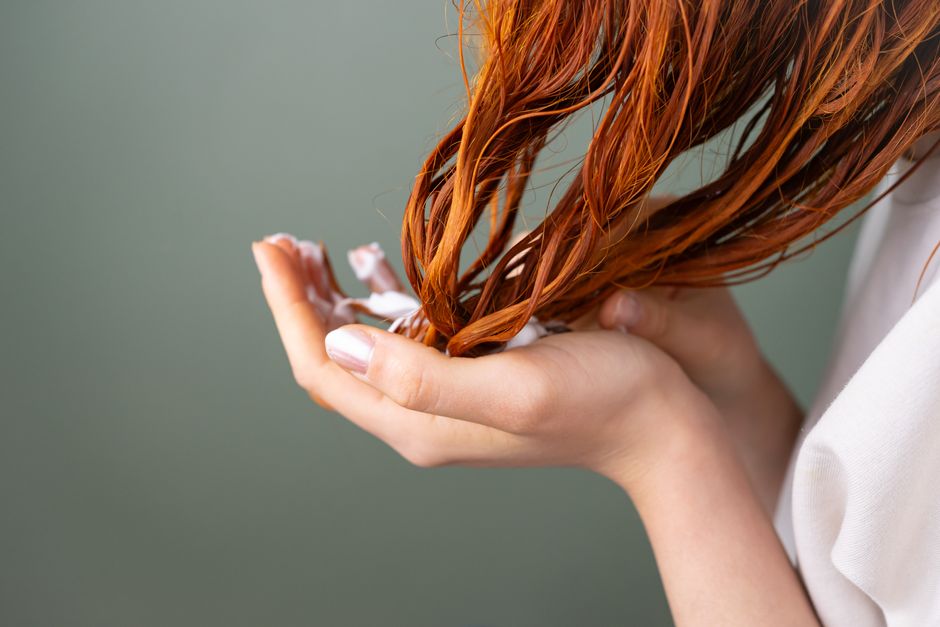
There is no single best conditioner for dry, damaged hair. The best one is the formula that matches how your hair got damaged, how porous it is, and how much protein it can tolerate before it turns stiff and brittle. A conditioner built around fatty alcohols and oils helps hair that is dry from coloring or heat. A conditioner with hydrolyzed protein helps hair that has lost structure from bleach or repeated chemical processing. Many people need both, used in different amounts.
This is not a dodge. Dryness and damage are two different problems, and they respond to different ingredients. Getting the match right matters more than the brand name on the bottle.
What Is The Best Conditioner For Dry Damaged Hair?
For most people with dry, damaged hair, the best conditioner is one that combines emollients and humectants with a small amount of hydrolyzed protein, applied to the mid-lengths and ends rather than the scalp. That combination addresses both halves of the problem: it replaces the oils and moisture the hair has lost, and it temporarily patches gaps in the outer layer of the hair shaft.
The reason a single answer is hard to give is that “dry” and “damaged” describe different things. Dry hair lacks moisture and oil. Damaged hair has physical and chemical changes to its structure. A conditioner that helps one may do little for the other.
Conditioners work mainly on the surface. They smooth the cuticle — the outer layer of overlapping scales on each hair strand — and coat the shaft so it feels softer and detangles more easily. They do not repair hair from the inside. No conditioner can rebuild a hair that has been chemically broken, because hair is not living tissue. Once a strand leaves the scalp, it cannot heal itself.
What conditioners can do is reduce friction, limit further breakage, and improve how hair looks and feels. That is a real benefit. It is just not the same as repair.
What Actually Causes Dry, Damaged Hair?
Hair damage comes from a few well-understood sources. The most common are chemical processing, heat, and mechanical stress.
Bleaching and coloring are the biggest culprits. These processes lift the cuticle and strip or alter the natural pigments and structural proteins inside the hair. The result is a rougher surface, more porosity, and a strand that breaks more easily. Repeated bleaching compounds the problem because each round removes more of the hair’s internal structure.
Heat is the second major cause. Blow dryers, flat irons, and curling wands pull moisture out of the hair and can physically change the proteins when the temperature gets high enough. Frequent use without protection adds up over time.
Mechanical damage is easy to overlook. Aggressive brushing, tight hairstyles, and rough towel drying all create friction that wears down the cuticle. Over months, that wear shows up as split ends and breakage.
Everyday factors matter too. Sun exposure, chlorine, and hard water can all make hair feel drier. So can the natural aging process, since oil production at the scalp tends to decline with age.
Which Ingredients Actually Help?
The ingredients that help dry, damaged hair fall into a few clear groups. Knowing them makes it easier to read a label instead of trusting the front of the bottle.
- Fatty alcohols — cetyl, stearyl, and cetearyl alcohol. Despite the name, these are not the drying kind of alcohol. They are waxy solids that soften hair and help other ingredients spread evenly.
- Emollients and oils — argan oil, coconut oil, jojoba, and similar. These coat the shaft and reduce friction, which makes hair feel smoother and helps prevent breakage.
- Humectants — glycerin and similar ingredients that attract and hold water. They help hair feel more moisturized, though their effect depends on the surrounding humidity.
- Hydrolyzed proteins — hydrolyzed wheat, rice, silk, or keratin protein. These are broken into small pieces that can temporarily attach to the hair surface and fill in rough spots.
- Silicones — dimethicone and related compounds. These form a light coating that smooths the cuticle and adds shine. Some people avoid them, but they are effective at reducing friction and are not inherently harmful.
Hydrolyzed protein deserves a closer look because it is where a lot of confusion lives. Small protein fragments can bind to the hair and give it a temporary feeling of strength. This is a surface effect, not a rebuild. It washes out. And there is a real limit: too much protein can make hair feel stiff, rough, and prone to snapping. That condition is sometimes called protein overload, and it is why a protein-heavy routine is not automatically better.
How Do You Match a Conditioner to Your Hair?
The match depends on what your hair is doing, not on a universal ranking. A few patterns cover most situations.
If your hair feels dry, frizzy, and rough but is not breaking easily, you likely need moisture and emollients more than protein. Look for a conditioner with fatty alcohols and oils near the top of the ingredient list, and little or no protein.
If your hair is stretchy when wet, limp, or breaks with little force after chemical processing, it may benefit from protein. A conditioner with hydrolyzed protein can help temporarily. Use it a few times a week rather than every wash, and watch for stiffness.
If your hair is both dry and damaged — the most common situation after coloring — you probably need a balance. Many people do well alternating a moisturizing conditioner with a protein-containing one, or using a product that includes both.
Fine hair usually does better with lighter formulas, since heavy oils and butters can weigh it down. Thick or coarse hair can handle richer, heavier products. Curly hair tends to be drier by nature and often benefits from more emollient formulas and leave-in conditioners.
Does Protein or Moisture Matter More?
Neither one wins. The right balance depends on your hair, and the balance can shift over time.
Moisture-focused conditioning is the safer default for most people. It softens hair, reduces friction, and rarely causes problems. Protein is the more targeted tool, useful when hair has lost structure, but easy to overdo.
A simple way to think about it: moisture makes hair feel soft and flexible. Protein makes hair feel stronger and slightly firmer. If hair feels mushy and limp, it may want protein. If it feels stiff, rough, and brittle, it may want less protein and more moisture.
This is a general framework, not a precise test. Hair feel is subjective, and different people describe the same sensation differently. Treat it as a starting point for experimenting, not a diagnostic rule.
What About Leave-In and Deep Conditioners?
Leave-in conditioners and deep conditioning masks serve different purposes than a standard rinse-out conditioner, and they can help when regular conditioning is not enough.
Leave-in conditioners stay on the hair and provide ongoing smoothing and detangling. They are useful for very dry or curly hair, and for protecting hair between washes. They tend to be lighter than masks.
Deep conditioners and masks are heavier treatments meant to be left on for a period before rinsing. They can add more emollients and moisture than a quick conditioner. How often to use one depends on your hair; some people use them weekly, others less. There is no fixed schedule backed by strong evidence, so frequency is a matter of what your hair tolerates.
One honest note: the word “deep” is marketing language, not a clinical category. A mask is essentially a richer conditioner. It can help, but it does not penetrate to the core of the hair and repair it.
What Should You Avoid?
Few ingredients in conditioners are genuinely harmful. The bigger risk is a routine that keeps damaging the hair faster than any conditioner can offset.
If you are trying to recover damaged hair, the most useful changes are often not about the conditioner at all. Reducing heat styling, spacing out chemical treatments, and handling hair gently do more than any single product. A conditioner can only do so much against ongoing damage.
Be skeptical of claims that a product “repairs” or “heals” damaged hair. Hair is not living, and no topical product restores its original structure. Products can improve how hair looks, feels, and behaves. That is worth something. It is just not repair.
Also be careful with protein if your hair is already stiff or snapping. Adding more protein to hair that has too much can make things worse. In that case, switch to a moisturizing formula for a while.
Frequently Asked Questions
What is the best conditioner for dry damaged hair?
The best choice is one that combines emollients and humectants with a small amount of hydrolyzed protein, matched to whether your hair needs more moisture or more structure. There is no single product that works for everyone.
Does protein conditioner repair damaged hair?
No. Hydrolyzed protein temporarily attaches to the hair surface and can make it feel stronger, but it washes out and does not rebuild the hair. Too much can make hair stiff and prone to breaking.
How often should I use a deep conditioner?
There is no fixed schedule supported by strong evidence, so frequency depends on your hair and how it responds. Many people use one weekly, while others need it less often.
Can conditioner fix split ends?
No. Conditioner can smooth split ends and reduce further friction, but it cannot rejoin or repair a split. The only way to remove a split end is to trim it.
