
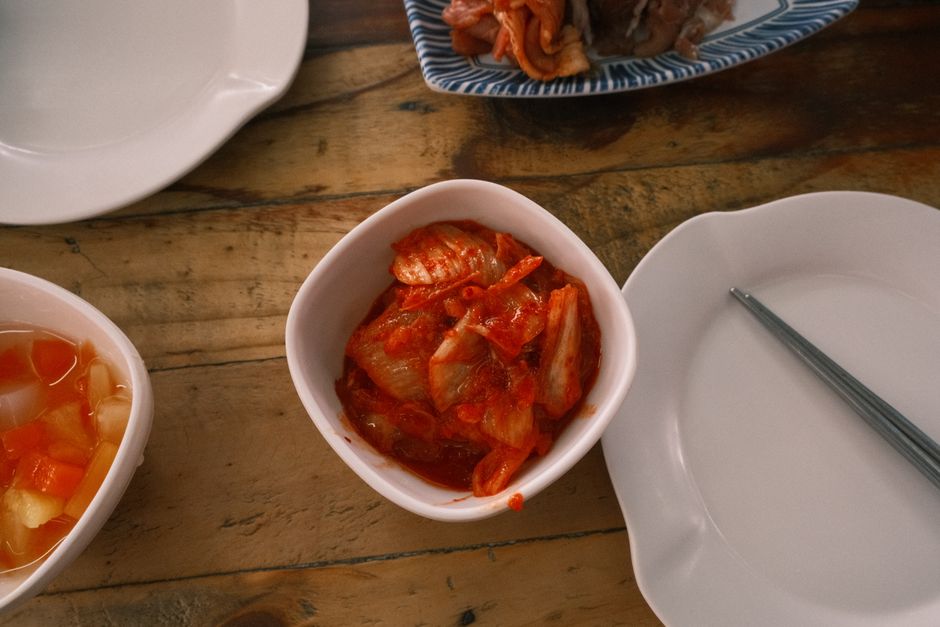
Kimchi gives some people diarrhea mainly because it contains live probiotics, high levels of histamine, and a significant amount of fiber and capsaicin all at once. For many, this combination speeds up digestion and irritates the gut lining. If your body is not used to fermented foods or you have a sensitive stomach, the result can be loose stools within hours of eating it.
What Exactly Is in Kimchi That Causes Digestive Issues?
Kimchi is a fermented cabbage dish packed with ingredients that each affect your gut differently. The fermentation process creates live bacteria called probiotics. These are usually good for you. But when you eat a large amount suddenly, they can temporarily change your gut environment. This can lead to gas, bloating, and diarrhea.
Kimchi also contains a lot of fiber from the cabbage and other vegetables. A sudden increase in fiber intake can speed up bowel movements. On top of that, many kimchi recipes include gochugaru or red pepper flakes. Capsaicin, the compound that makes peppers hot, can irritate the lining of the intestines. For some people, this irritation triggers the body to flush everything out quickly.
Salt is another factor. Kimchi is made with a salty brine. High sodium levels can pull water into the intestines through osmosis. More water in your stool means looser bowel movements.
Why Does Kimchi Give Me Diarrhea More Than Other Fermented Foods?
Not all fermented foods affect people the same way. Yogurt and kefir are fermented with fewer bacterial strains. Kimchi often contains multiple strains including Lactobacillus, Leuconostoc, and Weissella. Each strain can produce different byproducts during fermentation. Some of these byproducts, like certain organic acids, may irritate sensitive guts more than others.
Kimchi also has a much higher histamine content than most fermented dairy products. Histamine is a compound that builds up during fermentation. Some people have trouble breaking it down. If you have a histamine intolerance, kimchi can cause diarrhea, headaches, or flushing. Yogurt and sauerkraut usually have lower histamine levels than kimchi.
The spice level matters too. Most commercial yogurts are not spicy. Kimchi almost always contains chili. Capsaicin is a known gut irritant. A study published in the journal Nutrients found that capsaicin can activate intestinal receptors that speed up transit time. That means food moves through your colon faster. Less time in the colon means less water absorption. The result is loose stool.
Is It the Probiotics or the Spice That Causes the Problem?
Both can cause problems, but they work through different mechanisms. Probiotics change the bacterial balance in your gut. If you have a healthy gut microbiome, a small amount of probiotics is usually fine. But a sudden large dose can cause temporary digestive distress. This is often called a “die-off” reaction or a Herxheimer reaction. Some bacteria die and release toxins. Your body responds by trying to eliminate them quickly.
Capsaicin works differently. It binds to a receptor called TRPV1 in your gut lining. This receptor signals pain and inflammation. Your body may respond by increasing mucus production and speeding up muscle contractions in the intestines. This is a direct physical response, not a bacterial one.
If you eat kimchi and get diarrhea within an hour, it is more likely the capsaicin. If the diarrhea hits 4 to 8 hours later, the probiotics and fiber are probably the main cause. Pay attention to the timing. It can help you figure out which ingredient bothers you.





What Does Research Say About Fermented Foods and Diarrhea?
Research shows that fermented foods are generally safe for most people. But they can cause temporary digestive upset in some individuals. A 2021 review in the Journal of Agricultural and Food Chemistry noted that fermented vegetables contain high levels of biogenic amines like histamine and tyramine. These compounds can cause diarrhea in people who are sensitive to them.
The same review pointed out that the fiber content in fermented vegetables is often higher than in raw vegetables because fermentation breaks down some cell walls. This makes the fiber more accessible to gut bacteria. For someone with a sensitive gut, this sudden increase in fermentable fiber can cause gas and loose stools.
There is also research on capsaicin specifically. A 2019 study in Gastroenterology Research and Practice found that capsaicin can increase bowel movement frequency in people with irritable bowel syndrome. The effect was dose-dependent. More spice meant more urgency. For people without IBS, the effect was smaller but still measurable.
How Can You Eat Kimchi Without Getting Diarrhea?
If you like kimchi but your stomach does not, there are practical steps you can try. Start with a very small amount. A single tablespoon is a reasonable starting point. Eat it with other food, not on an empty stomach. The other food buffers the capsaicin and slows down digestion.
Choose a mild kimchi if spice is your trigger. Many brands sell “white kimchi” or “mild kimchi” made without chili flakes. These still have probiotics and fiber but lack the capsaicin. You can also rinse store-bought kimchi under cold water. This removes some of the brine and salt, which can reduce water retention in your gut.
Another option is to let kimchi sit at room temperature for a few hours before eating it. This allows some of the histamine to break down. Histamine levels drop over time after fermentation stops. Fresh kimchi has higher histamine than kimchi that has been sitting out or refrigerated for a week.
If you have a known histamine intolerance, look for kimchi that is labeled “low histamine” or make your own with a shorter fermentation time. A 3-day fermentation produces much less histamine than a 3-week fermentation.
What Are the Signs You Should Stop Eating Kimchi?
Occasional loose stools after eating kimchi are not usually dangerous. But there are signs that you should stop. If the diarrhea lasts more than 48 hours, you may have an infection or a more serious intolerance. Blood in your stool is a red flag. Severe abdominal cramping that does not go away is another warning sign.
If you have a compromised immune system, be cautious with raw fermented foods. The live bacteria in kimchi can cause infections in people who are immunocompromised. This includes people on chemotherapy, organ transplant recipients, and those with advanced HIV. For these individuals, pasteurized fermented foods are a safer choice.
Some people develop a true allergy to kimchi ingredients. Shrimp paste and fish sauce are common allergens. If you notice hives, swelling, or difficulty breathing along with diarrhea, you may be having an allergic reaction. Stop eating kimchi and see a doctor.
Frequently Asked Questions
Can kimchi cause diarrhea the next day?
Yes. The probiotics and fiber in kimchi can take 6 to 12 hours to reach your colon. If your gut is sensitive, the reaction may not show up until the next morning.
Is it normal to have diarrhea after eating kimchi for the first time?
It is common but not universal. Many people experience temporary digestive upset when introducing fermented foods. Your gut bacteria need time to adjust.
Does cooking kimchi stop diarrhea?
Cooking kills the live probiotics but does not remove the histamine or capsaicin. Cooked kimchi may still cause diarrhea if those compounds are your triggers.
How much kimchi is safe to eat per day?
Most studies use 50 to 100 grams per day, about half a cup. Starting with one tablespoon and increasing slowly over two weeks is safer for sensitive individuals.
