

Facial hair grows faster than the hair on your head for a few clear reasons. Blood flow, hormones, and the hair growth cycle all play a part. The average facial hair growth rate is about 0.4 millimeters per day, compared to roughly 0.3 millimeters per day for scalp hair. That difference adds up to about an extra inch of growth every three months.
What Makes Facial Hair Grow Faster Than Head Hair?
Facial hair has a biological advantage built into its growth cycle. Every hair on your body goes through three phases: growth, rest, and shedding. The key difference is how long each phase lasts.
Scalp hair stays in the growth phase for years. That is why it can grow long. Facial hair stays in the growth phase for only a few weeks to a few months. Because the cycle is shorter, the hair follicle spends more of its time actively producing new cells. The result is a faster daily growth rate.
Blood flow also matters. The face has a dense network of blood vessels. More blood means more oxygen and nutrients delivered to the hair follicles. This supports rapid cell division at the root of each hair.
How Do Hormones Affect Facial Hair Growth?
Androgens are the main hormones driving facial hair growth. Testosterone and its stronger form, dihydrotestosterone (DHT), bind to receptors in hair follicles. This binding signals the follicle to produce thicker, darker, faster-growing hair.
Men typically have higher androgen levels than women, which is why facial hair is much more common in men. But hormone levels alone do not tell the whole story. Sensitivity matters too. Some people have follicles that are highly sensitive to androgens, even at normal hormone levels. Others have lower sensitivity and grow less facial hair despite normal testosterone levels.
This sensitivity is largely determined by genetics. It explains why two men with identical testosterone levels can have very different beard growth.
Why Does Facial Hair Grow Faster Than Leg Hair?
Leg hair and facial hair respond to hormones differently. Androgens actually slow down the growth of scalp hair but speed up the growth of facial hair. On the legs, arms, and chest, androgens stimulate the conversion of fine vellus hairs into thicker terminal hairs, but the daily growth rate stays slower than on the face.
The face also has a higher density of hair follicles per square centimeter than most other body areas. More follicles working at once creates the appearance of faster, denser growth even when each individual hair grows at a similar pace to other body hair.
Temperature may play a minor role as well. The face is often exposed to warmer conditions than the legs, and warmth increases blood flow to the skin surface. This can slightly boost the activity of facial hair follicles.



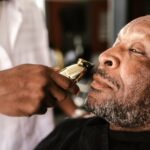

Does Shaving Make Facial Hair Grow Back Faster or Thicker?
No. Shaving does not change the rate of hair growth or the thickness of the hair. This is one of the most persistent myths in grooming, and it has been debunked repeatedly in clinical studies.
The confusion comes from how shaved hair feels. When you shave, you cut the hair at the skin surface. The blunt tip of the new hair feels coarse and stiff as it emerges. Unshaved hair tapers to a fine point at the end, so it feels softer. The hair is not thicker — it just feels that way because of the blunt edge.
Shaving also does not affect the follicle or the root of the hair. The growth cycle continues exactly as it would have without shaving. The only way to change actual hair thickness is through hormonal changes, genetics, or certain medical treatments.
Why Does Facial Hair Grow at Different Rates on Different Parts of the Face?
Not all facial hair grows at the same speed. The mustache area and chin typically grow faster than the cheeks. This variation comes down to differences in androgen sensitivity between follicle groups.
Hair follicles in different regions of the face have different numbers of androgen receptors. The chin and upper lip tend to have more receptors, making them more responsive to DHT. The cheeks have fewer receptors, which is why cheek hair often stays patchy or grows more slowly even in men with full beards elsewhere.
Blood supply also varies across the face. Areas closer to major arteries receive more blood flow and tend to support faster hair growth. This is why the mustache area, which sits near the facial artery, often grows quickly.
Does Age Change Facial Hair Growth Rate?
Yes, facial hair growth changes with age, but not in a straight line. Facial hair typically first appears during puberty as androgen levels rise. Growth rate increases through the late teens and twenties as hormone levels stabilize at adult levels.
In the thirties and forties, many men notice their facial hair grows thicker or faster. This is often due to continued follicular response to androgens over time. Some men also see new growth in areas that were previously bare.
In later decades, facial hair growth can slow. Testosterone levels gradually decline with age, and blood flow to the skin decreases. Some men also experience gray facial hair, which can feel coarser even though the growth rate is unchanged.
Can You Slow Down Facial Hair Growth?
There is no proven way to permanently slow facial hair growth without medical intervention. The growth rate is determined by genetics and hormones, both of which are largely outside your control.
Some products claim to slow hair growth, but clinical evidence is limited. Prescription medications like eflornithine cream can slow facial hair growth in women, but it is not approved for use in men and requires a prescription. Laser hair removal and electrolysis can permanently reduce hair density, but they work by damaging the follicle rather than slowing growth.
For most people, the practical answer is simple: manage the growth with shaving, trimming, or waxing. These methods remove the visible hair but do not change the underlying growth rate.
Does Diet or Lifestyle Affect Facial Hair Growth?
Severe malnutrition can impair hair growth everywhere on the body, including the face. But for a healthy person eating a balanced diet, no specific food has been proven to accelerate facial hair growth.
Protein, iron, and certain vitamins like biotin are necessary for hair health. Deficiencies in these nutrients can slow growth or cause hair loss. But supplementing beyond normal levels does not make hair grow faster. The evidence for biotin supplements boosting hair growth is particularly weak.
Sleep and stress management matter indirectly. Chronic stress raises cortisol levels, which can disrupt hormone balance. Poor sleep can also affect testosterone production. But these effects are modest for most people and will not dramatically change facial hair growth rate.
Is Facial Hair Growth Different for Women?
Women produce androgens too, just at lower levels. This is why women grow fine, light facial hair. When women experience faster or thicker facial hair growth, it is usually a sign of higher androgen activity.
Conditions like polycystic ovary syndrome (PCOS) can cause increased facial hair growth in women. This is called hirsutism. If facial hair growth changes suddenly or becomes coarse and dark, it is worth discussing with a doctor. A healthcare provider can check hormone levels and identify any underlying medical conditions.
Sudden changes in facial hair growth for either men or women are worth medical attention. A rapid increase could signal a hormonal imbalance, a medication side effect, or another health issue that deserves evaluation.
Frequently Asked Questions
Why does facial hair grow so much faster than head hair?
Facial hair has a shorter growth cycle and better blood supply than scalp hair. This combination allows facial follicles to produce new cells at a faster daily rate.
Does shaving make facial hair grow back thicker?
No. Shaving cuts the hair at the surface but does not change the follicle. New hair feels coarse because of its blunt tip, but it is not actually thicker.
How many millimeters does facial hair grow per day?
Facial hair grows about 0.4 millimeters per day on average. This is roughly one-third faster than scalp hair growth.
Can testosterone levels predict how fast facial hair grows?
Not directly. Follicle sensitivity to androgens matters more than total hormone levels. Two people with identical testosterone levels can have very different facial hair growth.
