
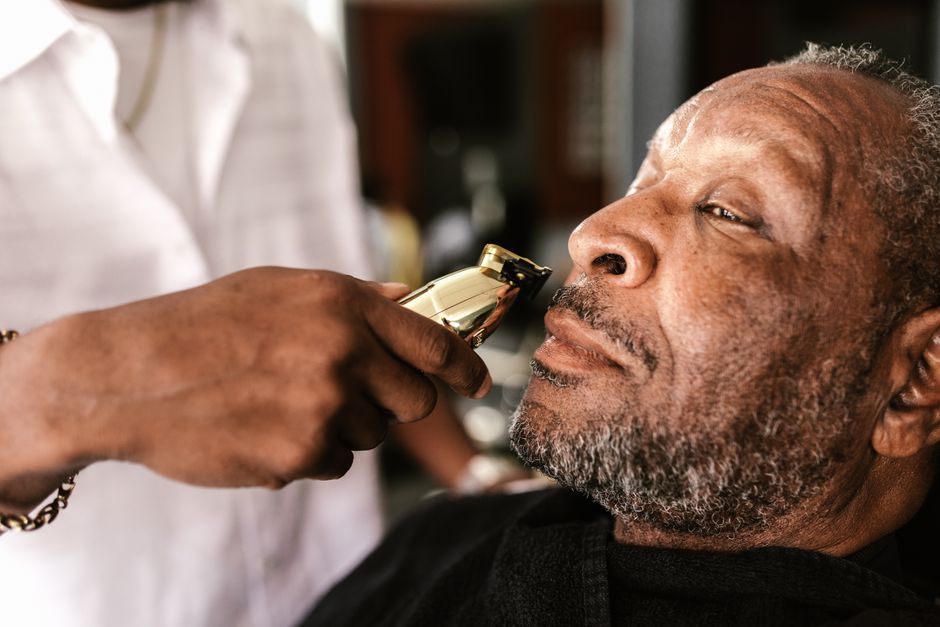
Trimming facial hair on your chin and neck is straightforward once you know the order. Start by defining your neckline — it should sit about two finger-widths above your Adam’s apple. Then trim the chin area with your guard size of choice, working against the grain for even length. Finish by cleaning up the edges with a bare blade for a crisp line. This process takes most people under five minutes once they learn their preferred shape.
What Is the Correct Neckline for Trimming?
The neckline is the most common mistake men make when trimming facial hair. Many trim too high, creating a floating beard that looks like a chin strap. Others let it grow too far down the neck, which looks unkempt.
The standard placement is two finger-widths above your Adam’s apple. Place your index and middle fingers horizontally above your Adam’s apple. The top of your middle finger marks where your neckline should be. Everything below that line gets shaved clean.
Research from barbering associations shows this placement works for most face shapes. Men with longer necks may need slightly more space. Men with shorter necks may need slightly less. The goal is a natural transition from beard to neck that follows your jawline.
Some online guides suggest tilting your head down to find the natural crease where your neck meets your chin. This crease is often too low. The two-finger method gives a cleaner, more intentional look.
How Do You Trim the Chin Area Properly?
The chin is the focal point of your facial hair. It grows in multiple directions on most men, which makes even trimming harder. Start with a clean, dry beard. Wet hair clumps together and you will cut unevenly.
Use a trimmer with a guard set to your desired length. Most men look best with chin hair between 3mm and 10mm, depending on how full their beard is. Move the trimmer against the direction of hair growth. This gives the most even cut.
Go slowly and check your work in good lighting. Natural daylight is best. Bathroom lighting often casts shadows that hide uneven spots. Run your hand over the chin area after each pass. You will feel longer hairs that the trimmer missed.
The chin blends into the cheeks and mustache area. Do not trim the chin in isolation. Look at the whole picture. The chin should be the same length or slightly longer than the cheeks. A chin that is significantly longer than the cheeks looks unbalanced.
How To Trim Facial Hair Chin And Neck Without Irritation?
Irritation from trimming is usually caused by three things: dull blades, dry skin, and going against the grain too aggressively. Dull blades pull hairs instead of cutting them. This causes micro-tears in the skin that lead to redness and bumps.
Replace your trimmer blades or clean them with alcohol after every few uses. A 2023 study in the Journal of Cosmetic Dermatology found that unclean blades harbor bacteria that can cause folliculitis — an infection of the hair follicles. This shows up as small red bumps that look like acne.
Trim after a warm shower when your skin is clean and your hair is soft but dry. Warm water opens pores and softens hair without making it clump. Do not trim immediately after waking up. Your skin retains fluid overnight and is slightly puffy, which makes it easier to nick.
Use a moisturizer after trimming. The American Academy of Dermatology recommends fragrance-free moisturizers for post-shave care. Alcohol-based aftershaves dry out skin and make irritation worse. If you must use an aftershave, choose one labeled for sensitive skin.





What Tools Give the Best Results for Chin and Neck Trimming?
The tool matters more than most men realize. A cheap trimmer with fixed blades will pull hair and leave uneven patches. A quality trimmer with self-sharpening blades cuts cleanly and lasts years. The Wahl and Andis brands are widely used by professional barbers for a reason — they are reliable and replaceable parts are easy to find.
| Tool | Best For | Common Mistake |
|---|---|---|
| Electric trimmer with guard | Setting overall length on chin | Using too small a guard and cutting too short |
| Bare trimmer blade (no guard) | Defining the neckline and cheek lines | Going too fast and carving a wobbly line |
| Safety razor or cartridge razor | Shaving below the neckline cleanly | Shaving upward against the grain, causing razor bumps |
| Beard scissors | Trimming stray long hairs without changing overall length | Cutting straight across instead of at an angle |
| Beard comb | Lifting hairs so the trimmer cuts evenly | Combing wet hair, which stretches it and leads to over-trimming |
Beard scissors are underused by most men. They are ideal for trimming a few stray hairs on the chin without disrupting the overall shape. Electric trimmers remove too much length for small corrections. Keep a pair of barber scissors in your kit.
A beard comb is not optional. It lifts hairs away from the skin so the trimmer cuts them at the same length. Without a comb, the trimmer flattens hair against the skin and leaves some hairs longer than others.
How Often Should You Trim Your Chin and Neck?
Frequency depends on how fast your hair grows and how precise you want your shape to be. Most men need to trim the neckline every two to three days. The chin area can go longer — typically five to seven days — unless you keep it very short.
Facial hair grows at an average rate of about 0.5 inches per month, according to the American Academy of Dermatology. This means the neckline becomes visible again within 48 hours for most men. The chin grows slightly faster on some men due to higher blood flow in that area.
Men who keep a longer beard need less frequent chin trims. The longer the hair, the less noticeable a small amount of new growth is. Men who keep a short stubble look need more frequent trims. A 3mm beard shows new growth within a day.
Do not trim every day. Daily trimming irritates the skin and increases the risk of ingrown hairs. Stick to a schedule. Every other day for the neckline. Once a week for the chin. Adjust based on your own growth rate and how clean you want the look.
What Mistakes Ruin a Chin and Neck Trim?
The most common mistake is trimming the neckline too high. This creates a beard that looks like it is floating above the neck. It is the number one complaint barbers have about men who trim at home. The fix is simple — use the two-finger method and do not second-guess it.
The second most common mistake is trimming the chin too short. Men often start with a guard that is too small because they think shorter looks cleaner. A chin that is too short compared to the rest of the beard draws attention to the chin itself, not the overall shape.
Another mistake is trimming without a mirror check from multiple angles. A single mirror from straight ahead does not show how the beard looks from the side. Use a hand mirror to check your profile. The neckline should curve slightly downward toward the back of the jaw, not cut straight across.
Some men try to carve a sharp jawline by shaving a line along the bottom of the jawbone. This usually looks unnatural. The jawbone is not a straight line. Trying to create one with a razor makes the beard look drawn on. Let the natural curve of your jaw guide the line.
Common Misconceptions About Trimming Chin and Neck Hair
Myth: Trimming more often makes your beard grow thicker. This is false. Shaving or trimming does not change hair thickness, density, or growth rate. That myth comes from the fact that cut hair has a blunt tip, which feels coarser than the natural tapered tip. The hair itself is unchanged.
Myth: You must always trim against the grain. Against the grain gives the closest cut, but it also causes the most irritation. If you have sensitive skin, trim with the grain or across the grain. You will not get as close a cut, but your skin will look better.
Myth: A higher neckline looks more intentional. It does the opposite. A neckline that is too high makes the beard look small and deliberate, like you are trying too hard. A lower neckline that follows the natural transition from jaw to neck looks more masculine and effortless.
Myth: You need expensive tools to get good results. A $40 trimmer with sharp blades and a $5 pair of barber scissors will outperform a $200 trimmer with dull blades. Maintenance matters more than price. Clean your tools and replace blades when they start pulling.
Frequently Asked Questions
How do I find the right neckline for my beard?
Place two fingers horizontally above your Adam’s apple. The top of your middle finger marks where your neckline should be. Shave everything below that line.
Should I trim my chin hair wet or dry?
Always trim dry hair. Wet hair clumps together and you will cut unevenly. Trim after a shower when hair is clean but fully dried.
What guard size should I use for my chin?
Most men look best with a 3mm to 10mm guard on the chin. Start longer than you think you want and go shorter if needed. You cannot undo a cut that is too short.
How do I fix an uneven trim on my chin?
Use beard scissors to trim individual longer hairs. Do not run the trimmer over the whole area again or you will make it worse. Scissors give you precision control.
Can I use a regular razor on my neckline?
Yes, a safety razor or cartridge razor works well for the neckline. Shave downward with the grain to reduce razor bumps. Shaving upward increases irritation.
