
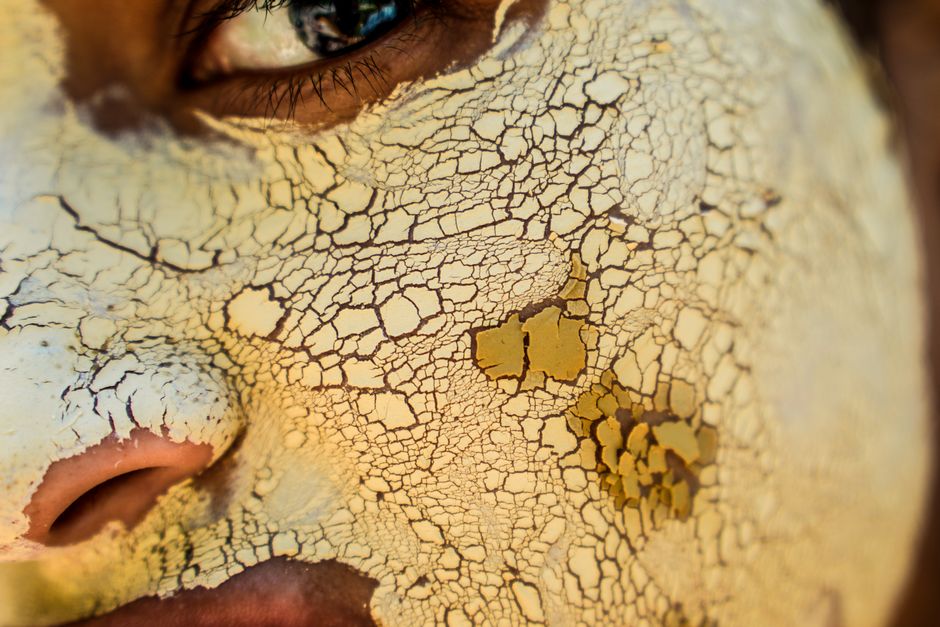
Clay cracks as it dries because it shrinks, and it shrinks because water is leaving the spaces between its particles. When that shrinkage is uneven, or when the clay is no longer able to stretch to accommodate it, the surface tears open. The fix is not one trick but a set of habits: dry slowly, keep the piece an even thickness, compress the surface, and control how fast the edges lose water compared to the middle.
Why Does Clay Crack When Drying?
Clay is made of flat, plate-like particles. When the clay is wet, water sits in the gaps between those plates and holds them apart. As that water evaporates, the plates get pulled closer together by surface tension, and the whole mass gets smaller. This is called drying shrinkage.
The trouble starts when one part of the piece shrinks before another. The rim of a bowl dries faster than the base because it has more exposed surface. The thin handle on a mug dries faster than the thick wall it is attached to. When the drier section tries to shrink and the wetter section will not move with it, stress builds up at the boundary. If that stress exceeds the clay’s strength, it cracks.
This is why most cracks appear at joins, at the rim, or at the base — the places where thickness changes and drying rates differ. A crack is not usually a sign that the clay was bad. It is a sign that the piece dried unevenly or was not strong enough to handle the strain.
What Is the Difference Between Drying Shrinkage and Firing Shrinkage?
Clay shrinks twice, and the two stages are often confused. Drying shrinkage happens between forming the piece and the bone-dry stage. Firing shrinkage happens in the kiln. They have different causes and different fixes.
Drying shrinkage is driven by water loss. The clay particles move closer together as water leaves. Most of this shrinkage is finished by the time the piece is leather-hard, and the last bit of drying — from leather-hard to bone-dry — causes very little further change in size.
Firing shrinkage is driven by heat. As the kiln climbs in temperature, the clay particles fuse together and the material densifies. This is a permanent chemical and physical change, not a reversible one. A glaze can also shrink during cooling, and if it shrinks more than the clay body underneath, it can craze or flake.
The practical point: you cannot fix drying cracks by adjusting your kiln. And you cannot fix firing cracks by drying more slowly. Each has its own cause.
How Do You Stop Clay From Cracking While It Dries?
You stop cracking by slowing the drying and making it even. Almost every technique that works comes back to one of those two goals.
Wrap the piece. Loose plastic sheeting over a board traps moisture and slows evaporation. For a piece that is drying too fast, a plastic bag with a few small holes punched in it lets moisture escape slowly. This is one of the most reliable methods for controlling the drying rate.
Dry upside down. A bowl or cup placed rim-down on a board dries more evenly because the base is now the most exposed part and the rim is protected. The rim is usually the thinnest, most fragile section, so protecting it from drying first prevents the classic rim crack.
Keep thickness consistent. A wall that is 6 mm in one place and 15 mm in another will dry at different rates. The thin area shrinks first and pulls on the thick area. Aim for even walls throughout the piece. If you must join thick and thin sections, dry the whole piece more slowly than usual.
Compress the surface. Running a rib or your fingers firmly over the clay aligns the particles and closes small gaps. This is a widely used studio practice. It does not make clay crack-proof, but many potters find that compressed surfaces handle drying stress better than rough, unburnished ones.
Join pieces at the right moisture level. Attaching a handle to a leather-hard mug works better than attaching it to a bone-dry one. The two pieces need to be close enough in moisture that they shrink together. Score and slip the join, then press firmly. A weak join will open up as the piece dries.
Control the room, not just the piece. A fan, a heater, or direct sun will dry one side faster than the other. Move pieces away from drafts and heat sources. A cool, still room with moderate humidity is kinder to clay than a warm, dry one.





Why Do Cracks Sometimes Appear After the Piece Looks Dry?
A piece can look dry and still be drying inside. Clay that feels firm on the surface may hold moisture in the center, especially in thick sections. When that inner moisture finally moves outward, the surface is no longer able to shrink, so the stress shows up as a crack.
This is why potters talk about “bone-dry” as a specific state, not just “feels dry.” Bone-dry means the piece has stopped losing meaningful moisture. Until then, it is still changing size. Handling a piece that is not fully dry can also introduce cracks, because the surface is brittle even if the inside is not.
Thick pieces are the usual suspects here. A solid sculpture or a heavy-based bowl can take days or weeks to dry fully, depending on the size and the conditions. Drying those pieces slowly is not optional — it is the main thing that prevents cracks.
Does Clay Type Affect How Much It Cracks?
Yes. Different clay bodies shrink by different amounts and tolerate stress differently. This is one of the reasons two people can follow the same steps and get different results.
Clays with a lot of fine particles, like many porcelain bodies, tend to shrink more and can be more prone to cracking than coarser stoneware or earthenware bodies. The plate-like structure of clay minerals means that how the particles are arranged and how much water sits between them both matter.
Adding grog — fired clay ground into small particles — is a common way to reduce shrinkage and give the clay more internal structure. Grog does not dissolve in water, so it does not shrink the way clay particles do. A body with more grog tends to crack less during drying, though it also feels less smooth to work with.
If you are having repeated cracking problems with one clay body, trying a different body is a reasonable step. But changing clay will not fix a piece that is being dried too fast or built with uneven walls.
Can You Repair a Cracked Piece?
Sometimes, if the piece is still leather-hard. A crack that has not fully opened can be pressed back together, and the join can be reinforced with slip made from the same clay. Working the surface with a rib after pressing helps blend the repair into the surrounding clay.
Once a piece is bone-dry, repair becomes much harder. You can fill a crack with slip or a paper-clay mixture, but the repair often shows after firing, and the filled area may not behave the same way as the surrounding clay. For structural cracks in a piece that needs to hold water or bear weight, repair is usually not reliable.
A crack that appears during firing cannot be repaired at all. The piece is already fused. The honest answer is that most cracks are better prevented than fixed.
What About Cracks That Show Up Only After Firing?
Some cracks are drying cracks that were invisible until the kiln made them open up. Others are caused by the firing itself. The two can look similar, which makes diagnosis tricky.
A crack that follows a join, or runs along the rim or base, is more likely to have started during drying. A crack that appears across a flat area, or that shows up after the glaze has melted, may be related to the firing or to a glaze that shrinks more than the clay body. Glaze fit problems often show up as a network of fine cracks called crazing, which is different from a structural crack.
Because the cause is not always obvious from the finished piece, the most useful thing you can do is track what you changed. Wall thickness, drying time, room conditions, and join moisture are the variables that matter most.
Frequently Asked Questions
Why does clay crack when drying?
Clay cracks when it shrinks unevenly as water leaves it. If one part dries faster than another, stress builds at the boundary and the clay tears.
How do you stop clay from cracking as it dries?
Slow the drying and make it even by covering the piece with plastic, drying it upside down, keeping walls the same thickness, and keeping it away from drafts and heat.
Can you fix a cracked clay piece?
You can sometimes press a crack closed while the clay is still leather-hard and reinforce it with slip. Once the piece is bone-dry or fired, repair is unreliable.
Does clay crack more in a hot or dry room?
Yes. Warm, dry, or drafty conditions pull moisture out faster and increase the chance of uneven drying. A cool, still room with moderate humidity is gentler on clay.
