
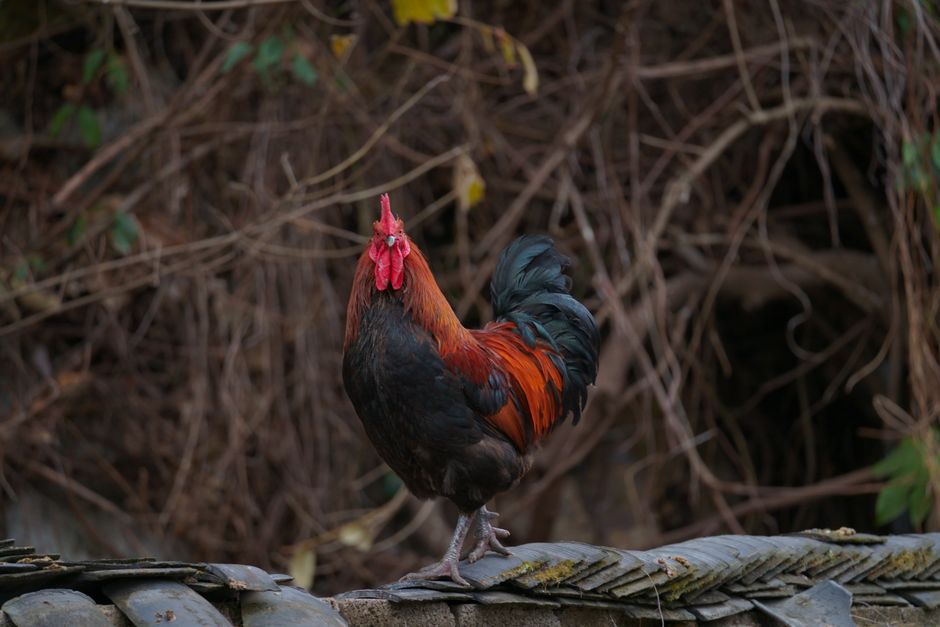
Roosters crow because it is how they claim territory, signal alertness, and communicate with the flock — not because they are trying to annoy you. The crowing is loudest around dawn, but it can happen at any hour, and it often increases when a rooster hears other roosters, sees movement, or feels his territory is threatened. You cannot train the instinct away, but you can reduce the noise by managing light, removing triggers, and adjusting your flock setup.
Why Do Roosters Crow All Day And How To Stop It?
Crowing is a form of vocal communication that roosters use to establish and defend territory. A rooster crows to announce his presence to other males, to signal his flock, and to respond to disturbances.
That instinct does not switch off, which is why a rooster can crow at noon as easily as at sunrise. The behavior is tied to social and environmental triggers more than to a clock. Understanding those triggers is the only realistic path to reducing the noise.
The dawn crow is real, but it is not the whole story
Roosters do crow more at first light. Their internal daily rhythm — the biological clock that governs sleep and wake cycles — primes them for activity as night ends. Research has shown that roosters have an internal clock that drives crowing near dawn even when light and other cues are controlled. That is a real biological driver, not a myth.
But the internal clock is only part of it. Once a rooster is awake and active, every other rooster within earshot becomes a trigger. A rooster who hears a distant crow often answers it. This is why one rooster can set off a chain of crowing across several properties.
What Actually Triggers a Rooster to Crow?
Most crowing traces back to a small set of triggers. If you can identify which ones apply to your bird, you have something to work with.
- Other roosters. The sound of a rival crow is one of the strongest triggers. A rooster will often crow in response, sometimes repeatedly.
- Light. Sudden light — including artificial light from a porch, a car, or a security lamp — can prompt crowing at night or before dawn.
- Movement and activity. People walking past, dogs in the yard, or other animals can set off a crow.
- Loud noises. A car door, a lawnmower, or a slammed gate can trigger a response.
- Social changes. Adding or removing birds, or a new hen in the flock, can increase crowing for a period.
The pattern matters. A rooster who crows constantly at all hours usually has more than one trigger working on him at once.
Can You Stop a Rooster From Crowing?
You cannot stop the behavior entirely. Crowing is instinctive, and no training method reliably eliminates it. Be skeptical of any product or technique that promises a silent rooster.
What you can do is reduce how often and how loudly he crows. Most approaches fall into a few categories: managing light, reducing triggers, and adjusting the physical setup. Results vary by bird and by environment.
Managing light and darkness
Because light is a major trigger, controlling it is one of the more practical steps. If your coop lets in a lot of artificial light at night, blocking that light may reduce early and nighttime crowing. Heavy curtains or solid coop walls can help.
Some owners report that keeping the coop dark until a later, consistent time reduces pre-dawn crowing. This is not a guaranteed fix. It may shift the timing rather than eliminate the behavior.
Reducing triggers
If your rooster crows in response to other roosters, distance helps. The farther he is from other males, the fewer calls he has to answer. If that is not possible, some owners find that keeping him with a stable flock and minimizing changes reduces stress-related crowing.
Limiting sudden noises and movement near the coop can also help. This is easier in a quiet backyard than next to a busy road, which is part of why some setups are simply louder than others.
Physical and housing options
Some owners use a covered or insulated coop to muffle sound. Insulation and solid construction can reduce how far the crow carries, though it will not silence it. This is a sound-reduction measure, not a cure.
Others keep roosters indoors at night in a dark, ventilated space and let them out later in the morning. This is a management strategy, not a behavioral fix, and it requires a space that is safe and appropriate for the bird.





Do Rooster Collars or No-Crow Collars Work?
No-crow collars are straps that fit around a rooster’s neck and are marketed to reduce crowing volume. The evidence for them is limited, and results are inconsistent.
The idea is that the collar restricts airflow enough to change the sound. Some owners report quieter crows. Others report no change, or that the bird is distressed. There is no strong body of controlled research confirming that these devices reliably work, and they carry a welfare concern because they can interfere with breathing and swallowing if fitted incorrectly.
If you consider one, understand that you are trying an unproven device, not a solution. Watch the bird closely for signs of distress. A collar that is too tight is a serious risk to the animal’s health.
Is Crowing a Sign of Aggression or a Health Problem?
Most crowing is normal communication, not aggression. A rooster crowing at a rival is defending territory, which is a normal social behavior. It is not the same as a rooster attacking a person or another bird.
That said, a sudden and dramatic increase in crowing can sometimes reflect stress or a change in the environment. If crowing changes alongside other signs — like reduced eating, changes in droppings, or unusual lethargy — those other signs are the ones worth paying attention to. Crowing alone is rarely a health indicator.
If you are concerned about a bird’s health, a veterinarian who treats poultry is the right resource. General crowing behavior is not something a vet can “cure.”
What If the Rooster Is Not Yours?
If a neighbor’s rooster is the problem, the practical options are different. You cannot manage another person’s flock, but you can address the situation directly and calmly.
Many cities and towns have ordinances about keeping roosters, and some prohibit them in residential zones entirely. Checking your local rules is a reasonable first step. Noise ordinances may also apply.
A polite conversation with the owner is often more effective than a complaint. Some owners do not realize how far the sound carries. If that does not work, local animal control or code enforcement is the next step, depending on your area’s rules.
Sound-blocking measures on your own property — like fencing, hedges, or window treatments — can reduce how much you hear, though they will not eliminate it.
Realistic Expectations
If you keep a rooster, some crowing is part of the deal. The goal is management, not elimination. Managing light, reducing triggers, and adjusting housing can lower the frequency and volume for many birds, but no method works for every rooster.
Be wary of anyone selling a guaranteed silent rooster. That claim does not match how the behavior works. The honest position is that crowing can often be reduced, sometimes significantly, but not reliably stopped.
Frequently Asked Questions
Why does my rooster crow all day and not just in the morning?
Roosters crow throughout the day because crowing is triggered by other roosters, movement, light, and noise, not just by dawn. The morning peak is real, but daytime crowing is normal communication.
Do no-crow collars actually work on roosters?
The evidence is limited and results are inconsistent, with some owners reporting quieter crows and others reporting no change or distress. These devices are not proven to reliably stop crowing and can harm a bird if fitted too tightly.
Can you train a rooster to stop crowing?
No training method reliably stops crowing because the behavior is instinctive. You can reduce how often a rooster crows by managing light and triggers, but you cannot train the instinct away.
What can I do if my neighbor’s rooster crows all day?
Check your local ordinances, since many areas restrict or prohibit roosters in residential zones, and try a calm conversation with the owner first. If that fails, animal control or code enforcement may be able to help depending on your area’s rules.
