
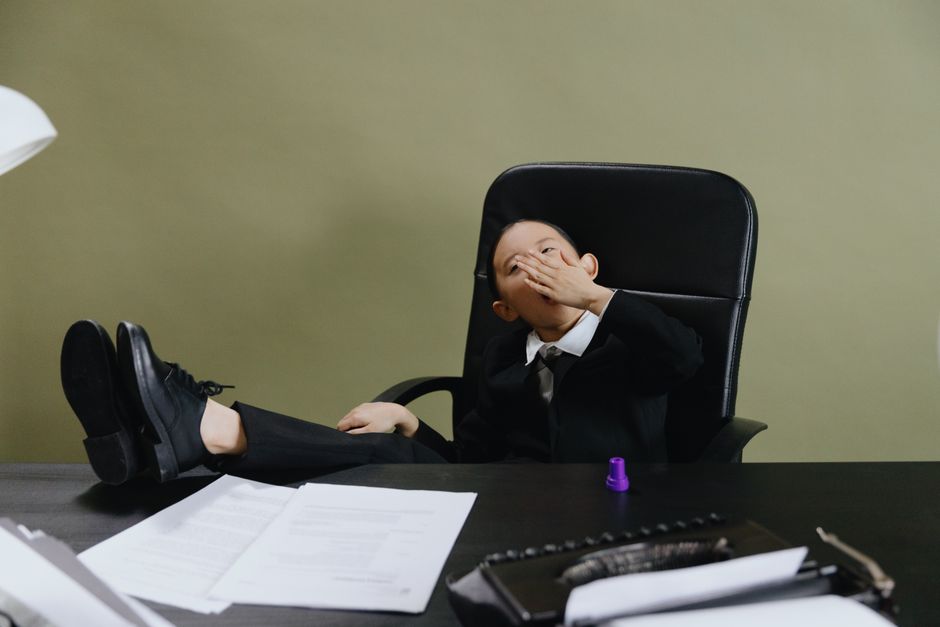
You know that feeling. It is late. Your eyes are heavy. And then it hits you — a deep, wide yawn that you cannot stop. Most of us think yawning when tired just means we need oxygen. That is actually not what the science shows. Yawning when you are tired is a complex brain cooling and alertness mechanism. It is your body’s way of managing brain temperature and trying to keep you awake when your sleep drive is high. Research from Princeton University and other institutions shows yawning is tied to brain thermoregulation, not oxygen levels.
What Actually Causes Yawning When You Are Tired?
The tired yawn is not random. It has a clear biological trigger. When you are tired your brain temperature rises slightly. This happens because your brain has been working all day and your body’s cooling systems are slowing down as your sleep drive increases. Yawning helps cool the brain down.
Studies have found that yawning increases blood flow to the skull. It also brings cooler air into the nasal passages and sinuses. This cools the blood that flows to the brain. The yawn itself is a stretch of the jaw muscles which also helps move blood out of the head. It is a coordinated cooling system.
When you are tired your brain is also trying to fight off sleep. The yawn is partly an alertness reflex. It gives you a short burst of wakefulness. This is why you yawn during boring meetings or long drives. Your brain is trying to stay online.
Does the Old Oxygen Theory Hold Up?
For decades people believed we yawn because we need more oxygen. You may have heard that a yawn brings in a big gulp of air to wake up the brain. That theory has been tested and it does not hold up well.
Research published in the journal Physiology & Behavior tested this directly. Participants breathed different mixtures of air — some with extra oxygen and some with less. The amount of oxygen in the air did not change how often people yawned. If oxygen shortage caused yawning then breathing pure oxygen should stop it. It did not.
The same studies tested carbon dioxide levels. High CO2 did not trigger more yawning either. This is strong evidence that the oxygen theory is wrong. The brain cooling theory fits the data much better. Yawning is not about gas exchange. It is about temperature regulation and state change.
What Does the Brain Cooling Research Show?
The strongest evidence for why we yawn when tired comes from brain thermoregulation research. A 2014 study from the University of Vienna found that people yawn more when their brain temperature is higher. Holding a warm pack on the forehead increased yawning. A cool pack reduced it.
This effect is not just in humans. Studies on rats and parakeets show the same pattern. Animals yawn more when their brain is warm and less when it is cool. The yawn itself seems to lower brain temperature by about 0.1 to 0.2 degrees Celsius. That is small but meaningful for brain function.
When you are tired your brain has been active all day. Metabolic heat builds up. Your body’s natural cooling mechanisms become less effective as your sleep drive rises. The yawn is a backup cooling system. It helps push brain temperature back toward a range that supports alertness. This is why yawning peaks right before sleep and right after waking — both times when brain temperature is shifting rapidly.





Is Yawning Contagious for a Reason?
You have probably noticed that yawning spreads. Seeing someone yawn makes you yawn. This is called contagious yawning and it is different from tired yawning. But they share a root cause.
Contagious yawning is linked to brain cooling in a social context. Research from SUNY Albany found that people are more likely to catch a yawn from someone else when the weather is warm. In winter contagious yawning drops. This fits the brain cooling model. If your brain is already cool you do not need to mirror someone else’s yawn.
Contagious yawning also involves empathy and social bonding. Brain imaging studies show that the same brain regions involved in empathy activate when you see someone yawn. This may be why contagious yawning develops around age four when social cognition kicks in. But the actual yawn itself still serves a cooling function. The social trigger just primes the pump.
If you do not catch yawns it does not mean you lack empathy. Some people are less susceptible due to age, personality, or how well rested they are. Tired people catch yawns more easily because their brains are warmer and closer to the yawning threshold.
| Trigger | Primary Cause | Evidence Strength |
|---|---|---|
| Tiredness | Brain temperature rises as sleep drive increases | Strong — multiple studies show correlation with brain temp |
| Boredom | Low stimulation causes brain to shift toward sleep state | Moderate — linked to vigilance regulation |
| Seeing others yawn | Social mirroring + brain cooling trigger | Strong — replicated in brain imaging studies |
| Waking up | Brain temperature rising from sleep low to daytime high | Moderate — consistent with thermoregulation model |
| Low oxygen | No evidence supports this | None — tested and disproven |
Can You Control or Stop Yawning When Tired?
You cannot fully stop a physiological yawn. It is a reflex driven by brain state. But you can reduce how often it happens by addressing the root cause — brain temperature and sleep pressure.
Cooling your face helps. Splash cold water on your face or hold something cool against your forehead and cheeks. This directly lowers the temperature of the blood going to your brain. Some studies suggest this cuts yawning frequency significantly within minutes.
Breathing through your nose also helps. Nasal breathing cools the brain more effectively than mouth breathing. The nasal passages have a large surface area for heat exchange. If you feel a yawn coming try taking a few slow nasal breaths instead.
Getting up and moving changes your brain state. A short walk raises your heart rate and shifts your brain out of the low-arousal state that triggers yawning. This is not a cure for being tired. It just delays the reflex temporarily.
The only real solution is sleep. Yawning when tired is a signal that your brain needs rest. Ignoring it repeatedly leads to chronic sleep debt. The yawn is not the problem. The tiredness behind it is.
What Are Common Misconceptions About Yawning?
There are several myths about yawning that keep circulating online. One is that yawning means you are bored. Boredom can trigger yawning but it is not the cause. The yawn is a response to low brain arousal not boredom itself. You can yawn while excited or anxious if you are tired.
Another myth is that yawning is a sign of a medical problem. Occasional yawning is normal. Excessive yawning — dozens of times per hour — can be a symptom of sleep disorders, migraines, or certain neurological conditions. But the average person who yawns a few times an hour when tired has nothing to worry about.
Some people claim yawning stretches the lungs and prevents atelectasis — small lung collapse. This is true but unrelated to why we yawn when tired. It is a side benefit not a cause. The yawn is driven by the brain not the lungs.
A final myth is that yawning is rude or should be suppressed. Yawning is a normal physiological reflex. Suppressing it does not harm you but it also does not help. If you need to yawn your brain is telling you something. Listen to it.
Why Do We Yawn When We Are Tired More at Certain Times?
Yawning is not constant throughout the day. It follows a rhythm tied to your circadian clock. You yawn most in the hour before sleep and the hour after waking. These are the times when your brain temperature is changing most rapidly.
Before sleep your brain temperature drops as your body prepares for rest. The yawn helps push it down faster. After waking your brain temperature rises quickly. The yawn helps stabilize the shift. This is why morning yawns are common even if you slept well.
Your yawning pattern also changes with sleep deprivation. After one night of poor sleep yawning increases by about 30 percent. After multiple nights it can double. This is a reliable marker of sleep debt. If you are yawning all day long your sleep is likely insufficient or poor quality.
Some people also yawn more during transitions — going from sitting to standing, moving from a warm room to a cold one, or shifting focus from one task to another. These are all moments when the brain needs to adjust its temperature and arousal level quickly. The yawn helps that happen.
Frequently Asked Questions
Is yawning when tired a sign of a health problem?
Usually not. Occasional yawning when tired is normal. Excessive yawning paired with daytime sleepiness may indicate a sleep disorder worth discussing with a doctor.
Does holding your breath stop a yawn?
No. Holding your breath does not stop the yawn reflex. Cooling your face or changing your activity is more effective at reducing yawning frequency.
Why do I yawn when I am not tired?
You may be bored, transitioning between tasks, or experiencing a brain temperature shift. Yawning also happens when you see others yawn or think about yawning.
Can yawning too much be dangerous?
No. Yawning itself is not dangerous. But if you are yawning constantly due to severe sleep deprivation the underlying tiredness carries real health risks including impaired driving and weakened immunity.
