
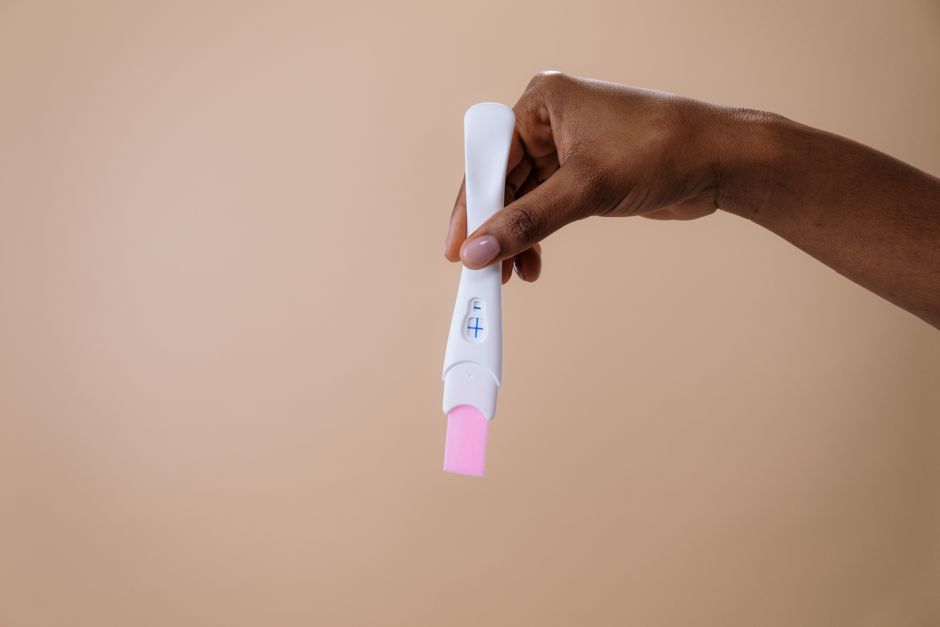
A pregnancy test that has sat in a bathroom cabinet past its expiration date may still work, but you should not trust the result the same way. Expiration dates on home pregnancy tests reflect the period during which the manufacturer can guarantee the test’s stated accuracy. Past that date, the antibodies and other reagents that detect hCG can degrade, and the results can become less reliable. The test does not simply stop working on the date printed on the box, but the further you get from that date, the more likely you are to see a false negative.
Why Do Pregnancy Tests Expire Accuracy Explained
Home pregnancy tests work by detecting human chorionic gonadotropin (hCG), a hormone the placenta produces after an embryo implants in the uterus. The test strip contains antibodies designed to bind to hCG. When hCG is present in urine, it triggers a visible line or a digital signal.
Those antibodies are proteins, and proteins break down over time. Heat, humidity, and light speed that breakdown. The expiration date is the manufacturer’s estimate of how long the reagents will stay stable under proper storage conditions. After that point, the antibodies may bind less effectively to hCG, which can produce a faint line, a weaker signal, or no signal at all even when hCG is present.
This is why an expired test is more likely to give a false negative than a false positive. The test fails to detect what is there. A false positive on an expired test is uncommon, but it is not impossible if the strip has been contaminated or damaged.
How Long Are Pregnancy Tests Good After the Expiration Date?
There is no reliable answer to this, and any specific number you see online is an estimate rather than a tested figure. Manufacturers do not publish data on how long a test remains accurate past its expiration date because they have no reason to test beyond the window they guarantee.
What is known is that degradation is gradual, not sudden. A test used a few weeks past its date and stored properly will likely still detect hCG, especially in early pregnancy when levels are rising. A test used a year past its date that sat in a hot bathroom is a different situation.
Storage conditions matter as much as time. Tests kept in a cool, dry place in their sealed wrapper degrade more slowly than tests exposed to moisture or heat. If you cannot remember how a test was stored, treat its result with more caution.
If you need a dependable answer, use a test within its expiration date. That is the only way to rely on the accuracy the manufacturer claims.
What Is the Difference Between an Expired Test and a Damaged Test?
An expired test and a damaged test can both give unreliable results, but the causes differ. Expiration involves the gradual breakdown of reagents over time. Damage involves a specific event that compromises the test, such as moisture getting into the wrapper, extreme heat, or physical harm to the strip.
Signs a test may be compromised include:
- A wrapper that is torn, punctured, or not sealed
- A test stick that looks discolored or has visible moisture
- A control line that does not appear at all (on tests that use lines)
- A digital test that shows an error message or no display
If the control line does not appear, the test did not work and the result is invalid, regardless of the expiration date. The control line confirms the test ran correctly. Without it, you have no result to read.





Does an Expired Pregnancy Test Give False Positives or False Negatives?
False negatives are the more common concern with expired tests. When the antibodies degrade, they may fail to capture enough hCG to produce a visible result, even when you are pregnant. Early pregnancy is when hCG levels are lowest, so an expired test is most likely to miss a pregnancy in the first days after a missed period.
False positives are less likely but not impossible. A test that has been contaminated, exposed to moisture, or physically damaged could show a faint line that is not a true positive. Some tests can also show what is called an evaporation line, a faint mark that appears as urine dries and is sometimes mistaken for a positive result. Evaporation lines are not caused by hCG and can appear on any test, expired or not.
If you get a positive result on an expired test, confirm it with a new test. If you get a negative result on an expired test but still suspect you are pregnant, test again with a fresh one.
How Should You Store Pregnancy Tests to Keep Them Accurate?
Proper storage extends a test’s usable life and protects its accuracy within the expiration window. Most manufacturers recommend storing tests at room temperature in a dry place, away from direct sunlight.
Practical storage tips:
- Keep tests in their sealed wrapper until you are ready to use them
- Avoid storing tests in bathrooms, where humidity from showers can degrade the strip
- Do not freeze tests or leave them in a hot car
- Check the expiration date before you buy, especially if buying from a discount retailer or a store where stock may sit for a long time
The bathroom cabinet is a common storage spot, but it is also one of the worst because of moisture. A bedroom drawer or a closet shelf is a better choice.
When Should You Trust a Pregnancy Test Result?
A test used within its expiration date, stored properly, and read within the time window specified in the instructions gives you the most reliable result a home test can provide. Home pregnancy tests are generally accurate when used correctly, though no test is perfect.
Timing matters as much as the test itself. Testing too early, before hCG levels have risen enough to be detected, can produce a false negative even with a fresh test. Most tests are designed to be used on or after the first day of a missed period, though some claim earlier detection. Following the instructions on the specific test you are using is the most reliable approach.
If you have a negative result but your period remains absent, or if you have symptoms that concern you, testing again a few days later or speaking with a healthcare provider is reasonable. A provider can order a blood test, which detects hCG at lower levels than a urine test and is not subject to the same expiration concerns as a home test.
Does an Expired Test Matter If You Are Already Late?
Being late increases the amount of hCG in your urine if you are pregnant, which can make a test more likely to detect a pregnancy even if its sensitivity has dropped. This does not mean an expired test becomes reliable. It means the higher hormone level may compensate somewhat for a weakened test.
That compensation is not something you can count on. The degree of degradation varies by test and storage conditions, and there is no way to know how much sensitivity an individual expired test has lost. A fresh test removes that uncertainty.
If you are late and an expired test is all you have, use it, but treat a negative result as inconclusive and confirm with a new test. Treat a positive result as likely but still worth confirming.
What Should You Do With Expired Tests?
The simplest answer is to replace them. Pregnancy tests are not expensive, and the cost of a new test is small compared with the uncertainty of relying on an expired one. Check the expiration date on any test you already own and discard anything past its date.
If you are trying to conceive and testing regularly, buy tests in smaller quantities so you are less likely to have expired ones on hand. Buying in bulk saves money only if you use them before they expire.
Frequently Asked Questions
Can an expired pregnancy test still be accurate?
It may still detect hCG, but you cannot rely on the result the way you can with a test within its expiration date. Accuracy generally declines as the reagents degrade, and false negatives become more likely.
How long past the expiration date can I use a pregnancy test?
There is no tested or reliable answer, and manufacturers do not publish data on use beyond the expiration date. A test used shortly past its date and stored properly may still work, but a fresh test is the only way to trust the result.
Can an expired pregnancy test show a false positive?
False positives are less common than false negatives on expired tests, but they can happen if the test was damaged or contaminated. Evaporation lines can also be mistaken for a positive result on any test.
What does it mean if no control line appears on an expired test?
It means the test did not work and the result is invalid, regardless of the expiration date. The control line confirms the test ran correctly, so without it there is no result to read.
